

The Recipe for Bearing Failure
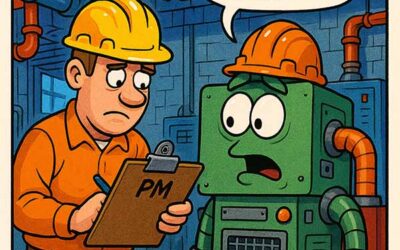
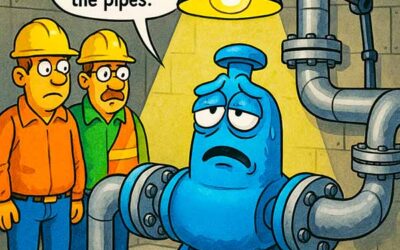
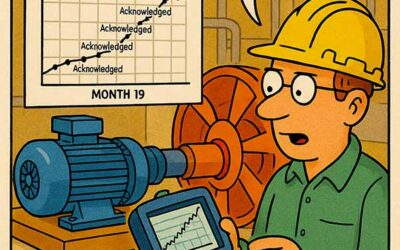
Some plant failures start long before the alarms sound. They begin quietly, with a few specks of dirt, a splash of moisture, or a missing seal. The cartoon captures this irony perfectly: a cheerful bearing “chef” stirring a pot of grime and debris, proud of his mysterious new failure formula. It’s funny until you realize how often it happens in real plants.
A few particles today become a full-scale failure tomorrow. Contamination always collects interest.
Contamination is responsible for the majority of premature bearing and lubricant-related equipment failures. Studies consistently show that as much as 70–80% of these failures are traced back to particulate or moisture contamination. When a precision lubricant is contaminated with solids, it becomes an abrasive slurry. Instead of reducing friction, it accelerates wear.
True contamination control in rotating equipment is not simply about filters or oil changes—it’s about preventing contamination from entering, surviving, and circulating. Every microscopic particle has the potential to score surfaces, deform rolling elements, or disrupt film strength. Over time, this microscopic damage accumulates into macroscopic failure.
If you want predictable reliability, you must stop contamination from ever becoming an ingredient in your “recipe.”
Identifying Contamination Pathways
Contamination control in rotating equipment starts with visibility, literally and figuratively. You can’t control what you can’t see. Identifying where and how contaminants enter the system is the foundation for every reliability improvement plan.
Common Entry Points:
- Breathers and vents: Standard breathers allow airborne dirt and moisture to enter with every temperature change. Replacing them with desiccant or hybrid breathers prevents atmospheric exchange of contaminants.
- Shaft seals: Worn seals act like open doors for particles and water. Upgrading to labyrinth or contactless seals prevents ingress without restricting rotation.
- Lubrication tools: Dirty funnels, unsealed transfer containers, or open oil ports bypass even the most advanced filtration systems. Every oil transfer step must be closed-loop and contamination-free.
- Human error: Technicians who top off lubricants without proper tools or cleaning can unknowingly undo months of contamination control work.
A contamination map – tracking every possible entry point, lubricant movement, and filtration step – helps reveal weak links. Plants that develop such a map and update it yearly typically reduce contamination-related downtime by more than 30%.
Building a Contamination Control Strategy
Effective contamination control in rotating equipment requires a multi-layered approach integrating prevention, detection, and correction:
1. Prevention
This is your first line of defense. Use sealed transfer systems, proper storage cabinets, color-coded containers, and high-efficiency filtration. Keep lubricants indoors, control temperature, and maintain humidity under 50%. Every lubricant should meet a specific ISO cleanliness code before it ever touches a machine.
2. Detection
Modern condition monitoring tools make contamination visible. Portable particle counters, water sensors, and routine oil analysis detect problems early, often before any mechanical symptoms appear. Trending cleanliness levels over time reveals whether improvements are sticking or slipping.
3. Correction
When contamination is detected, find the cause, not just the symptom. Don’t just replace the oil or the filter. Investigate the contamination source: Was it environmental, procedural, or mechanical? Document every finding and update maintenance standards accordingly.
Plants that institutionalize contamination control in rotating equipment typically see lubricant life doubled and bearing life extended by up to 300%. These gains compound: fewer oil changes mean less handling, less waste, and fewer opportunities for contamination.
Creating a Culture of Clean
The cartoon’s tagline, “The secret ingredient is plausible deniability,” highlights a painful truth: many plants accept contamination as inevitable. That attitude kills reliability.
Cleanliness is not an engineering problem; it’s a cultural one. Creating a culture of contamination control requires leadership commitment and daily accountability. Start by:
- Including contamination metrics in maintenance KPIs.
- Training every technician on handling, transferring, and sampling lubricants correctly.
- Displaying ISO cleanliness goals at lube rooms and inspection stations.
- Rewarding proactive contamination detection, not just reactive repairs.
When contamination control in rotating equipment becomes part of the plant identity, technicians stop “hoping for clean” and start “ensuring clean.” Operators become defenders of precision, not just machine users.
Behavioral discipline is what separates reliability cultures from reactive ones. Simple actions—like wiping fittings, keeping caps on containers, or labeling transfer hoses. Build habits that eliminate ingress events before they start. The most reliable plants are not those with the most advanced sensors, but those with the cleanest hands.
The Economic and Performance Payoff
Clean machines pay dividends. Contamination control in rotating equipment delivers measurable ROI:
- Extended Component Life: Bearings, seals, and gears last up to four times longer when operating in clean environments.
- Improved Lubricant Health: Clean oil retains additives longer, reducing replenishment costs.
- Energy Efficiency: Reduced friction means lower power draw and cooler operation.
- Lower Maintenance Costs: Fewer breakdowns mean fewer emergency repairs and less unplanned downtime.
To put numbers to it: a single large gearbox running on oil that exceeds ISO cleanliness targets can lose up to 5% efficiency due to contamination-induced friction. That can equate to thousands of dollars per year in wasted energy—just from dirty oil. Multiply that across a plant and you begin to see why cleanliness is an investment, not an expense.
The Real Secret Ingredient
Contamination control in rotating equipment is the unsung hero of asset reliability. It’s not glamorous. It doesn’t get celebrated with confetti like new reliability programs or dashboards. But it silently prevents failures that would otherwise dominate maintenance logs.
Contamination doesn’t announce itself; it whispers through bearings long before failure.
When maintenance teams adopt a contamination control mindset, reliability stops being reactive and starts being measurable. The bearing in the cartoon doesn’t need plausible deniability; it requires accountability, discipline, and clean oil.
Wrap-Up: Reliability Lives or Dies by Cleanliness
Precision maintenance begins with contamination control. Keep lubricants clean, control moisture, and standardize handling procedures. When rotating equipment operates in a contamination-free environment, reliability ceases to be luck; it becomes design.
The best-run plants don’t cook with dirt; they cook with data. And that’s a recipe worth repeating.