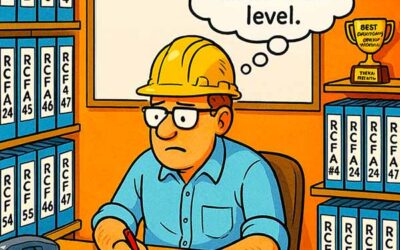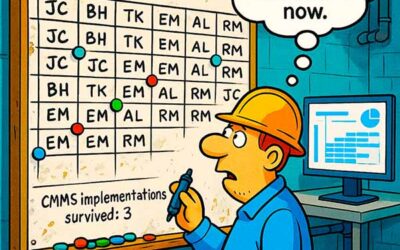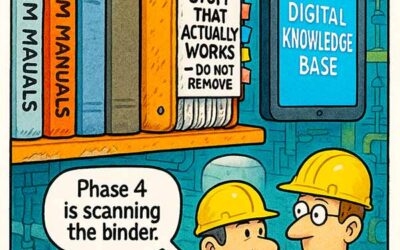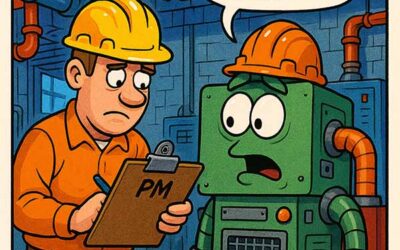
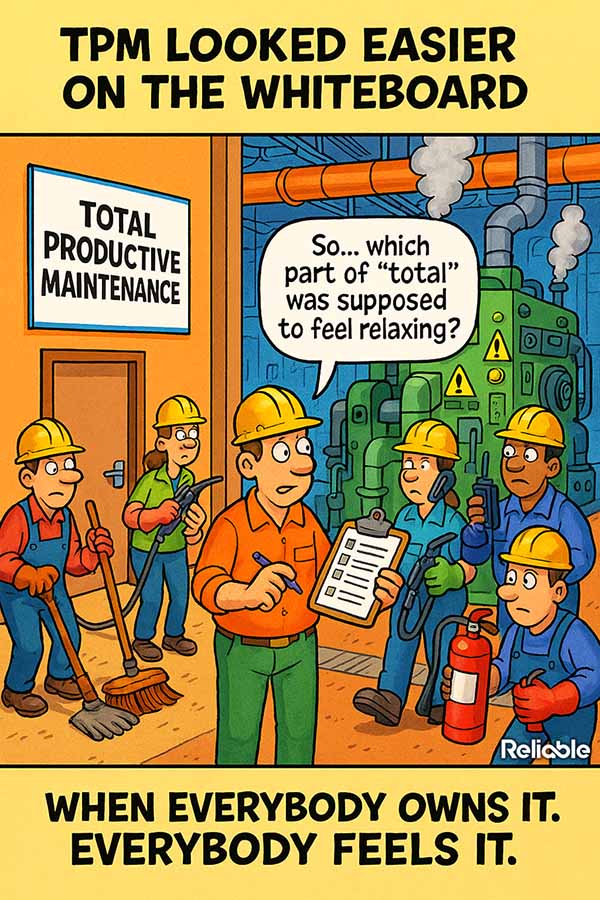

Every plant manager who’s sat through a TPM workshop has had the same experience. The slides look clean, the pillars make sense, and the whole framework feels logical enough to sketch on a napkin. Then Monday morning arrives.
Understanding how to implement total productive maintenance on paper is the easy part. Making it survive contact with a real workforce, real equipment, and real production pressure is where most programs quietly fall apart.
The gap between the whiteboard and the shop floor accounts for roughly 60% of failed TPM rollouts, according to a 2023 survey by the Society for Maintenance and Reliability Professionals. The theory holds up fine. The execution is where things unravel, because nobody planned for the human side of shared ownership.
How to Implement Total Productive Maintenance Without Stalling Out
TPM asks something unusual of a maintenance organization: shared ownership. Operators take on basic care tasks. Maintainers shift toward precision and analysis. Supervisors become coaches instead of taskmasters. That’s a lot of role disruption happening simultaneously, and most plants underestimate how much friction it creates.
The most common failure mode looks like this: a plant launches TPM with a kickoff event, assigns cleaning and inspection tasks to operators, and expects compliance within weeks. Three months later, operators resent the extra work they weren’t hired to do, maintainers feel undercut, and leadership quietly shelves the initiative.
Shared ownership sounds inspiring in a conference room. On the floor, it means asking people to do things that weren’t in their job description yesterday.
The root cause is almost always sequencing. Plants try to change behavior before they’ve changed the environment that makes the behavior possible. Operators can’t inspect equipment they were never trained to understand. Maintainers won’t willingly hand off tasks if they believe (sometimes correctly) that the work will be done poorly.
Start With the Equipment, Then Add the People
The most successful TPM implementations share a common first step: pick one machine, one line, or one cell. Get it running well before you try to change anyone’s role. Trying to roll out TPM across an entire facility simultaneously is the fastest way to ensure none of it sticks.
This means performing a thorough initial cleaning and restoration, tagging every defect, and fixing the backlog before asking operators to maintain a standard. A predictive maintenance strategy layered on top of a neglected asset just generates data about neglect. The asset needs to be healthy before you start measuring its health.
The practical sequence for a pilot:
- Select a pilot asset with visible, chronic losses: jams, minor stops, quality defects, or frequent adjustments
- Restore it to baseline condition with a cross-functional team of operators and maintainers working together
- Develop simple, visual standards for what “clean and inspected” looks like on that specific asset
- Train operators on the “why” before the “what” so they understand what they’re looking for and why it matters
The pilot asset becomes your proof of concept. When operators see a machine running better because of their direct involvement, buy-in follows naturally. Results persuade people in ways that presentations never will.
A pilot asset that runs visibly better is worth more than a hundred slide decks about the eight pillars of TPM.
Only after the pilot succeeds should you expand. And expansion should be gradual: one area at a time, with each new area learning from the last. Rushing the rollout recreates the same failure mode you’re trying to avoid.
Training That Actually Changes Behavior on the Floor
Classroom TPM training is necessary but insufficient. The training that actually changes behavior happens at the machine, with hands on the equipment, guided by someone who knows both the theory and the reality of running that specific asset.
Effective operator training for total productive maintenance covers three areas:
- Equipment function: what does this machine actually do, mechanically and electrically? What are its critical components?
- Failure modes: what goes wrong, what does it look like before it goes wrong, and what should I report to maintenance?
- Inspection technique: how to check lubrication levels, listen for bearing noise, spot belt wear, feel for excess vibration, and read gauges
Pairing this with a solid autonomous maintenance framework gives operators a clear progression path from basic cleaning to independent, confident inspection.
The best plants pair each operator with a maintenance technician during the initial rollout period. The technician teaches the operator how the machine works. The operator teaches the technician what the machine does during production that maintenance never sees. Both sides gain knowledge they didn’t have before, and the partnership builds trust that outlasts the training period.
Metrics That Drive the Right Behavior
OEE (Overall Equipment Effectiveness) is the standard TPM metric, and it’s useful at the site level. At the machine level, though, OEE can feel abstract to operators who just want to know if their work is making a difference. Break it into its components: availability, performance, and quality.
Track minor stops and speed losses specifically. These are the losses operators have the most direct influence over, and seeing them shrink week over week reinforces the connection between effort and results. People sustain what they can see working.
Avoid tying TPM participation to individual performance reviews in the first year. People game metrics they’re evaluated on. You want genuine engagement with the process, not checkbox compliance that evaporates the moment a supervisor looks away.
Sustaining Total Productive Maintenance Gains After the Initial Push
The first 90 days of a TPM rollout often go well because there’s leadership attention, dedicated resources, and novelty. The real test comes at month six, when the excitement fades and production pressure reasserts its usual dominance over everything else.
Plants that sustain total productive maintenance gains over the long term share a few common habits:
- Weekly short-interval reviews at the machine, not in a conference room three buildings away
- Visual boards showing loss trends, open action items, and clear ownership for each item
- Maintenance and operations leadership doing joint floor walks at least twice a month
- A formal escalation path so operator-reported issues don’t vanish into a CMMS queue and die there
Connecting TPM data to your maintenance planning and scheduling process ensures operator findings feed directly into planned work orders. This closes the loop between detection and action, which is the single most important feedback mechanism in the entire program.
The real test of a TPM program comes at month six, when the novelty has worn off and production pressure reclaims the schedule.
Leadership visibility matters more than leadership speeches. When a plant manager walks the floor and asks about a specific loss trend on a specific machine, it signals that TPM matters. When leadership only shows up for the quarterly review, it signals something else entirely.
The Long Game
Full TPM maturity takes three to five years. Any vendor or consultant promising transformation in six months is selling something other than realistic expectations. The plants that reach maturity treat TPM as an operating philosophy, not a project with a completion date.
Start small. Prove the concept on one machine. Train at the equipment. Measure what operators can actually influence. And above all, close the loop between what gets reported and what gets fixed. That’s how to implement total productive maintenance in a way that lasts longer than the kickoff banner hanging in the break room.