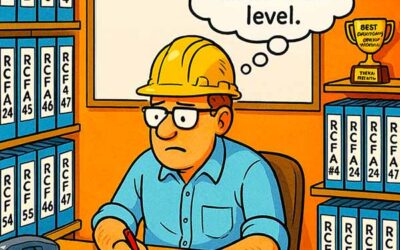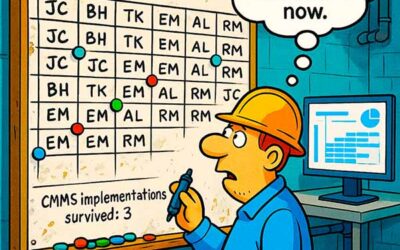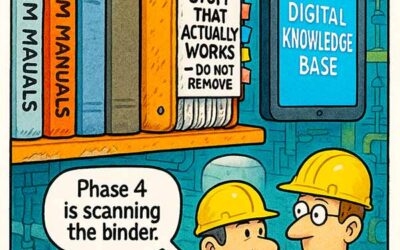
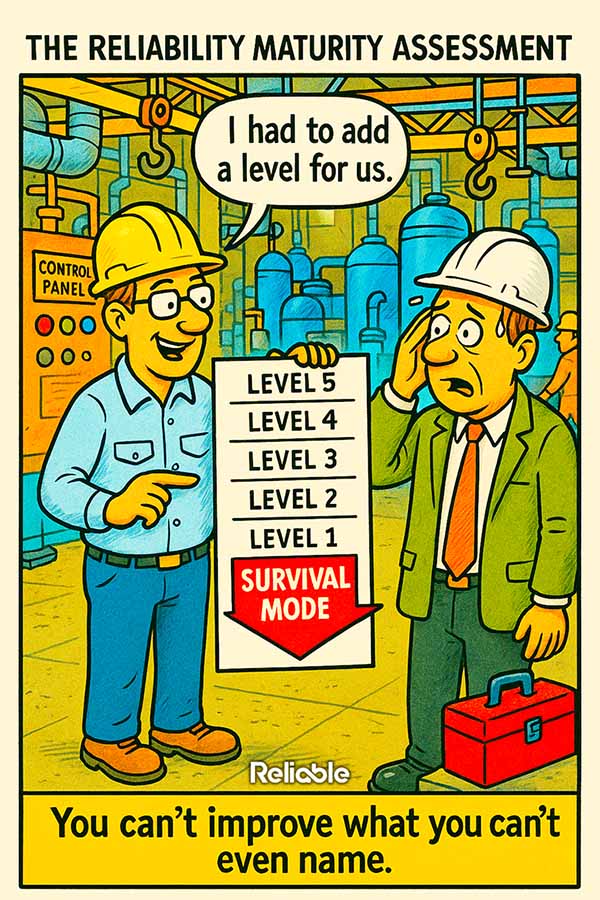

The signs of an immature maintenance program are obvious once you know what to look for. They’re also easy to normalize. When every week feels like survival mode, it’s hard to step back and recognize that the chaos itself is the diagnosis.
Maturity models exist for a reason. They give organizations a framework for understanding where they stand today and what specific changes move them forward. But the first step, the honest assessment, is where most facilities stall. Nobody wants to admit they’re operating at the lowest level on the scale.
Recognizing the Signs of an Immature Maintenance Program
Immaturity in a maintenance organization shows up in patterns, not isolated incidents. A single bad week happens to everyone. The indicators below, when they appear together and persist over months, point to a systemic problem.
Reactive Work Dominates the Schedule
The clearest marker is how much of the weekly workload is unplanned. Mature maintenance programs often aim to keep reactive work below roughly 20% to 30% of total labor hours, depending on asset mix and operating context. Less mature programs may run at 50%, 60%, or higher. At that level, maintenance planning exists on paper, but the plan gets overwritten by emergencies before the week starts.
The symptoms cascade from there. Parts aren’t staged because nobody knew the job was coming. Technicians spend half their shift waiting for materials, reading drawings, or improvising repairs without proper procedures. Wrench time can fall sharply as technicians spend more time chasing parts, clarifying scope, waiting on equipment access, and improvising repairs.
When the default mode of operation is reacting to the last thing that broke, every other improvement initiative stalls before it starts.
Reactive dominance also warps how the team thinks about success. A good day becomes “nothing catastrophic happened” instead of “we completed all planned work on schedule.” That shift in expectations is one of the most corrosive signs of an immature maintenance program, because it removes the pressure to change.
Data Is Missing, Inconsistent, or Ignored
Immature programs generate very little usable data. Work orders are incomplete or missing entirely. Failure codes are inconsistent. Asset hierarchies in the CMMS don’t reflect the actual plant layout, so reports produce misleading summaries.
The data problems show up in specific, recognizable ways:
- Technicians close work orders with generic descriptions (“fixed pump,” “replaced part”) that provide no diagnostic value.
- Failure timestamps are rounded to the start of shift, weakening the accuracy of reliability calculations.
- Nobody reviews work order data for trends because the data quality is too low to trust.
- PM completion rates are tracked, but PM effectiveness (did the task actually prevent failure?) is never measured.
Without clean data, many improvement efforts become educated guesswork. You can’t identify your worst-performing assets, calculate the true cost of reactive work, or build a credible case for predictive maintenance strategy investment.
No Formal Prioritization System
In mature organizations, work is prioritized by a defined system that weighs safety, environmental impact, production consequence, and asset criticality. In immature ones, priority is set by who yells the loudest.
The production manager who calls the maintenance supervisor directly gets faster service than the operator who submits a work order through the CMMS. That informal hierarchy means critical equipment might wait while a low-priority convenience request jumps the queue.
- Work priority changes multiple times per day based on who last spoke to the planner.
- There is no documented asset criticality ranking, or one exists but nobody references it.
- “Emergency” becomes overused, sometimes applied to work that is urgent but still plannable.
A priority system with only two practical settings – urgent and ignored – often produces the same outcome as having no system at all. The planning team can’t sequence work effectively when the queue reshuffles every few hours. Over time, planners stop trying to build meaningful schedules and default to fire-drill dispatching.
Tribal Knowledge Runs the Operation
When an organization depends on two or three senior technicians who “know everything,” that’s a fragility indicator. Immature programs store critical knowledge in people’s heads instead of in documented procedures, job plans, and asset histories.
The retirement of one senior technician can expose years of accumulated organizational neglect in a single quarter.
This reliance on tribal knowledge also creates training gaps. New technicians learn by watching, and what they learn includes all the shortcuts, workarounds, and bad habits that experienced workers have accumulated over decades. The informal training system perpetuates immature practices rather than building toward better ones.
Moving Up the Maturity Scale
Assessment is the starting point, but progress requires targeted action on specific fronts. Trying to improve everything at once overwhelms the team and produces no measurable results. The organizations that successfully mature their maintenance programs focus on three to four priorities per year.
Fix the Foundation First
Clean up the CMMS asset hierarchy. Standardize failure codes. Establish work order completion standards that require useful information: actual failure mode, parts used, labor time, and root cause (when known). This foundational work can take 6 to 12 months and feel unglamorous, but everything else depends on it.
- Audit 100 recent work orders and score them for completeness. Publish the results.
- Assign a data steward (even part-time) to review and correct work order entries weekly.
- Train every technician on what a complete work order looks like, with concrete examples of good and bad entries.
Once the data foundation is solid, you can start making evidence-based decisions about where to invest in reliability engineering capabilities. That’s also the point where a condition monitoring program becomes viable, because you have the asset data and failure history to target it effectively.
Build the Planning and Scheduling Muscle
With cleaner data, the next priority is establishing a real planning and scheduling process. That means a dedicated planner (or at least dedicated planning time), a weekly schedule built from the backlog, and a daily coordination meeting with operations to protect the plan.
Schedule compliance should be measured weekly. A practical target is often 80% to 90%, depending on operating volatility, staffing, and the amount of true emergency work. Below roughly 70%, the schedule is often still more aspiration than commitment. Tracking the number creates accountability and forces the team to address the root causes of disruption.
Maturity in maintenance is built on boring, repetitive discipline: consistent data, consistent planning, consistent follow-through.
Progress from survival mode to a planned, proactive operation typically takes 18 to 36 months of sustained effort. That’s a realistic timeline, and setting expectations accordingly prevents the disillusionment that comes from expecting transformation in a single quarter.
The signs of an immature maintenance program are clear enough to identify in a single plant walk-through. Fixing them takes longer. But the path forward starts with an honest answer to a simple question: where are we really? The organizations that get that answer right, even when the answer is uncomfortable, give themselves a foundation for every improvement that follows. The ones that avoid the question keep rebuilding the same broken systems year after year.