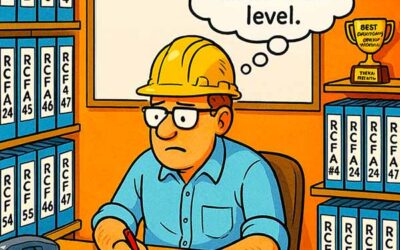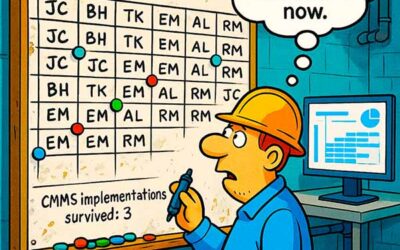
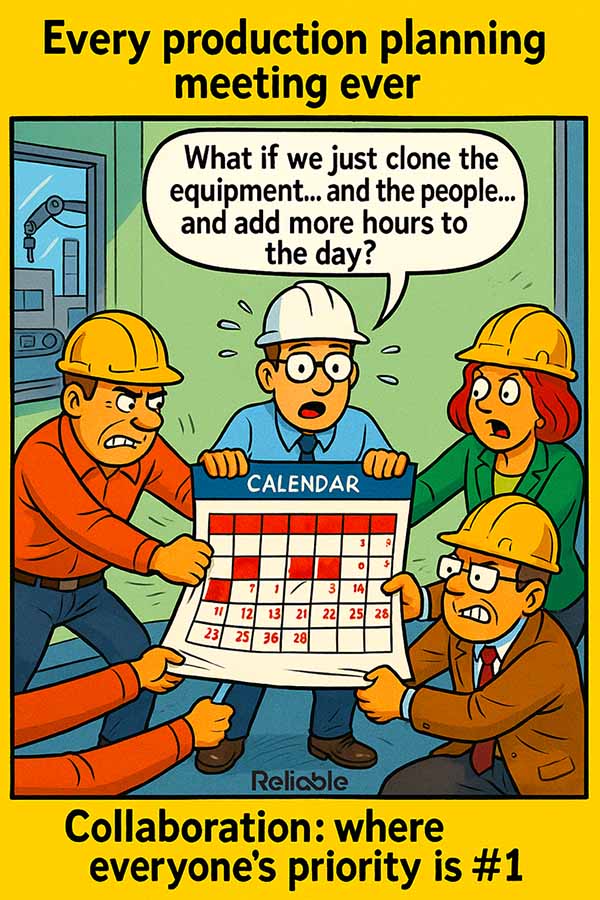

The weekly production planning meeting follows a familiar script at most plants. Operations presents the schedule. Maintenance gets informed (if they’re in the room at all). Everyone nods. And within 48 hours, the plan collapses because a critical asset needs work that nobody accounted for.
Understanding why production planning meetings fail requires looking at the structural problems that make these sessions performative rather than productive. The good news: the fixes are straightforward once you name the real issues.
Why Production Planning Meetings Fail at the Structural Level
The most common failure mode is simple exclusion. In too many plants, the production planning meeting is an operations meeting that maintenance attends as a courtesy. The schedule gets built around output targets, shift capacity, and customer commitments. Equipment availability is treated as a given, like electricity or compressed air.
That assumption breaks down constantly. Every production plan depends on functional assets, and asset availability depends on maintenance planning that needs its own time windows. When those windows get squeezed out of the schedule or treated as optional, unplanned failures fill the gap on their own terms.
The second structural problem is competing priority systems. Operations ranks work by customer deadlines, order value, and throughput targets. Maintenance ranks work by asset criticality, failure risk, and PM due dates. These two systems rarely align without deliberate effort, and the planning meeting is supposed to be where that alignment happens.
Every production plan depends on functional assets, and asset availability depends on maintenance planning that needs its own time windows.
When the meeting doesn’t create that alignment, both teams leave with different assumptions about the coming week. Operations believes the line will run 24/7. Maintenance knows a gearbox needs work by Thursday. Nobody reconciled those two realities, so the gearbox fails on Wednesday night, and the finger-pointing starts Thursday morning.
Three Patterns That Kill Productive Planning
The Wishful Thinking Problem
Planning meetings fail when participants treat the schedule as an aspiration rather than a constraint-based commitment. Asking a line to produce 120% of rated capacity for three consecutive weeks without a maintenance window will generate downtime. The only question is when and how expensive.
Effective planning acknowledges equipment limits. A pump rated for continuous duty still needs seal inspections, lubrication, and alignment checks on a predictable cadence. Planning around those needs (rather than hoping they won’t arise) separates functional meetings from fantasy exercises.
The math is straightforward. If an asset requires 8 hours of planned maintenance per month and you schedule zero hours, you’ll get 16 or more hours of unplanned downtime instead. Planned maintenance is a choice about timing. Unplanned maintenance is a surprise about cost.
The Last-Minute Insertion Problem
In many plants, 30 to 50% of scheduled maintenance work gets bumped by reactive jobs during the execution week. That level of schedule disruption means the planning meeting was effectively wasted. Improving maintenance scheduling discipline requires protecting the agreed-upon schedule from all but genuine emergencies.
Define what constitutes an emergency clearly and in advance. A hot bearing on a critical compressor qualifies. A production manager’s preference to run a different product does not. Write these definitions down and post them where everyone can see them.
The Missing Data Problem
Planning meetings without data are opinion sessions. Both maintenance and operations should bring current information to the table:
- Current asset condition status, including any upcoming PM due dates and the known deficiency backlog
- Production forecast for the next two to four weeks, including expected changeovers and shift changes
- Labor availability for both operations and maintenance, accounting for vacations, training, and contractor schedules
- Parts availability confirmation for any planned maintenance work in the coming week
Without this information in the room, participants make assumptions. Assumptions breed conflict when they turn out to be wrong at 2 a.m. on a Tuesday.
How to Fix the Meeting So Plans Actually Survive the Week
The fix starts with structure. Here’s what productive production planning meetings have in common:
- Maintenance has equal standing at the table, with a planner or supervisor who can commit resources and speak to asset condition with authority
- The meeting produces a frozen schedule for the coming week, with clear and documented rules about what can bump planned work
- Both teams review the previous week’s schedule compliance together, identifying where the plan broke down and why it happened
- A rolling four-week lookahead ensures major maintenance work gets reserved in the production calendar well before the execution week arrives
The most productive planning meetings produce a frozen schedule for the coming week, with clear rules about what can bump planned work.
The meeting should also track wrench time trends and schedule break-in rates from week to week. These metrics tell you whether the planning process is actually improving execution or just generating paperwork that nobody follows.
One more structural fix that pays dividends: end every meeting with a clear list of commitments. Who is doing what, by when, and what resources are allocated? Vague agreements like “we’ll try to get that PM done” are worthless. Specific commitments like “PM-4072 on Compressor 3, Tuesday day shift, two mechanics, parts staged by Monday” give everyone something to hold each other accountable for.
Why production planning meetings fail usually comes down to treating them as status updates rather than decision-making sessions. When both operations and maintenance come prepared (with data, with authority to commit resources, and with a shared understanding that equipment needs time too) the meeting starts producing plans that survive contact with reality. That’s the difference between a meeting people dread and one they rely on.