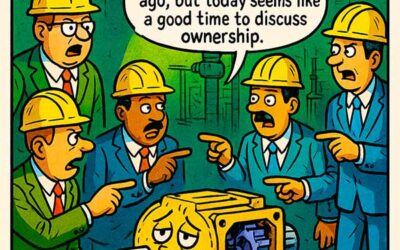

Every maintenance leader eventually faces it: the moment a perfectly reasonable improvement initiative meets a wall of crossed arms and blank stares. Understanding how to lead change in maintenance organizations starts with accepting that resistance is normal, predictable, and (if you handle it right) temporary.
The problem is rarely the change itself. New CMMS platforms, revised PM schedules, updated lockout/tagout procedures: most technicians can see the logic. What trips people up is the execution, the communication gaps, and the feeling that decisions are being made in a conference room by people who haven’t turned a wrench in years.
So the real question becomes: how do you move a team from skepticism to buy-in without resorting to top-down mandates that breed quiet sabotage?
Why Most Efforts to Lead Change in Maintenance Organizations Stall
A 2023 McKinsey study found that 70% of organizational change efforts fail. In maintenance departments, that number feels generous. The reasons are specific to the trade.
Maintenance teams operate under constant production pressure. Every minute spent in a training session or adapting to a new system is a minute pulled from keeping equipment running. When leadership rolls out a new initiative without accounting for this reality, it reads as tone-deaf at best and adversarial at worst.
Three patterns show up in nearly every failed rollout:
- Leadership announces the change as a done deal, skipping the “why” entirely
- Training is compressed into a single session, then everyone is expected to perform flawlessly
- Early problems are dismissed or blamed on the people adapting, rather than the process
Each of these patterns shares a common root: they treat the workforce as an obstacle to manage rather than a resource to engage.
Resistance rarely means people disagree with the goal. It usually means they disagree with how they’re being asked to get there.
When a veteran technician pushes back on a new digital work order system, the objection is almost always about implementation: the interface adds steps, the training was rushed, nobody asked what problems they actually need solved. That feedback is gold, and treating it as insubordination wastes the best diagnostic tool a leader has.
Building Trust Before Building Programs
The single most overlooked step in leading change in maintenance organizations is the pre-work. Before you unveil the new initiative, you need credibility with the people who will carry it out.
Credibility comes from three things: competence (you know what you’re talking about), consistency (your actions match your words), and genuine concern for the team’s working conditions. If you’re missing any one of these, expect friction.
Start With Small, Visible Wins
Before launching a major overhaul, fix something that’s been annoying the team for months. A stockroom reorganization. A revised maintenance planning template that actually makes their day easier. A broken tool bench that’s been on a work request since last fiscal year.
These small wins accomplish two things: they demonstrate that leadership listens, and they build the social capital you’ll need when asking people to absorb bigger changes.
People follow leaders who fix the broken coffee maker before redesigning the org chart.
Involve Technicians in the Design
Maintenance professionals carry decades of institutional knowledge that no consultant or software vendor can replicate. When you design a new process without their input, you’re almost guaranteed to miss something critical, usually something that turns a 20-minute job into a 90-minute headache.
Bring two or three respected technicians into the planning phase early. Give them real influence over the final product. When they walk back to the shop floor and tell their peers, “We helped build this,” you’ve just recruited your most effective change agents.
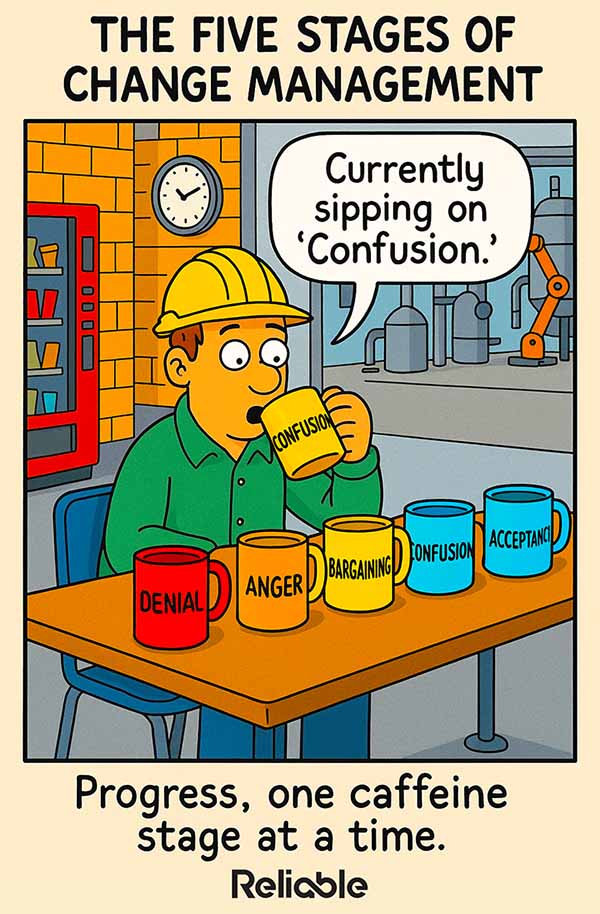
How to Lead Change in Maintenance Organizations: A Five-Stage Framework
Frameworks are guardrails. They keep good intentions from drifting into chaos. This five-stage approach accounts for the realities of maintenance work, where time is scarce, trust is earned slowly, and every new initiative competes with the urgent demands of keeping production running.
Stage 1: Name the Problem Clearly
Vague justifications breed suspicion. “We need to modernize” means nothing to someone elbow-deep in a gearbox. Be specific: “Our unplanned downtime on Line 3 cost us 340 production hours last quarter. Here’s what we’re going to do about it.”
Numbers ground the conversation. They also make it harder for anyone (including leadership) to move the goalposts later. And they give your team a concrete benchmark to measure progress against, which builds momentum once the numbers start moving in the right direction.
Stage 2: Communicate the Plan in Layers
A single all-hands meeting rarely covers it. People absorb information differently, and maintenance teams are often spread across shifts. Effective communication rolls out in layers:
- An initial briefing that covers the “what” and “why” with specific data
- Shift-level follow-ups where supervisors answer questions in smaller groups
- Written summaries posted in break rooms and accessible on mobile devices
- A feedback channel (even a simple suggestion box) that gets reviewed weekly
The goal is saturation without overwhelming people. Everyone should feel informed, and everyone should know where to bring their questions.
Stage 3: Train in Context
Classroom training has its place, but maintenance skills stick best when learned on the equipment. If you’re rolling out a new predictive maintenance strategy, teach it on the machines your team actually works on. Pair experienced technicians with those learning the new process. Peer-to-peer learning is faster, stickier, and builds team cohesion at the same time.
Schedule training during planned downtime windows so technicians can focus without feeling like production is suffering. That single scheduling decision communicates volumes about how much leadership values their time and expertise.
Training that happens on the shop floor sticks. Training that happens in a conference room evaporates by lunch.
Stage 4: Measure and Adjust Publicly
Once the change is live, track results and share them openly. Post weekly metrics where the team can see them: downtime hours, PM completion rates, work order backlog trends.
When something works, celebrate it specifically. “PM compliance on the south line hit 94% this week” is more motivating than a generic “good job, team.”
When something falls short, own it and adjust. Teams respect leaders who say “that part of the plan missed the mark; here’s what we’re changing” far more than leaders who pretend everything is going according to plan.
Stage 5: Sustain Through Systems
Changes that rely on individual motivation eventually decay. Build the new behaviors into your systems: update your maintenance scheduling workflows, revise your standard operating procedures, and adjust KPIs to reflect the new expectations.
When the new way of doing things is baked into the daily routine, it stops being “the change” and starts being “how we work.” That’s the finish line.
Handling the Holdouts
Even a well-executed change process will encounter a few persistent skeptics. That’s fine. Forced enthusiasm is worse than honest doubt.
Most holdouts fall into two categories. The first group has legitimate concerns that haven’t been addressed yet. Listen carefully, because they’re often pointing at a real problem. The second group is resisting the loss of status or comfort that came with the old way. This requires a different conversation, one centered on how their expertise fits into the new model.
Your most vocal skeptic often becomes your strongest advocate, if you give their concerns a real hearing instead of a rehearsed rebuttal.
What you should never do: make an example of someone. Public shaming or disciplinary action for slow adoption poisons the well for every future initiative. It tells the entire team that questioning leadership is career-threatening, and you’ll never get honest feedback again.
The Long View
Knowing how to lead change in maintenance organizations is ultimately about patience and respect. You’re asking people who take pride in keeping things running to accept that their methods need to evolve. That’s a personal ask, even when it’s framed as a business decision.
The organizations that navigate this well share a common trait: they treat their maintenance teams as partners in solving problems together. When people feel ownership over a change, they protect it. When they feel like it was imposed on them, they wait for it to fail.
Start with trust. Communicate relentlessly. Train in context. Measure openly. And when someone pushes back, lean in instead of clamping down. Real change in maintenance organizations follows the same principle as good preventive maintenance: consistent effort, applied at the right intervals, produces results that compound over time.