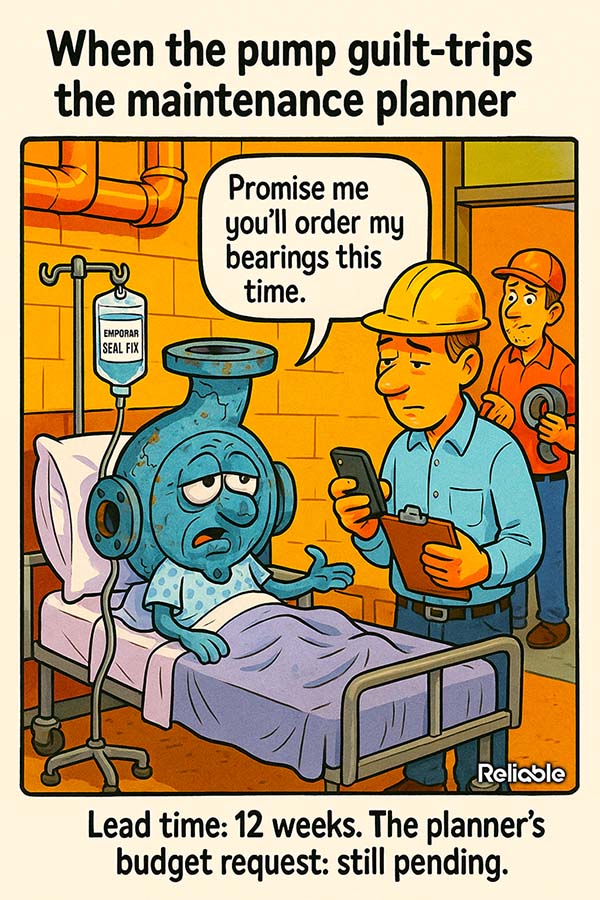

A bearing with a 12-week lead time fails on a Tuesday morning. The maintenance planner submitted the purchase request two months ago, and it’s still sitting in the approval queue. Now the pump is down, production is scrambling, and someone is about to pay rush freight charges that dwarf the original part cost. Learning how to reduce spare parts lead time begins long before the emergency: in the planning process, the storeroom, and the vendor relationships that most plants neglect until something breaks.
Why Lead Times Catch Plants Off Guard
Long lead times rarely surprise anyone the first time. They surprise plants the second, third, and fourth time because nothing changed after the first failure.
The pattern repeats: equipment fails, the part isn’t in stock, a rush order goes out at premium cost, the repair takes days instead of hours, and then everyone moves on to the next crisis. Nobody updates the reorder point. Nobody flags the part as critical. The same failure, with the same lead time, will produce the same emergency six months from now.
Long lead times rarely surprise anyone the first time. They keep surprising plants because nothing changes after the first failure.
Breaking this cycle means treating lead time as a managed variable, starting with the delays that happen inside the organization.
The Budget Approval Bottleneck
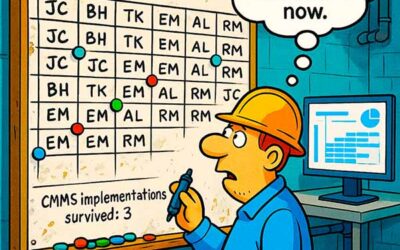
In many organizations, the biggest delay often lives inside the building, in the internal approval process. A planner identifies a part that needs ordering, submits a purchase request, and waits. The request sits in a queue behind capital projects, office supplies, and other priorities.
For critical spare parts management, this approval bottleneck can add weeks to an already long vendor lead time. A 12-week vendor lead time becomes a 16-week actual lead time once internal procurement cycles are factored in.
Practical Steps to Reduce Spare Parts Lead Time
Cutting lead times requires action on multiple fronts: inventory strategy, vendor management, and internal processes.
Identify and Stock Critical Spares
The starting point is knowing which parts matter. Run a criticality analysis on your equipment and flag the components where failure causes the most significant production loss. For those components, determine the lead time for every replaceable part.
Any part with a lead time longer than your acceptable downtime window belongs in the storeroom. The carrying cost of a $400 bearing sitting on a shelf for a year is trivial compared to the production loss from a three-week wait.
The carrying cost of a $400 bearing on a shelf for a year is trivial compared to the production loss from a three-week wait.
Effective stocking decisions start with a few fundamentals:
- Equipment criticality ranking (which failures hurt most)
- Mean time between failures for the component
- Vendor-confirmed lead time (current, not historical)
- Cost of downtime per hour for the affected asset
Build Vendor Relationships Before You Need Them
Emergency orders cost more and arrive slower than planned purchases. Vendors prioritize customers who order consistently and predictably. The plant that places a single desperate phone call during a breakdown gets the back of the line.
Establishing blanket purchase orders, consignment arrangements, or vendor-managed inventory programs for critical spares can dramatically cut effective lead times. Some distributors will hold stock at their facility dedicated to your account if the relationship warrants it.
Review vendor performance quarterly. Track actual lead times against quoted lead times. If a vendor consistently delivers late, that’s a relationship problem worth addressing directly.
Emergency orders cost more and arrive slower than planned purchases. Vendors prioritize customers who order consistently and predictably.
Strong vendor relationships also open the door to early warnings about supply chain disruptions, material shortages, or manufacturing delays that could extend lead times beyond normal.
Streamline Internal Procurement
The fastest way to cut weeks off your lead time often involves your own purchasing process. Pre-approved purchase orders for parts below a dollar threshold eliminate the approval queue for routine items. Giving maintenance scheduling teams authority to order parts up to a defined value without additional sign-off keeps planned maintenance on track.
Review the approval workflow and find where requests stall. Common chokepoints:
- Purchase requests waiting for a manager who’s traveling or in meetings
- Requests flagged for competitive bidding when only one qualified vendor exists
- Budget codes that require annual reauthorization, leaving gaps at fiscal year transitions
Each of these delays is fixable with policy changes that don’t require capital investment.
Use Condition Data to Order Ahead
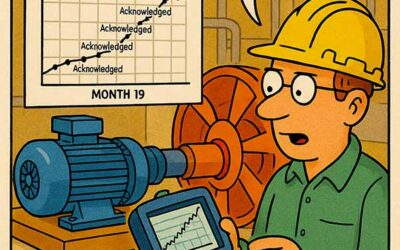
The most effective way to reduce spare parts lead times is ordering parts before they’re needed. Tools like vibration analysis, oil analysis, and temperature monitoring can signal deterioration months before failure.
When a vibration trend shows a bearing entering its degradation curve, the work order and the parts order should go in at the same time.
When a vibration trend shows a bearing entering its degradation curve, the work order and the parts order should go in at the same time.
If the lead time is 12 weeks and the degradation curve suggests 16 weeks of remaining useful life, there’s a comfortable window to get the part on site, schedule the repair, and avoid both the emergency and the rush freight.
How to Reduce Spare Parts Lead Time: The System View
Tackling spare parts lead time as an isolated procurement problem misses the bigger picture. Lead time is a symptom of how well maintenance planning, inventory management, vendor relationships, and condition monitoring work together as a system.
Plants that excel at this treat lead time as a managed variable, tracked and reduced deliberately over time. They review their critical spares list annually. They hold vendors accountable to quoted timelines. They connect condition monitoring data directly to the purchasing process so parts arrive before equipment demands them.
The alternative is waiting for the next breakdown, scrambling for parts, and hoping the budget request clears before the equipment gives out entirely. That approach has a perfect track record of repeating itself.