

When assets operate beyond their engineered limits, both load-dependent and temperature-dependent degradation mechanisms tend to accelerate, increasing the probability – not the certainty – of earlier failure. These effects vary by component, duty cycle, and lubrication/temperature control, but the underlying theme is consistent: elevated stress introduces elevated risk.
The short-term productivity gain is often offset by cumulative mechanical, thermal, and fatigue damage that may not become visible until later. These conversation starters help teams frame the issue using engineering evidence rather than assumptions, pressure, or habit.
30 Conversation Starters
- “What’s the actual risk profile of running at this load based on engineering evidence?”
- “If this asset degrades faster, which production goals become most vulnerable?”
- “Are we increasing output, or increasing the probability of load-driven degradation?”
- “When was the last time this equipment operated fully within its design envelope?”
- “What failure mode evidence, not just correlations, links recent issues to overload?”
- “How have different subsystems (bearings, drives, seals, structures) seen their operating margins change under this load?”
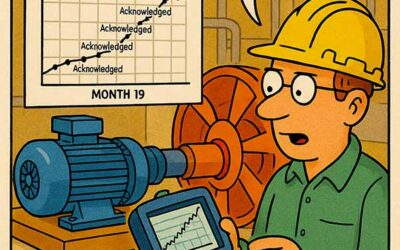
- “Has anyone formally acknowledged the increased risk and documented mitigation steps?”
- “How would we operate if critical spares had long or uncertain lead times?”
- “If uptime is the priority, what’s our plan to manage the added stress on critical components?”
- “What condition data – vibration severity (ISO 10816/20816), oil cleanliness (ISO 4406), temperatures, alignment – indicate this rate is acceptable?”
- “What models or trend data estimate how long we can sustain this demand before risk increases further?”
- “Have we completed an engineering review for this operating condition, or are we relying on assumptions?”
- “What is the cost difference between slightly reduced speed versus accelerated degradation and downtime?”
- “Have we documented the technical justification for operating outside OEM duty cycles and the added monitoring required?”
- “Is this run rate driven by true production need, or by historical habits we haven’t revisited?”
- “Do vibration, temperature, and lubrication trends confirm the asset can handle this load?”
- “Which components are most sensitive to increased load or temperature under current conditions?”
- “How would a third-party reliability assessment characterize the risks of this operation?”
- “What problem are we solving by increasing speed, and what new risks are we introducing?”
- “Is the short-term gain worth the long-term maintenance and reliability impact?”
- “Does leadership understand the specific degradation mechanisms accelerated by this decision?”
- “What evidence from condition monitoring or RUL estimation supports running at this level for the next cycle?”
- “Which degradation mechanisms, such as fatigue, wear, thermal oxidation, and creep, are most sensitive to the new operating conditions?”
- “If this asset had a visible ‘stress gauge,’ where would it be reading today?”
- “Do we have a shared agreement on how much risk we’re accepting with this decision?”
- “Are we basing production speed on data, engineering limits, or deadline pressure?”
- “Which KPIs encourage responsible operation, and which unintentionally incentivize overload?”
- “What’s the true cost-benefit of increased throughput versus accelerated component wear?”
- “Would a controlled slowdown reduce long-term risk more than we lose in short-term output?”
- “Do we have a documented plan for monitoring, detection, and mitigation while running at this elevated load?”
Operating beyond engineered limits doesn’t guarantee failure, but it increases the rate at which stress-dominated mechanisms such as fatigue, wear, thermal degradation, and lubrication-film collapse accumulate. The degree of acceleration depends on load amplitude, temperature rise, lubrication performance, material properties, and monitoring effectiveness.
Plants that balance production demands with engineering evidence, enhanced condition monitoring, and clear risk-acceptance processes generally achieve more stable schedules and fewer surprise failures. These conversation starters help teams align decisions with measurable reality rather than assumptions or short-term pressure.