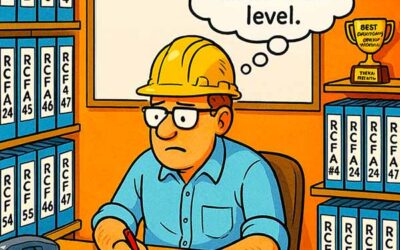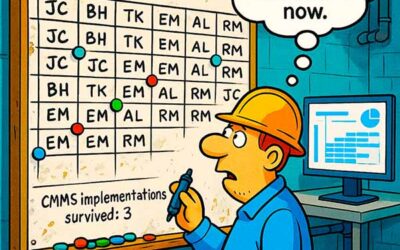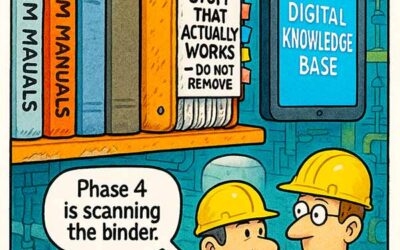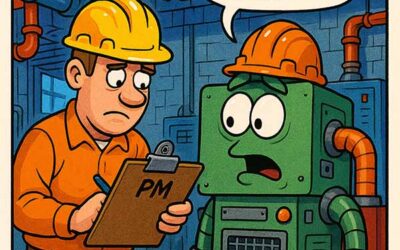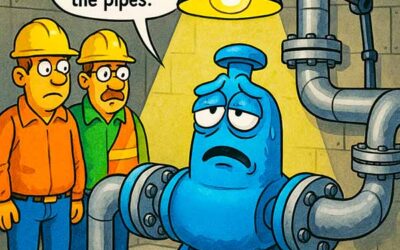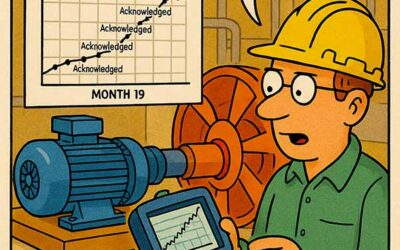


This cartoon exposes a truth every maintenance professional has experienced: the paradox of “efficiency meetings” that waste the very time they’re meant to save. The team sits discussing productivity while production stalls, the backlog grows, and the same issues resurface week after week.
The problem isn’t the meeting itself. It’s the imbalance between planning and execution. Plants often confuse activity with progress, equating discussion with improvement. In reality, every moment spent in unstructured meetings drains the capacity needed for meaningful change.
That’s where maintenance optimization comes in. It’s not just a buzzword. It’s a structured discipline that connects strategy, technology, and culture to achieve true operational excellence. It’s about executing maintenance smarter, faster, and with measurable impact.
Defining the Real Goal of Maintenance Optimization
At its core, maintenance optimization is the pursuit of the best possible performance at the lowest sustainable cost. It balances reliability, safety, and efficiency while aligning maintenance decisions with business goals.
The aim isn’t to do less. It’s to do better. Optimization focuses on effectiveness first, efficiency second. Too many organizations skip this order and try to save money before they’ve stabilized reliability.
Maintenance optimization integrates three critical layers:
- Strategic alignment: Maintenance priorities must reflect asset criticality and business risk.
- Process standardization: Repeatable, documented work procedures ensure consistency and speed.
- Performance measurement: KPIs like MTBF, MTTR, and PM compliance track whether the system is improving.
When optimization becomes part of the plant’s DNA, every maintenance action contributes directly to uptime, safety, and cost control; not just work completion.
Optimization isn’t about doing more – it’s about doing what matters most, flawlessly.
Turning Data Into Decisions That Drive Results
Every plant now collects massive volumes of data like CMMS histories, vibration analysis, oil reports, infrared thermography, and inspection notes. Yet few transform that data into decisions. The true power of maintenance optimization lies in connecting data streams to actionable intelligence.
Practical methods include:
- Consolidate condition monitoring data into a unified view of asset health.
- Use predictive analytics to detect failure patterns before they disrupt production.
- Link work orders to root causes, not symptoms, ensuring future actions prevent recurrence.
- Automate insights, allowing planners to prioritize maintenance based on risk, not habit.
When predictive data flows directly to the maintenance scheduler, the difference is dramatic. There’s less firefighting and more foresight. Assets run longer, spare parts consumption stabilizes, and maintenance labor shifts from reactive to proactive.
For example, a refinery that merged its oil analysis and vibration data found that poor lubrication practices caused 60% of repeat failures. After standardizing procedures and digitally tracking compliance, bearing-related downtime decreased by 42% over the course of a year. That’s maintenance optimization in practice—turning information into measurable improvement.
Eliminating Waste in the Maintenance Workflow
Optimization isn’t just about analytics. It’s also about removing friction from daily work. Every extra step, form, or approval adds drag to performance. Lean thinking applies perfectly here: identify waste, simplify flow, and empower those closest to the work.
Common forms of waste in maintenance include:
- Waiting: Technicians idle due to missing parts or permits.
- Motion: Walking long distances to retrieve tools or components.
- Overprocessing: Excessive reporting that adds no value.
- Defects: Rework caused by unclear instructions or missing data.
To combat this, maintenance leaders can:
- Standardize job plans for high-frequency tasks.
- Pre-stage materials for scheduled work.
- Digitize workflows using tablets and barcoding.
- Empower technicians to resolve minor issues autonomously.
A well-optimized maintenance workflow transforms downtime coordination into uptime creation. Every step supports the next without delay or duplication. Plants that continuously identify and remove waste see measurable gains like higher wrench time, faster response, and better reliability outcomes.
Building a Culture of Continuous Maintenance Optimization
Technology and process are only half the equation. Culture sustains results. Maintenance optimization becomes permanent when it’s reinforced daily through behavior, communication, and leadership.
Leaders set the tone. When they model disciplined execution – starting meetings on time, using data to drive decisions, and following through on action items – the culture follows. Optimization thrives when improvement is seen as everyone’s responsibility, not a side project.
Cultural enablers include:
- Short, focused daily huddles that drive immediate action.
- Shared dashboards that display live reliability metrics for transparency.
- Post-job reviews capturing what worked, what didn’t, and why.
- Recognition systems rewarding teams for eliminating waste or improving uptime.
When every technician, planner, and supervisor understands how their actions contribute to plant reliability, optimization becomes self-sustaining. People start asking smarter questions, solving small problems before they grow, and treating time as a precious, finite resource.
The Role of Digital Tools in Maintenance Optimization
Modern digital platforms multiply the effectiveness of optimization efforts. Predictive analytics, mobile CMMS tools, and AI-driven planning software eliminate guesswork and manual delays.
Key technologies enabling maintenance optimization include:
- IoT sensors for real-time asset monitoring.
- AI-based scheduling that prioritizes by risk and production impact.
- Augmented reality (AR) for remote technical assistance.
- Digital twins to simulate asset behavior and predict degradation.
However, the technology must serve a purpose. Without transparent processes and accountability, digital tools can create digital noise: more dashboards, fewer decisions. The true power lies in integration: when data flows seamlessly from the machine to the planner to the technician, maintenance becomes predictive, efficient, and synchronized with production goals.
Measuring the Impact of Maintenance Optimization
No optimization effort is complete without proof of value. Success must be tracked across multiple dimensions:
- Reliability metrics: Increased MTBF, reduced MTTR, improved availability.
- Efficiency metrics: Higher wrench time, lower administrative overhead.
- Cost metrics: Decreased spare parts waste, reduced overtime, and lower energy consumption.
- Cultural metrics: Higher engagement, lower turnover, and more proactive maintenance behavior.
Leading organizations treat optimization as an ongoing cycle: measure, analyze, improve, and sustain. When KPIs are reviewed consistently and tied to root-cause improvement, continuous optimization becomes second nature.
From Talk to Transformation
The cartoon’s irony highlights a universal reality: most plants overanalyze and under-execute. The bridge between intention and performance is maintenance optimization.
Optimization turns reactive chaos into controlled improvement. It aligns teams, technology, and time around a common goal: reliability excellence. Whether you start by cleaning up your backlog, standardizing PMs, or integrating predictive analytics, the key is consistency.
You can’t optimize what you don’t measure, and you can’t sustain what you don’t simplify. The smartest plants treat maintenance optimization not as a project, but as a mindset that powers every decision, every repair, and every meeting.