
In every plant, there’s an ongoing battle between urgency and preparation. Maintenance crews juggle unexpected failures, delayed parts, and schedule conflicts, while production pushes for maximum uptime. The key to breaking this cycle lies in one phrase: improving maintenance planning efficiency. It’s not just about faster scheduling; it’s about creating a system where planning supports production, not competes with it.
1. Defining Maintenance Planning Efficiency
Maintenance planning efficiency means that every task is ready to execute before it’s scheduled. The right materials, tools, permits, and manpower are in place, leaving technicians free to focus on the work itself, not on chasing down parts or clarifying instructions.
A high-efficiency maintenance plan ensures that:
- Preventive tasks are executed on time.
- Emergency work is minimized.
- Labor utilization is maximized.
- Downtime is predictable and controlled.
To improve maintenance planning efficiency, start by recognizing that planning and execution are separate functions. When planners spend their time reacting to breakdowns, they’re not planning; they’re firefighting.
2. Core Principles for Better Planning
A. Separate Planning from Execution
One of the biggest inefficiencies in maintenance organizations is overlapping roles. When the same person plans and executes, jobs become reactive. Create a distinct planning role focused on defining work scopes, estimating time, preparing materials, and coordinating with production.
B. Build Jobs from Reliable Data
Good planners don’t guess; they build plans from history. Review past work orders, actual repair times, and failure data to accurately estimate labor, tools, and materials. Capture what went wrong or right during execution so each job plan improves over time.
C. Prioritize by Criticality
Not every asset deserves equal attention. Rank equipment based on production impact, safety risk, and replacement cost. Use this ranking to decide where to spend limited maintenance hours. Efficient planning focuses effort where reliability returns are highest.
D. Coordinate with Production Early
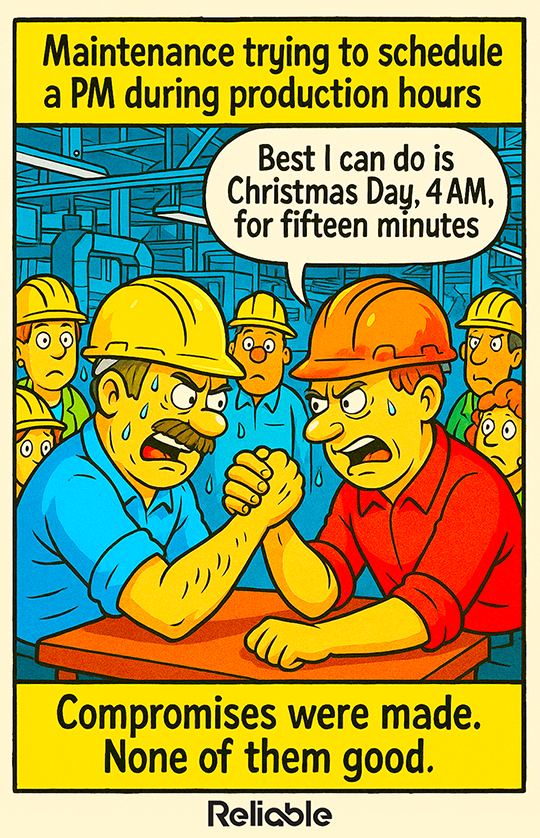
The most successful plants make planning a shared process. Meet with production weekly to align maintenance schedules with operating needs. This avoids scheduling conflicts and builds trust between teams. Coordination is a key element in improving maintenance planning efficiency across the organization.
3. Optimizing Scheduling and Execution
Efficient planning only matters if scheduling converts plans into action. A well-structured schedule maximizes technician productivity while respecting production constraints.
A. Look Ahead
Build a rolling four-week schedule. The first week is locked in, the next three are flexible but visible. This allows production to plan around upcoming work and gives procurement time to prepare materials.
B. Allocate Resources Intelligently
Assign tasks according to skill level and complexity. Don’t overload your best technicians with routine PMs. Let skilled labor handle critical assets while less complex work is distributed across the team.
C. Ensure Materials and Tools Are Ready
Before each job starts, confirm parts availability, permits, and isolation procedures. Many inefficiencies occur because technicians arrive at the job site unprepared. A planner’s checklist should eliminate those surprises.
D. Track Schedule Compliance
Measure how often planned work is completed as scheduled. Low compliance indicates systemic issues, poor coordination, missing parts, or unrealistic time estimates. Improving compliance directly increases the efficiency of maintenance planning.
4. Using Technology and Continuous Improvement
Digital tools can transform maintenance planning efficiency in modern plants. A Computerized Maintenance Management System (CMMS) serves as the foundation for data-driven planning, but the technology only works if consistently used.
- Centralize Information: Store all job plans, parts lists, and asset histories in one system.
- Automate Workflows: Use the CMMS to trigger follow-up jobs, reorder parts, and generate maintenance windows automatically.
- Integrate Predictive Data: Combine oil analysis, vibration monitoring, and temperature trends to plan work before failure.
- Review Performance: After each maintenance cycle, analyze plan accuracy, estimated time vs. actual, parts used vs. forecasted, and causes of deviation.
Continuous improvement is the final stage. Each feedback loop enhances planning accuracy and builds a foundation for reliability growth. When planners refine data after every job, the entire system compounds in effectiveness.
5. Advanced and Speculative Strategies
For organizations ready to go beyond the basics, several advanced methods can multiply efficiency:
- Dynamic Scheduling: Use real-time production and condition data to adjust maintenance timing automatically.
- AI-Assisted Planning: Artificial intelligence can analyze asset history and failure patterns to predict optimal maintenance windows.
- Maintenance Buffers: Include short, recurring maintenance windows in production schedules to handle minor proactive tasks without full shutdowns.
- Cross-Asset Task Bundling: Group similar maintenance tasks across multiple machines to minimize setup and mobilization time.
These approaches require cultural maturity and data discipline, but they point toward the future of reliability.
6. Building a Culture Around Efficient Planning
The ultimate goal isn’t faster maintenance, it’s smarter maintenance.
Efficiency grows when planners, technicians, and operators trust each other’s priorities. Shared metrics such as overall equipment effectiveness (OEE), schedule compliance, and mean time between failures (MTBF) connect production and maintenance to a common outcome: reliable uptime.
Organizations that master improving maintenance planning efficiency achieve more than better schedules; they build operational resilience. The cost of downtime drops, the reliability culture strengthens, and production performance becomes predictable.