

The Dangerous Illusion of “Full Asset Utilization”
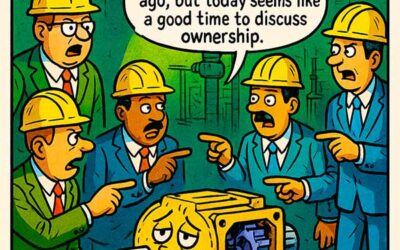
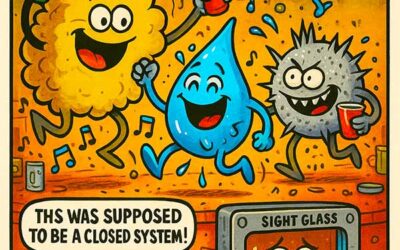
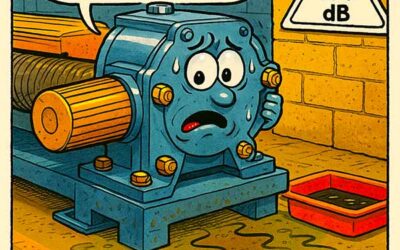
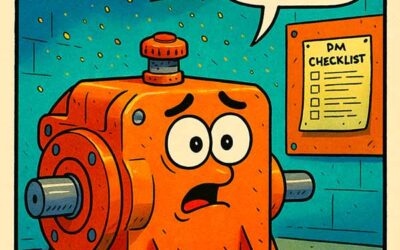
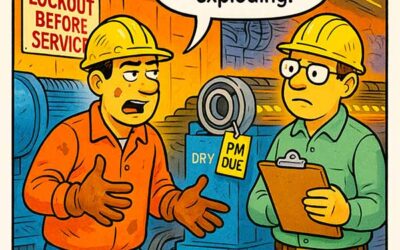
The cartoon nails a universal mistake: chasing 100% asset utilization. The cheerful worker celebrating “no downtime” is every plant manager’s dream, and every reliability engineer’s nightmare. It’s a reminder that maximizing runtime doesn’t equal maximizing performance.
Many organizations interpret “asset utilization” as keeping machines running every minute possible. In theory, that sounds efficient. In reality, it’s operational self-sabotage. Without planned downtime, preventive maintenance vanishes, wear compounds, and the following “success” story ends with catastrophic failure.
Machines are not marathon runners; they’re systems designed for optimized, not continuous, use. Pushing them to 100% is like driving a car at redline all day. Eventually, something gives—and when it does, it’s expensive.
When Asset Utilization in Maintenance Becomes a Liability
High utilization metrics look great in executive dashboards. But look closer, and you’ll see a hidden trail of waste: overtime labor, emergency parts, reactive repairs, and missed production targets after breakdowns. This is where asset utilization in maintenance crosses the line from productive to destructive.
Every breakdown costs far more than scheduled maintenance. A 2019 study by Aberdeen Group showed that unplanned downtime can cost up to $260,000 per hour in lost productivity. Yet many plants still treat maintenance as the enemy of uptime, an outdated mindset rooted in short-term financial optics.
Symptoms of overutilization failure:
- Rising unplanned downtime despite “high utilization” metrics
- Shortened Mean Time Between Failures (MTBF)
- Increasing overtime and maintenance backlogs
- Declining reliability and operator morale
True utilization success lies not in how much you run assets, but in how well you run them.
Balancing Asset Utilization in Maintenance with Reliability
Plants that master asset utilization view maintenance as part of production, not separate from it. They understand that maintenance creates capacity. By protecting equipment health, they extend operational life and minimize unscheduled stops.
Practical steps to balance utilization with reliability:
- Integrate maintenance into scheduling. Treat PMs and inspections as production events with value, not interruptions.
- Adopt predictive technologies. Oil analysis, vibration monitoring, and thermography identify emerging issues before they become downtime.
- Measure availability, not just utilization. A line running 100% of the time but breaking weekly isn’t more productive than one running 85% efficiently.
- Redefine KPIs. Include reliability metrics (OEE, MTBF, MTTR) in executive performance reviews, not just runtime hours.
This cultural shift replaces “run to failure” with “run to performance.” It aligns asset utilization in maintenance with reliability, energy efficiency, and workforce safety.
The Culture Problem Behind Overutilization
Overuse isn’t a technical issue; it’s a cultural one. Many organizations celebrate heroics: the late-night repair crew, the emergency restart, the “we got it running again” moments. But these are symptoms of systemic neglect.
In reliability-centered operations, success means nothing exciting happens. Equipment runs smoothly, maintenance is predictable, and performance is steady. That’s real discipline, and it’s far harder to celebrate on a factory floor.
Changing culture requires reframing what “success” looks like:
- Reward prevention, not reaction.
- Publicize metrics that track avoided failures.
- Educate leadership on the economic return of preventive downtime.
When teams understand that downtime is not defeat, but design, it changes how they manage every asset.
You can’t improve what you overuse. Utilization without reliability is just chaos at full speed.
Building a Smarter Utilization Strategy
To achieve sustainable performance, plants need a smarter definition of asset utilization in maintenance, one that accounts for reliability, cost, and performance together.
A reliable utilization framework should include:
- Planned Downtime Ratio (PDR): The percentage of downtime that’s intentional. Higher is better.
- Effective Operating Time (EOT): The portion of uptime that actually adds value.
- Maintenance-to-Operation Ratio (MOR): The balance of proactive to reactive work hours.
These metrics expose hidden inefficiencies that “100% utilization” masks. The goal is strategic utilization, running assets at the right time, for the right duration, under the right conditions.
The Future of Asset Utilization in Maintenance
Emerging technologies make it easier than ever to optimize utilization intelligently. AI-driven CMMS systems, digital twins, and IoT-enabled sensors can forecast stress loads, suggest optimal rest intervals, and dynamically adjust production schedules.
In the near future, plants won’t need to guess the ideal balance between uptime and reliability. Predictive algorithms will model it in real time, ensuring every hour of machine use contributes to profit, not just production.
But even with automation, the principle remains human: machines need maintenance, and maintenance requires time. Deny either, and the system collapses.
Conclusion: 100% Use, 0% Sense
The obsession with full asset utilization is a relic of outdated industrial thinking. It ignores the complex interplay between maintenance, reliability, and production efficiency.
Proper optimization is not about eliminating downtime; it’s about controlling it. The best-performing plants embrace maintenance as a performance enabler, not an interruption.
As the cartoon reminds us: anyone can chase “100% use.” But it takes wisdom and discipline to make that use make sense.