
When Efficiency Turns into Overload
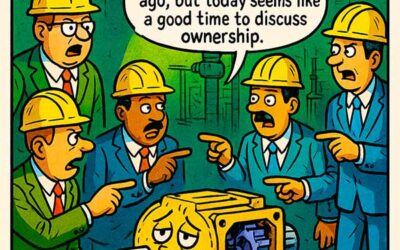
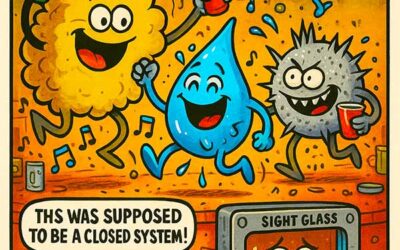
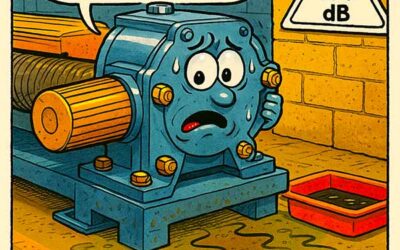
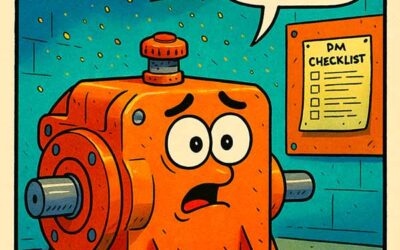
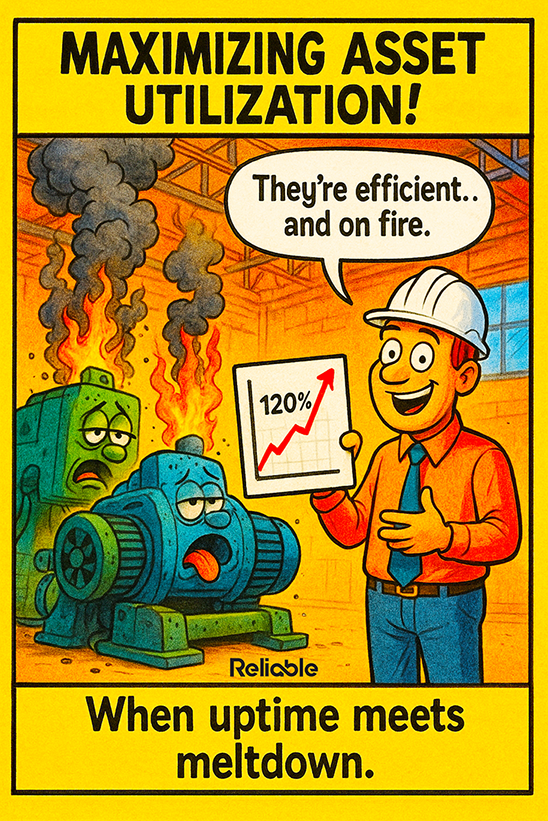
Many manufacturing teams equate “maximizing utilization” with success: machines running nonstop, output at record highs, and production targets exceeded. But that mindset hides a dangerous truth: overuse leads to degradation, energy waste, and premature asset failure. The cartoon nails it: a smiling manager celebrates 120% utilization while his motors smoke and sputter. It’s funny because it’s real.
Actual efficiency means aligning asset utilization best practices with maintenance discipline, operational context, and lifecycle management. Running harder doesn’t mean running better. Sustained equipment reliability improvement only happens when utilization is balanced with planned maintenance and data-informed decision-making.
Plants that chase high utilization without monitoring asset health often experience what reliability engineers call “uptime myopia.” Machines run continuously, but overall system reliability, quality, and throughput decline over time. Preventing this requires a cultural and operational shift from maximizing hours to maximizing productive uptime, the time assets spend performing within designed parameters without accelerated wear or quality loss.
Understanding the Limits of Asset Utilization
Every machine has operational boundaries, defined by design specifications, ambient conditions, load factors, and lubrication requirements. When organizations ignore those limits, degradation accelerates exponentially. Bearings run hotter, lubricants oxidize faster, and vibration signatures creep upward. These are the early warning signs of systemic stress caused by poor utilization management.
Implementing asset utilization best practices starts with understanding and quantifying these limits. Tools like condition-based monitoring, thermal imaging, and vibration analysis give maintenance teams insight into how close each machine operates to its threshold.
In high-performing facilities, asset utilization is a calculated metric, not an emotional target. It’s derived from run-time, load profile, and maintenance history, not from production quotas alone. By coupling maintenance optimization strategies with reliability-centered thinking, plants can extend the useful life of assets while maintaining optimal throughput.
Reliability isn’t built by running longer – it’s built by running smarter.
This means every operator, planner, and engineer must understand the cost curve of overutilization. Pushing equipment to 120% capacity may yield short-term gains, but it doubles long-term maintenance costs, increases safety risks, and undermines production stability. Reliability-focused leaders use predictive analytics and operational efficiency in manufacturing metrics to pinpoint when running less actually produces more sustainable results.
Balancing Utilization with Maintenance Discipline
The misconception that downtime equals loss is one of the most significant cultural barriers to reliability excellence. Planned downtime is not waste, it’s an investment in sustainable plant performance. In fact, the best-run plants integrate maintenance activities into production plans, creating synergy between maintenance and operations rather than conflict.
Organizations that master asset utilization best practices recognize maintenance as a performance enabler. Lubrication routes, alignment checks, oil sampling, and inspections are treated as reliability multipliers. Neglecting them might maintain short-term uptime, but it destroys long-term profitability.
Integrating predictive maintenance planning into utilization schedules is one of the most effective ways to ensure both high performance and extended asset life. Condition-based triggers—derived from vibration, oil analysis, or temperature data—help align maintenance timing precisely with equipment health. This reduces unnecessary interventions while preventing catastrophic failures.
Best practice facilities also align KPIs like OEE (Overall Equipment Effectiveness), MTBF (Mean Time Between Failures), and MTTR (Mean Time to Repair). When OEE climbs but MTBF declines, it’s a warning sign of unsustainable utilization. Innovative leaders adjust schedules, rebalance workloads, or even cycle equipment offline to preserve system reliability and avoid burnout.
Data-Driven Asset Utilization Best Practices
Digital transformation is redefining equipment reliability improvement. Industrial IoT sensors, AI-based analytics, and CMMS systems enable real-time visibility into asset conditions. This allows maintenance teams to transition from reactive firefighting to proactive optimization.
Through data-driven asset utilization best practices, organizations can:
- Track asset health trends using vibration, oil condition, and thermal data.
- Automate predictive maintenance planning to replace time-based intervals.
- Use digital twins to model load impacts and simulate stress conditions.
- Optimize spare parts inventory through failure pattern forecasting.
- Establish performance benchmarks across similar machines and lines.
The outcome is an evidence-based reliability culture, where health data, not assumptions back every utilization decision. Instead of chasing arbitrary uptime goals, teams pursue sustainable plant performance based on real-world data, ensuring longer asset lifespans, fewer breakdowns, and higher profitability.
Another critical component is dynamic load balancing. Rather than running one motor continuously while another sits idle, distribute the operational demand. This evens out wear and extends the overall lifecycle of your assets. It’s an often-overlooked but powerful maintenance optimization strategy that prevents the “hot spots” of overuse illustrated in the cartoon.
Redefining Success: From Uptime to Reliability
The most transformative step for any organization is redefining what success looks like. It’s not the number of hours equipment runs; it’s the value and stability that the operation produces over time. The cartoon’s “They’re efficient… and on fire” moment is a perfect metaphor for plants that pursue maximum output at the expense of reliability.
By embracing asset utilization best practices, companies transition from reactive maintenance to proactive reliability engineering. Leaders start to measure success through long-term KPIs: reduced maintenance costs, improved energy efficiency, and consistent quality. Reliability becomes the competitive differentiator.
In mature reliability cultures, utilization metrics are integrated into business decisions, capital planning, labor allocation, and performance incentives. Maintenance is no longer a cost center; it’s a strategic function that protects production continuity and asset value.
When plants operate this way, they achieve a dual advantage: optimized throughput and extended asset life. That’s the true definition of operational excellence.
Conclusion
Maximizing utilization without respecting limits results in what the cartoon illustrates: efficiency on paper, chaos in practice. The key is balance. Asset utilization best practices align equipment performance with maintenance precision, data intelligence, and a culture of reliability.
By shifting focus from “more hours” to “better hours,” plants can achieve sustainable productivity, safer operations, and stronger profitability. The future of reliability isn’t about running harder; it’s about running smarter, using technology, data, and discipline to ensure that uptime never meets meltdown again.