

Reducing Infant Mortality in Maintenance Systems
In industrial reliability, infant mortality doesn’t refer to a human tragedy; it’s the early death of new machines and components that fail long before their expected lifespan. The term may sound harsh, but it perfectly captures how new assets can “die young” due to improper installation, contamination, or procedural shortcuts. Reducing infant mortality in maintenance systems is one of the most overlooked but critical elements of a strong reliability program.
Most early equipment failures aren’t bad luck; they’re the predictable result of how assets are installed, handled, and brought online.
Every plant that introduces new pumps, motors, or gearboxes faces the same risk: early failure due to hidden weaknesses introduced during commissioning. These early-life failures are not random—they follow a predictable pattern seen in the bathtub curve, where failure rates spike at the start, stabilize during the useful life, and rise again in wear-out. Addressing that left-hand spike is essential to establishing long-term reliability and cost control.
Understanding Infant Mortality and Its Root Causes
Infant mortality happens when new assets experience a high failure rate within the first few days, weeks, or months of operation. These early failures often stem from preventable errors, not inherent flaws. Reducing infant mortality in maintenance systems begins with understanding where the process breaks down.
Common Root Causes Include:
- Contamination: Dirt, moisture, and debris entering bearings, seals, and oil systems during storage or installation.
- Improper Handling: Dropped components, wrong torque settings, or misalignment during assembly.
- Poor Installation Practices: Inadequate foundation preparation, incorrect coupling alignment, or lack of runout checks.
- Human Error: Incomplete startup procedures or skipped verifications due to time pressure.
- Lack of Early Monitoring: Failure to baseline vibration, temperature, or oil data during commissioning.
Each of these conditions erodes the “honeymoon phase” that should be the most stable period of an asset’s life. Instead of building confidence, it creates doubt and reactive chaos. A disciplined approach to reducing infant mortality in maintenance systems prevents these mistakes before they propagate through the plant.
Why Reducing Infant Mortality in Maintenance Systems Matters
The financial and operational costs of early failures are profound. When an asset fails within weeks of startup, it creates a ripple effect – unplanned downtime, wasted labor, warranty disputes, and credibility loss. Reliability engineers often underestimate the hidden cost of rework during early failure events.
Reducing infant mortality in maintenance systems is about more than protecting individual machines—it’s about protecting system integrity. Early-life failures distort predictive analytics and condition monitoring data, making it harder to trust trend baselines. For organizations deploying digital reliability tools, insufficient early data can cripple AI-driven insights before they gain traction.
Key Business Benefits:
- Faster Stabilization: Smooth startup periods accelerate the transition from commissioning to full production.
- Higher Equipment Reliability: Each successfully commissioned asset improves Mean Time Between Failures (MTBF).
- Reduced Maintenance Backlog: Teams spend less time firefighting and more time on precision maintenance.
- Improved Vendor Relations: Early failure data drives better collaboration with OEMs and suppliers.
- Cultural Trust in Reliability Systems: Operators gain confidence when new equipment “just works.”
Organizations that invest in reducing infant mortality in maintenance systems see exponential returns. The payback comes in reliability, stability, lower life-cycle costs, and fewer unpleasant surprises in the first 1,000 hours of operation.
Best Practices for Reducing Infant Mortality in Maintenance Systems
The cure for infant mortality is a blend of precision, patience, and prevention. Plants that master early-life reliability view commissioning as a critical reliability phase—not a mechanical handoff.
1. Precision Commissioning Protocols
Develop standardized commissioning procedures focused on alignment, torque verification, oil cleanliness, and baseline vibration readings. Adopt a “no startup without verification” mindset. Commissioning isn’t complete until the asset proves it can operate within specification under normal load.
2. Early-Life Condition Monitoring
Monitor vibration, oil quality, and temperature intensively during the first 500–1,000 hours of operation. Early detection of anomalies helps isolate installation-related faults before they cascade into catastrophic failures.
3. Supplier Collaboration
Work with OEMs to review installation documentation, lubrication requirements, and storage conditions. Jointly analyze early failure data and establish warranty protocols that reward precision rather than paperwork.
4. Technician Training and Discipline
Training must go beyond tools and torque; it should teach the physics of failure. When technicians understand how installation errors create bearing fatigue or seal leakage, precision becomes instinctive.
5. Data-Driven Feedback Loops
Integrate commissioning and early failure data into CMMS and reliability databases. Patterns across assets reveal systemic weaknesses, improper torque tools, poor vendor packaging, or inadequate environmental controls. This is the essence of continuous improvement in reliability.
Reducing infant mortality in maintenance systems is not about eliminating every error; it’s about catching them before they mature into chronic problems.
Creating a Reliability Culture That Prevents Early Failures
Even the best technical strategies fail without cultural alignment. Plants that consistently reduce early failures have one thing in common: they treat reliability as a value, not a department. Every employee, from purchasing to operations, understands their role in preventing infant mortality.
Cultural Reinforcement Tactics:
- Engineering teams verify maintainability before asset purchase.
- Procurement insists on proper packaging, labeling, and preservation for spare parts.
- Maintenance leaders enforce commissioning discipline and celebrate zero-defect startups.
- Operators take ownership of performance during early-life periods, reporting anomalies immediately.
This alignment transforms startup phases from stress tests into success stories. The plant stops “hoping” assets will survive early operation and starts knowing they will.
Reducing infant mortality in maintenance systems becomes a shared mission; engineering precision meets human accountability. Over time, this shared discipline compounds reliability gains across every level of the organization.
Reliability Starts Before the First Rotation
Infant mortality is not an inevitable phase; it’s a symptom of preventable failure. The most reliable plants understand that excellence begins at installation. Reducing infant mortality in maintenance systems protects uptime, budget, and credibility.
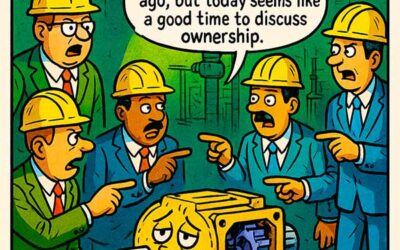
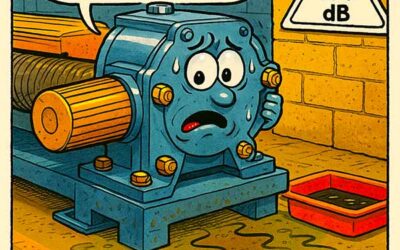
The next time a new asset comes online, think of it like the cartoon’s baby pump – fragile, hopeful, and counting on the adults to get it right. Early failures aren’t cute, and they’re not random. With disciplined commissioning, early-life monitoring, and a culture of precision, every new asset can grow into a reliable performer that stands the test of time.