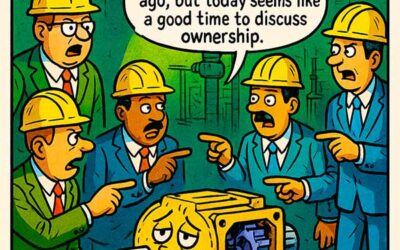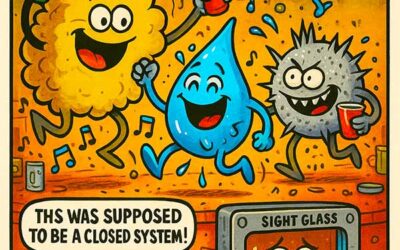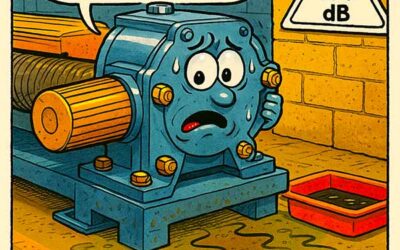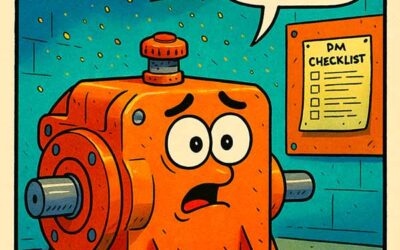

A single missed grease fitting can turn into thousands of dollars in lost productivity. In most plants, neglected lubrication points are silent culprits behind bearing failures, shaft damage, and premature machine replacements. What seems like a minor oversight – skipping a zerk hidden behind a guard or covered in grime – can spiral into significant downtime.
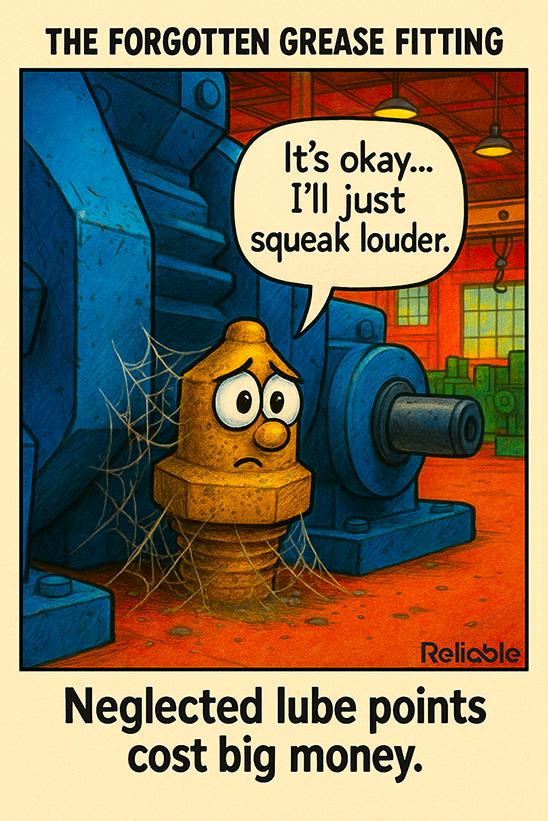
This cartoon captures a simple truth: the forgotten grease fitting always finds a way to remind you, loudly.
1. Why Neglected Lubrication Points Lead to Catastrophic Failures
Neglected lubrication points are not just minor maintenance misses; they’re system failures in disguise. When a lube point goes dry, metal-to-metal contact increases, generating heat and wear. Vibration levels rise, and the degradation accelerates exponentially.
In many plants, 60–80% of rotating equipment failures trace back to poor lubrication practices. The combination of incomplete route execution, undocumented points, and inaccessible fittings creates blind spots in maintenance programs. Each neglected lubrication point becomes a weak link that compromises the asset’s entire reliability chain.
Reliability engineers often underestimate how fast damage accumulates. A single unlubricated bearing may fail within days, and its collateral damage can extend to shafts, housings, or couplings – multiplying replacement costs and downtime.
2. The Hidden Economic Impact of Neglected Lubrication Points
The financial cost of neglected lubrication points goes beyond repair parts. The actual expense includes lost production, emergency labor, and reduced mean time between failures (MTBF). Studies consistently show that lubrication-related failures account for more than 35% of total maintenance budgets.
In one mid-sized manufacturing facility, an annual audit identified 4% of grease points as neglected due to missing or mislabeled tags. Over 18 months, those points led to $220,000 in avoidable costs. That’s the silent tax of lubrication negligence.
When a fitting is forgotten, the maintenance backlog grows invisibly. And while predictive tools like vibration analysis can detect early signs, they can’t reverse the damage caused by dry friction. Preventing neglected lubrication points is not just cost avoidance; it’s capital preservation.
3. Building a Strategy to Eliminate Neglected Lubrication Points
The solution starts with a robust lubrication reliability program built around asset mapping and accountability. Every lubrication point must be identified, tagged, and linked to a clear route in the CMMS. A complete lubrication database should include frequency, quantity, lubricant type, and accessibility notes.
A best practice is to color-code fittings by lubricant type and standardize tags plantwide. This visual consistency eliminates guesswork and helps technicians identify neglected lubrication points during inspections.
Digital lubrication management systems can now automate reminders and provide traceable histories for every grease point. By integrating these systems with ultrasound sensors or RFID tracking, teams can ensure zero missed fittings and data-backed compliance.
Even simple improvements – like visual boards showing “last lubricated” dates – create ownership and accountability at the technician level.
4. Turning Neglected Lubrication Points into Reliability Wins
The best reliability programs treat lubrication as precision work, not routine work. By converting neglected lubrication points into tracked, measured tasks, you turn a high-risk weakness into a measurable KPI.
Maintenance leaders can use route completion rates, grease fitting audits, and lubricant consumption metrics to quantify improvement. Over time, this approach reduces both unplanned downtime and total cost of ownership.
Reliability improvement is a financial strategy disguised as maintenance. Every neglected lubrication point represents hidden waste waiting to be eliminated. Turning that awareness into action is where reliability begins.
Conclusion
The forgotten grease fitting in the cartoon isn’t just comic relief; it’s a cautionary tale. Machines don’t fail from neglect overnight; they fail from minor omissions compounded over time.
By treating every lubrication point as critical, plants safeguard uptime, profitability, and trust in their maintenance process. The path to reliability starts not with advanced sensors or algorithms, but with a grease gun, a checklist, and the discipline to never forget a single fitting.