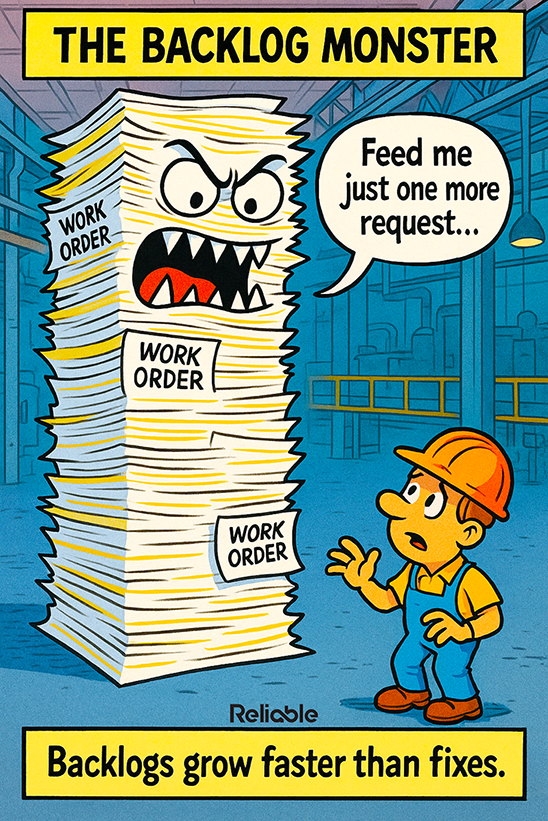

Every maintenance leader has faced the same nightmare: a mountain of unfinished work orders towering over the plant floor, threatening to crush productivity. The cartoon of the “Backlog Monster” nails this reality, an insatiable pile of paper with sharp teeth demanding “just one more request.” That’s what backlog feels like.
But here’s the truth: backlog isn’t the enemy. Poor maintenance backlog management is. The way we measure, prioritize, and act on backlog defines whether it becomes a monster or a map.
Why Maintenance Backlog Management Is the Critical First Step
Backlog is inevitable. In fact, a certain level of it is healthy because it ensures technicians always have work lined up. But once the backlog grows beyond control, it signals deeper systemic issues—inefficient planning, misaligned priorities, or a reactive maintenance culture.
Strong maintenance backlog management makes the difference between surviving and thriving. Plants that ignore it fall into firefighting mode, chasing breakdowns and losing credibility with operations. Plants that manage it well create space for proactive work, predictive inspections, and reliability improvements.
Backlog is the litmus test of organizational maturity. If you want to know whether a plant is reliable, look at how it handles backlog.
The Hidden Costs of Letting Backlog Spiral
Unchecked backlog creates more than just paperwork headaches. It drives real, measurable losses that ripple through the business:
- Escalating downtime – Deferred tasks often involve inspections, lubrication, or adjustments. Skip them, and minor issues grow into catastrophic failures.
- Compromised safety – Many work orders address hazards or compliance-related checks. When they pile up, risk skyrockets.
- Burnout and attrition – Maintenance crews facing endless work lists feel defeated, leading to disengagement and turnover.
- Operational mistrust – Operations staff begin to see maintenance as slow, unresponsive, and incapable of keeping up.
Here’s the kicker: a bloated backlog doesn’t just reflect resource shortage, it often reflects leadership indecision. When leaders refuse to prioritize, every task looks equally essential. That’s how the Backlog Monster gets fat.
Core Strategies for Maintenance Backlog Management
Slaying the Backlog Monster isn’t about working harder. It’s about working smarter with a structured, disciplined approach. World-class plants apply these tactics:
1. Define Healthy Backlog Levels
Leading organizations aim for a 2–4 week ready-to-execute backlog. This ensures technicians always have work but aren’t buried. Anything beyond that creates noise, not value.
2. Prioritize by Risk, Not Sequence
First-in-first-out is a myth. Every work order must be evaluated in terms of the risk and consequences of failure. High-risk assets get first attention, while nuisance tasks are rescheduled or eliminated.
3. Use Skilled Planners
Maintenance planners should plan. Technicians should execute. When planners spend time securing parts, building job plans, and sequencing work, technicians spend more time on the tools—and less time wandering the plant hunting for gaskets.
4. Hold Weekly Backlog Reviews
A standing backlog review forces leadership to confront the monster regularly. These meetings should ask: What’s critical? What can be closed? What can be deferred? Consistency here prevents backlog bloat.
5. Kill “Zombie” Work Orders
Backlogs are littered with outdated or duplicate requests. Every review should include a purge, closing work orders that no longer add value, rolling duplicates into master jobs, and consolidating related requests.
These steps turn backlog from an uncontrolled beast into a manageable queue. More importantly, they send a signal to the workforce: leadership is serious about reliability.
Turning Backlog Into a Reliability Roadmap
Here’s the paradox: backlog is a gold mine of information. With the right lens, maintenance backlog management becomes a diagnostic tool for long-term strategy. Patterns in the backlog reveal:
- Chronic offenders – Assets that generate repeated work orders likely need redesign, replacement, or root cause analysis.
- Training gaps – Recurring requests often highlight missing skills in the workforce.
- Resource mismatches – If a particular craft is always overloaded, it points to imbalance in workforce allocation.
- Operational inefficiencies – Nuisance work orders often come from misused equipment or lack of operator care.
When plants analyze backlog instead of just attacking it, they uncover insights that drive continuous improvement. The backlog stops being a monster and starts being a map.
Case Example: A Tale of Two Plants
Consider two plants with identical equipment and staffing levels:
- Plant A ignores backlog. Work orders pile up, planners are overwhelmed, and crews spend 60% of their time responding to breakdowns. Operators complain, audits fail, and leadership eventually outsources maintenance in frustration.
- Plant B embraces maintenance backlog management. They set a target of four weeks’ worth of ready-to-execute work. Each week, leadership reviews the backlog, prioritizes high-risk tasks, and purges outdated orders. Within six months, emergency work drops 30%, safety audit scores climb, and crews spend more time on proactive PMs and predictive tasks.
The difference isn’t in resources; it’s in discipline.
Practical Tips to Start Today
If your plant feels overwhelmed by backlog, here are practical first steps:
- Measure it – Count weeks of backlog, not just total orders. Normalize by crew size.
- Set a target – Pick a healthy range (2–4 weeks) and work toward it.
- Engage operations – Backlog is not a maintenance-only problem. Operations must help prioritize.
- Celebrate wins – Every time backlog is reduced by a week, share the victory. Recognition builds momentum.
Final Thoughts
The cartoon is funny because it’s true. The Backlog Monster is real, and it feeds on neglect. But it’s not invincible. Plants that apply structured maintenance backlog management tame the beast, protect their workforce, and uncover opportunities for reliability gains.
Backlogs tend to grow faster than fixes, but only if you allow them to. With discipline, planning, and a commitment to leadership, the backlog becomes less of a monster and more of a roadmap to operational excellence.