

The Long Life of Temporary Maintenance Fixes
Walk into almost any industrial facility, and you’ll eventually stumble upon one of them: a “temporary” maintenance fix that has been holding equipment together for 10, 15, even 30 years. Duct tape, baling wire, zip ties, wooden props—these are the unsanctioned artifacts of reactive maintenance.
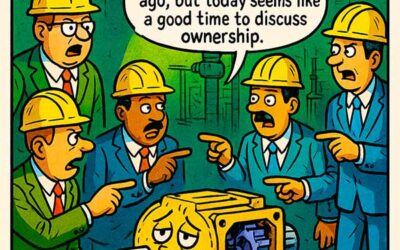
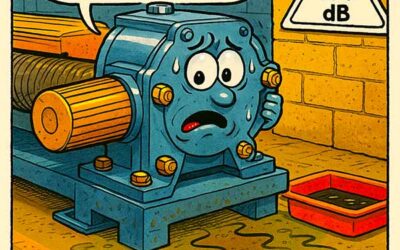
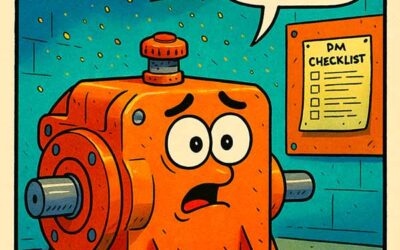
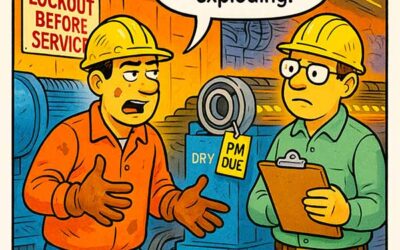
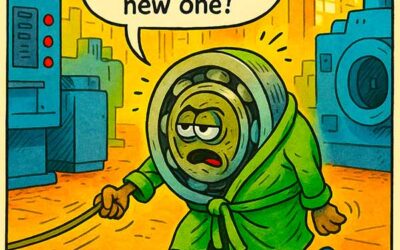
This cartoon captures that absurd yet all-too-familiar moment: someone finds a makeshift solution from 1995 still in place, and someone else defends it with a casual, “If it ain’t broke, don’t fix it.”
It’s funny until it isn’t. Because under the humor is a reality that plagues countless industrial plants: short-term solutions that become long-term liabilities. These temporary maintenance fixes become embedded in the culture of operations, slowly eroding reliability, masking failure modes, and undermining any hope for achieving proactive maintenance maturity.
Understanding how this happens—and how to prevent it—is crucial for organizations seeking to improve their reliability.
Why Temporary Maintenance Fixes Become Permanent
Temporary maintenance fixes are usually born out of urgency. Something breaks. The production line is down. The spare part is backordered. The crew is short-staffed. So someone cobbles something together just to get the machine running again. But then… nothing happens. The fix works. No one logs it. No one schedules the follow-up. And it fades into the background—until it becomes normal.
This normalization of deviance happens across industries. Here’s why it persists:
- Production Pressure: There’s rarely time to revisit a fix once the line is back up.
- Poor Documentation: Temporary repairs often aren’t entered into the CMMS or work order system.
- Staff Turnover: New techs see the workaround and assume it’s OEM design.
- No Incentive to Close the Loop: Maintenance teams aren’t measured on eliminating patches—they’re measured on uptime.
And so the workaround stays. It becomes invisible. Eventually, it becomes part of the asset.
But here’s the catch: every temporary maintenance fix introduces new unknowns. Load paths change. Materials behave unpredictably. Inspection routines fail to account for altered failure modes. And when failure does occur, it often takes people by surprise—because the failure didn’t follow the assumptions built into the original maintenance plan.
How Temporary Maintenance Fixes Erode Reliability
Each workaround is a reliability debt—a hidden liability that compounds over time. These fixes may work in the short term, but they often compromise long-term asset integrity. Here’s how:
- They Mask Root Causes: Temporary fixes often treat symptoms, not sources. The loose shaft is shimmed instead of realigned. The leaking seal is diverted with a drip pan rather than replaced. Each of these choices hides degradation from visibility.
- They Confuse Diagnostics: Inspection teams may misinterpret signals if the machine behavior is altered by the fix. Vibration analysts, for example, may pick up strange harmonics caused by non-standard bracing.
- They Expose People to Risk: Unengineered materials like wood or tape don’t behave predictably under load, temperature, or time. They degrade and fail silently.
- They Create Maintenance Blind Spots: Work orders and PMs don’t reflect the change, so planners assume the asset is in OEM condition. This leads to inappropriate maintenance actions—or none at all.
The real cost of temporary maintenance fixes isn’t just component failure. It’s systemic misalignment between the physical reality of the plant and the digital assumptions of its asset management strategy.
How to Eliminate Legacy Fixes Without Disrupting Operations
You don’t need to tear your plant apart to start fixing this problem. But you do need a deliberate plan. Here’s a proven framework to eliminate these embedded liabilities:
Conduct a Temporary Fix Audit
Send experienced techs through the facility to identify and document all observable temporary repairs. Photograph everything. Create a “rogue fixes” catalog and prioritize by risk.
Map Fixes to Failure Modes
For each workaround, identify what it was trying to solve. Was it a vibration issue? Alignment? Lubrication failure? This helps uncover deeper reliability problems and highlights training or process gaps.
Build Them into CMMS
Log each legacy fix into your CMMS as a corrective maintenance item. Don’t just leave it on a spreadsheet or whiteboard. Track it like you would any deferred maintenance.
Tie Remediation to KPIs
Make eliminating these fixes part of your maintenance KPIs. Reward the closure of legacy issues. Build recognition into your culture for “cleaning up the past.”
Use Quick Fixes as Training Moments
When someone proposes a new temporary fix, pause. Ask: “What’s the root cause? How do we ensure this isn’t permanent?” Build this reflection into your work order process.
Communicate the Why
It’s not about blaming past techs. It’s about building a culture that values long-term performance over short-term uptime. Make this a leadership message.
Remember: temporary maintenance fixes are symptoms of a reactive maintenance culture. Eliminating them is not just a tactical improvement—it’s a cultural shift.
From Maintenance Archaeology to Future-Ready Reliability
These temporary fixes are, in a way, historical artifacts—archaeological evidence of how maintenance was approached under pressure, with limited tools, staffing, and time. They represent creativity and ingenuity. But they also reveal the cost of short-term thinking.
To build a future-ready reliability program, plants must treat these legacy fixes as reliability debt and aggressively remove them. This isn’t just about engineering. It’s about mindset.
If you want higher uptime, fewer surprises, and longer asset life, stop defending the “it ain’t broke” logic. Because what’s holding together today might quietly be setting up tomorrow’s failure.
Start now. Make the fix permanent. Let the duct tape rest.