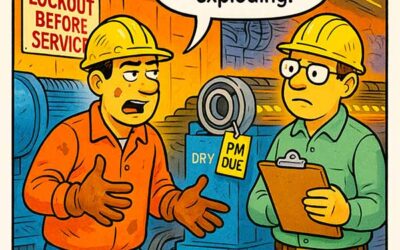
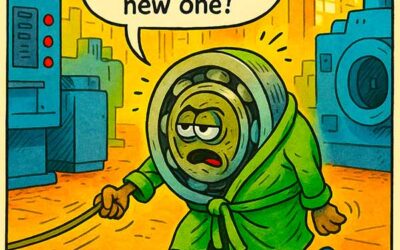
The Real Risk Behind the Laughter
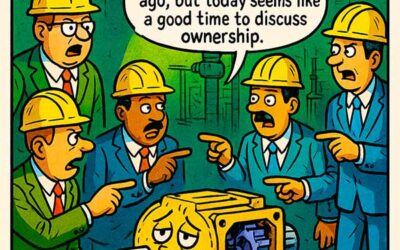
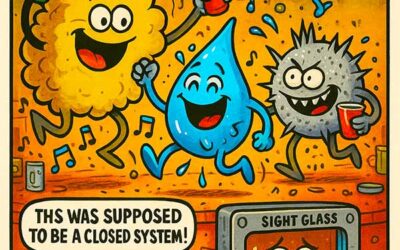
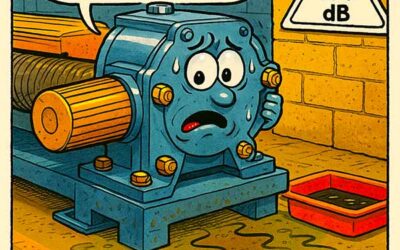
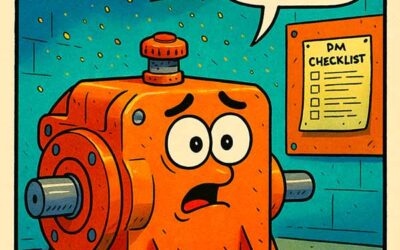
The cartoon hits hard because it’s true: your best vibration sensor can’t interpret the phrase “weird sound when cold.” A seasoned technician can. That’s the essence of tribal knowledge—experience, intuition, pattern recognition, gut feel. And when those seasoned technicians walk out the door, most of it walks out with them.
Tribal knowledge transfer in maintenance isn’t just a cultural issue—it’s a business continuity problem. Too many organizations assume sensors, dashboards, and CMMS entries will compensate for decades of hands-on expertise. They won’t. Because technology can only quantify what’s been clearly defined. “Weird” isn’t quantifiable—but it’s often the first indicator of failure.
If your plant is losing veteran techs and you’re not capturing their mental models, expect avoidable downtime. Expect unexplainable failures. Expect post-mortems where no sensor saw it coming. That’s what makes tribal knowledge so dangerous—it’s invisible until it’s gone.
Why Tribal Knowledge Transfer in Maintenance Is Broken
Tribal knowledge transfer in maintenance used to happen through shadowing. Junior techs learned from seniors by walking the plant, feeling the vibrations, hearing the anomalies, and absorbing commentary like, “She moans like that every winter—don’t touch her.” It was apprenticeship by osmosis.
But that system doesn’t scale, and it doesn’t survive turnover. Now, with retirement waves and workforce churn, there’s no one to absorb that knowledge. And most of it was never documented.
Here’s why the traditional transfer model is collapsing:
- Digital tools replaced mentors, but not mentorship.
- New hires are data-driven, but often lack sensory fluency.
- Plants are leaner, leaving no time for informal coaching.
- CMMS and IIoT systems rarely prompt for subjective observations.
And yet, the machines haven’t changed. They still behave inconsistently. They still “talk” in strange ways. The people who understood those voices—the machine whisperers—are vanishing. And Bluetooth can’t hear what they used to hear.
What We Lose When Intuition Walks Out the Door
To understand the depth of the problem, you have to unpack the types of knowledge being lost. It’s not just tribal stories or folklore—it’s practical, performance-critical nuance that’s nearly impossible to recreate after the fact.
1. Sensory-based diagnostics:
Veterans could detect bearing damage by the pitch of a whine or tell oil was off by its smell. These sensory cues rarely make it into digital records.
2. Asset-specific behaviors:
Machines aren’t identical, even if they’re the same model. One gearbox may vibrate slightly more than another, but that might be “normal” for that asset. A sensor might flag it as an anomaly. A human wouldn’t.
3. Judgment under ambiguity:
Experienced techs know when to act and when to watch. That nuance gets lost in binary failure models. “Makes weird sound when cold” might mean “wait for 10 minutes, then it’s fine.” A new tech might shut it down.
4. Embedded workarounds:
Many reliability strategies depend on undocumented practices—torque adjustments, filter swaps, or shift-specific routines. Without tribal knowledge transfer in maintenance, these disappear overnight.
When you lose this kind of intuition, you don’t just lose history—you lose future uptime. Sensors might catch some of it. Most won’t. And no one programs intuition into a tablet.
Strategies to Capture and Convert Tribal Knowledge
Tribal knowledge transfer in maintenance doesn’t have to be mystical or ad hoc. It can be structured, systematized, and documented—if you take it seriously.
Start with these proven approaches:
1. Build a structured knowledge capture process
Conduct exit interviews with retiring techs focused on asset-specific insights. Use templates that include:
- Asset quirks
- Failure precursors
- Operational myths vs. truths
- Environmental effects on performance
2. Use rich media formats
Encourage techs to record short videos showing asset behavior under different conditions. Let them narrate what they hear, feel, or expect. A 30-second clip of a “weird” sound at startup is more valuable than a paragraph in a CMMS.
3. Create “tribal notes” fields in your CMMS
Add freeform fields where techs can log subjective or context-dependent observations: “This pump cavitates if the tank is below 40%.” These notes build a digital tribal layer.
4. Incentivize documentation
Reward techs for contributing observations and “narrative diagnostics.” Feature the best insights in newsletters or morning huddles. Make it visible, valued, and part of the culture.
5. Shadowing + scenario training
Pair new hires with vets for guided tours that focus not just on SOPs, but on gut-level know-how. Use downtime simulations: “What would you do if the gearbox whines after 30 minutes of operation?”
6. Leverage AI to surface subjective patterns
Some tools can ingest narrative input and correlate it with known failure modes. This is speculative but growing. As LLMs integrate with CMMS data, tribal phrases might eventually be “translated” into diagnostic logic.
Final Thought: If It’s Not in the System, It Doesn’t Exist
If you’re depending on retiring experts to mentor replacements, you’re gambling with availability. If you’re relying on tech alone, you’re overestimating its range. Tribal knowledge transfer in maintenance isn’t optional—it’s essential. The cartoon is funny because it’s true. But the consequences aren’t. “Weird” doesn’t translate to digital—but you can capture it if you try.
Your most reliable assets aren’t just machines. They’re people. Start preserving their knowledge like your plant depends on it—because it does.