

How “Just One More Run” Becomes the Most Expensive Decision
That pleading line—”Come on buddy, you’ve got one more in you”—might sound harmless. But in reliability circles, it’s become a meme for disaster.
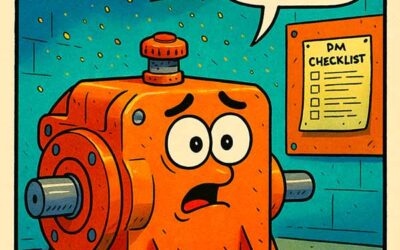
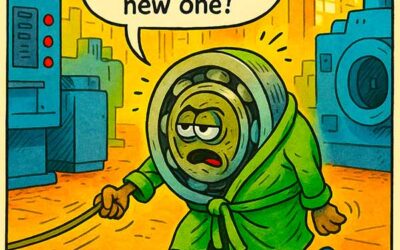
This cartoon captures the harsh reality of overburdened assets and the flawed thinking that turns minor wear into catastrophic failure. The moment you push a tired pump past its limit without intervention, you’re not managing risk—you’re gambling against it.
The root issue here is mental: maintenance decisions still lean reactive in far too many plants. The culture encourages short-term wins at the cost of long-term equipment health. If you’re serious about operational excellence, it’s time to break that cycle with equipment burnout prevention strategies that actually work.
Substituting Planning with Hope: The Real Failure Mode
“Just one more run” is a symptom of poor planning, not heroism. That phrase typically rears its head during downtime panic or production pressure. In both cases, the assumption is that the machine will survive because it always has.
Here’s the problem: fatigue isn’t linear. The degradation curve accelerates toward the end. That tired-looking pump in the cartoon? It might make it through this run. But each minute past the safe operating window is a multiplier on the failure risk.
Equipment burnout prevention strategies begin by replacing hope with data. Real-time condition monitoring, work order histories, and predictive maintenance tools exist to end the guesswork. Use them—or prepare to pay the price.
Equipment Burnout: What It Looks Like Before the Breakdown
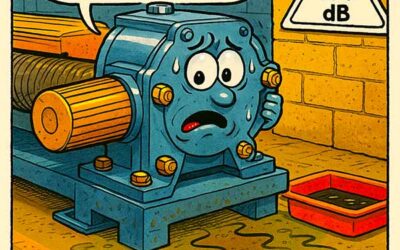
Before the smoking motor or seized gearbox, burnout gives you clues. Excess heat, rising vibration, oil darkening, slower response—all are silent pleas from a machine pushed too far. But they’re often ignored in the name of “keeping things moving.”
Let’s be clear: equipment burnout prevention strategies don’t start with failure—they start upstream. Asset health dashboards, alarm trend reviews, and even simple walkdowns are proactive defenses. And yes, that means scheduling downtime before the breakdown forces your hand.
Burnout is most dangerous when it looks like “almost normal.” If the machine’s talking to you, listen.
The Human Factor: How Culture Fuels Equipment Burnout
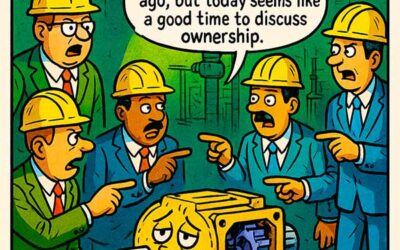
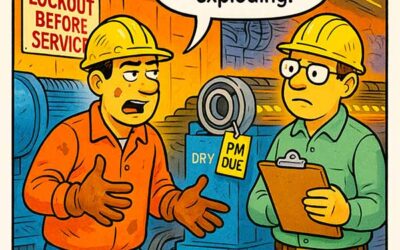
This cartoon puts a friendly face on a brutal truth—sometimes the biggest threat to reliability is us. The tech in the hardhat isn’t malicious. He’s trying to help. But he’s embedded in a culture that valorizes uptime and devalues strategic maintenance.
You can’t solve burnout at the component level if the system that runs it glorifies firefighting. That means training leaders and supervisors to stop rewarding heroics and start rewarding foresight. It means rethinking KPIs that punish planned downtime.
Equipment burnout prevention strategies aren’t just technical—they’re cultural. Until people feel supported for stopping a line for the right reasons, burnout will keep winning.
From Cartoons to Countermeasures: What the Best Plants Do Differently
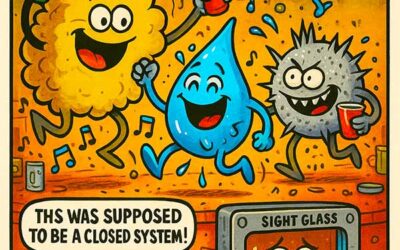
This cartoon is funny because it’s true. But the best plants take that truth and weaponize it. They don’t just laugh—they act.
They build lubrication programs that catch viscosity drops before friction skyrockets. They set up automated alerts for vibration spikes. They train operators to know when “one more run” is too many. And above all, they empower teams to say no when the pressure’s on.
Here’s what best-in-class equipment burnout prevention strategies include:
- Condition-based work orders tied to thresholds, not just time
- Digital twins that simulate risk before it’s real
- Cross-functional root cause analysis after near failures, not just actual ones
- Maintenance windows written into production schedules
In short, they build a system that doesn’t need to beg machines for “one more.”
Machines Don’t Need Pep Talks – They Need Protection
“Come on buddy, you’ve got one more in you” might feel like leadership under pressure. But it’s often the last thing a machine hears before catastrophic failure. Stop repeating that story.
Adopt equipment burnout prevention strategies that protect your assets from abuse disguised as resilience. Replace hope with metrics. Replace pressure with planning. Because the best way to win long-term isn’t to push your machines harder—it’s to take care of them smarter.