

The Illusion of Vigilance
In control rooms across the world, alarms are meant to alert, not overwhelm. Yet many plants have devolved into alarm farms—walls of blinking, shrieking signals so constant they become background noise.
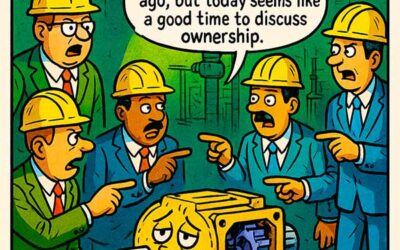
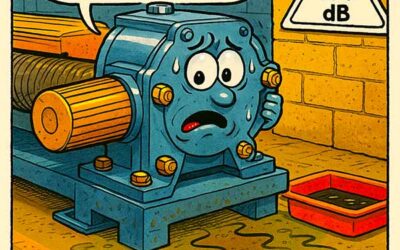
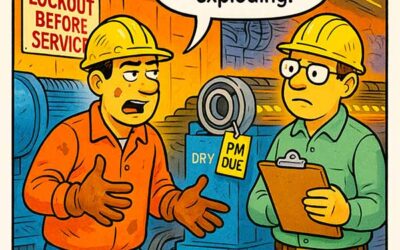
The cartoon above captures it with brutal clarity: a sea of red and yellow alarm indicators, and the operator? Calm. Detached. Coffee in hand. That’s not serenity—it’s surrender.
Alarm fatigue is a systemic failure, not just a nuisance. When every parameter triggers a warning, none receive genuine attention.
It creates a false sense of vigilance—more lights, more sound, more urgency—without adding actual value to operations or reliability. In fact, it does the opposite. It desensitizes your team and masks real threats under layers of noise.
When Everything is Critical, Nothing Is
Overclassification of alarms is often driven by fear—of failure, of liability, of missing something. But this leads to the absurd outcome where normal operational variation looks indistinguishable from catastrophic deviation.
You can’t treat bearing vibration that’s 5% over baseline with the same urgency as a trip threshold breach. Yet many plants do exactly that.
Here’s the catch: systems that constantly cry wolf train people to ignore the wolf. Operators stop reacting. Maintenance teams skip investigations. And over time, the whole culture shifts from proactive to passive. Why bother when it’s always the same?
Prioritization must be intentional. Criticality should be rooted in consequence and urgency, not guesswork. If an alarm doesn’t require immediate action, it shouldn’t interrupt. It should inform, quietly and appropriately. Clarity drives credibility. Credibility drives action.
Alarm Overload Is a Governance Problem
This isn’t a tech issue. It’s governance. The failure lies in how alarm thresholds, escalation logic, and asset strategies are defined—typically in silos. Engineering sets limits, operations overrides them, and nobody revisits logic until there’s a disaster.
To fix it, leaders must treat alarm design and rationalization like safety systems—with ownership, oversight, and accountability. Alarm audits should be conducted annually. Every alarm should be classified, justified, and tested. Key metrics like “alarms per hour per operator” and “nuisance alarm rate” should be tracked and managed.
You also need to empower the people in the chair—the operators. Give them permission and tools to silence or escalate alarms. Let them flag what’s noise. If you’re serious about situational awareness, stop burying signal under static.
Culture Eats Control Systems for Breakfast
At the heart of this issue is a culture problem. Alarm fatigue doesn’t emerge overnight—it accumulates. It’s tolerated. Normalized. Reinforced by people who’ve seen too many warnings ignored and too many overreactions to noise.
Want to reverse it? Start by asking hard questions:
- Why do we have this alarm?
- What should happen when it triggers?
- What happens if we ignore it?
Then go a step further: train teams to think critically about alarm meaning, not just response. Teach the logic behind thresholds. Make alarm tuning part of continuous improvement. Recognize people who raise alarm rationalization issues before they become failures.
And above all, show that in your organization, clarity is more valuable than activity. It’s not about who yells the loudest—it’s about who speaks when it matters most.
Alarm fatigue is not an inconvenience. It’s a silent strategy—one that leads to complacency, delays, and catastrophic misses. It destroys trust in the system and dulls the sharp edge of reliability culture. If you’re not actively pruning alarms, you’re letting weeds take over your garden of situational awareness.
This cartoon isn’t just funny. It’s a mirror. And for many plants, it’s uncomfortably accurate.