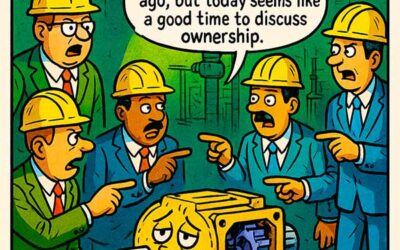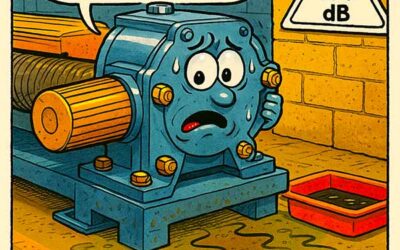


In the cartoon, a vibration sensor—personified with a suit, tie, and jittering lines—applies for a promotion. His résumé proudly states, “Detects problems others miss.”
But the HR rep, sitting comfortably behind a desk, responds, “Sorry, we need someone with less sensitivity.” It’s funny. It’s ridiculous. And it’s painfully accurate.
This cartoon isn’t just a gag—it’s a stinging critique of how many organizations undervalue the very tools and people that can prevent catastrophic failure. Below, we unpack this reality and explore why sensitivity is often misunderstood, misapplied, and mismanaged in maintenance and reliability programs.
1. The Real Cost of Ignoring Sensitivity
The joke cuts deep because it’s true: organizations often prefer comfort over confrontation. High-sensitivity tools like vibration sensors—particularly when properly deployed in a route-based or online condition monitoring program—can pick up early-stage faults such as imbalance, misalignment, bearing degradation, or looseness. But when these tools flag issues that others miss, what happens?
Too often, these insights are ignored. Why? Because they don’t align with the plant’s maintenance schedule, the downtime window, or the production priorities. Or because someone in leadership simply doesn’t want to believe there’s a problem that hasn’t already caused a noticeable failure.
That mindset can cost you: minor vibration becomes shaft damage, early-stage wear becomes bearing seizure, and soon you’re facing unplanned downtime and a five-figure repair bill.
2. Vibration Sensors Don’t Complain—But They Do Tell the Truth
A highly sensitive vibration sensor doesn’t “overreact.” It responds to physics. It’s not making guesses—it’s measuring sub-G accelerations, frequency spectra, and fault signatures that are often invisible to other diagnostic methods.
In that way, vibration sensors are like your sharpest technician or most honest team member: they may not sugarcoat things, but they save you from disaster. Just as we sometimes dismiss insightful employees for being “difficult” when they challenge groupthink, we often treat sensitive monitoring tools as “overly complicated” or “too pessimistic.”
The irony is that the very traits that make these sensors effective—sensitivity, objectivity, early detection—are the reasons they’re underutilized. The data is there. The signal is clear. The problem is human discomfort with inconvenient truths.
3. Turning Sensitivity Into Strategy
The answer isn’t to reject sensitivity—it’s to harness it. If a vibration sensor is detecting problems others miss, that’s a competitive advantage. But only if your organization knows how to respond.
Here’s the fix:
Upgrade your CM program: Don’t just collect vibration data—interpret it with the right diagnostic tools, FFTs, and trending techniques.
Train your team: Help technicians and managers understand what sensor data means and how to act on it. Early action = reduced cost.
Promote the uncomfortable truth-tellers: Whether it’s a sensor, a technician, or a maintenance engineer—elevate those who bring visibility to hidden risks.
Ignoring high-sensitivity insights doesn’t make the problem go away. It just delays the consequences.