
The Dangerous Complacency of Outdated SOPs
When’s the last time you looked at your SOPs? Not skimmed—looked. If your answer is measured in years, you’re already at risk. Outdated standard operating procedures (SOPs) are more than just neglected documents—they’re ticking time bombs for reliability, safety, and efficiency.
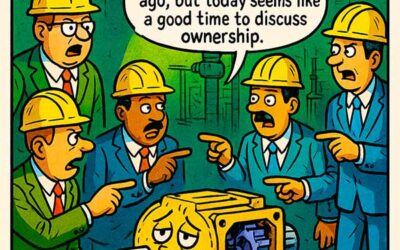
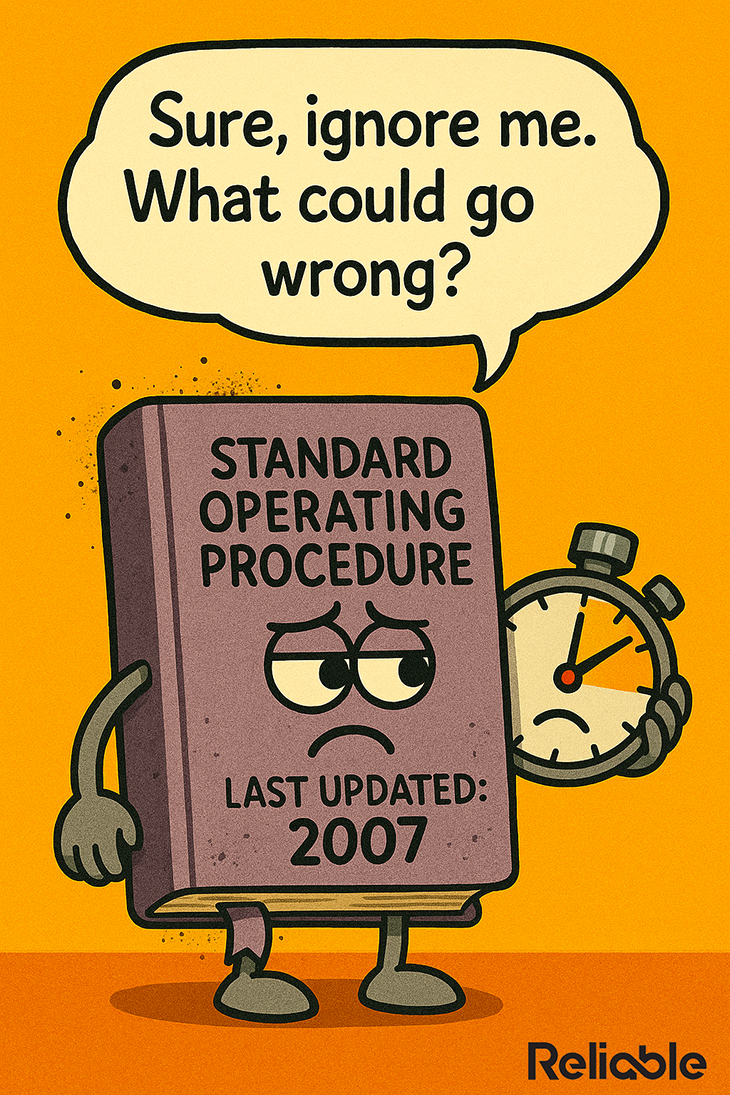
In many plants, SOPs are treated as one-and-done deliverables: created at launch and then left untouched as systems evolve. This cartoon captures the absurdity—a 2007 update on a frontline SOP? It’s both comical and tragic. The reality is that outdated SOPs are an invisible anchor dragging down your operational performance.
SOPs are the codified behaviors that define your culture. If the culture is defined by irrelevance and improvisation, you can expect a process full of deviation and waste. Don’t be surprised when results follow suit.
Outdated Standard Operating Procedures Are Sabotaging Your Metrics
Let’s talk numbers. Every maintenance and operations leader is chasing lower MTTR, higher OEE, better first-pass yield, and reduced safety incidents. But what’s rarely tracked is the document currency that underpins those KPIs.
Outdated standard operating procedures introduce risk across every touchpoint:
- Downtime from confusion: When a procedure doesn’t match current equipment or process flow, execution stalls while techs guess or ask.
- Errors from tribal knowledge: If the SOP is wrong, operators substitute with memory or hearsay—often incorrect and variable.
- Training gaps: New hires onboard with obsolete guidance, reinforcing bad habits from day one.
- Audit failures and liability: Regulatory bodies don’t care about your excuses. If documentation is out of date, it’s noncompliant.
This is death by a thousand cuts. Every deviation, misstep, and misunderstanding drives up cost and erodes the very culture of discipline reliability programs depend on.
How to Update Outdated Standard Operating Procedures Effectively
You don’t need a full-scale digital transformation initiative to fix this. You need ownership, structure, and a cadence. Here’s how to modernize outdated standard operating procedures and ensure they never slip out of relevance again:
- Inventory and flag: Start with a full SOP inventory. Flag anything older than 36 months or that hasn’t been reviewed since a system change.
- Validate with the floor: Desk-level review is useless. Walk the SOP with frontline users. Watch for where the real process deviates from the written one.
- Involve maintenance, ops, and safety: SOPs don’t exist in a vacuum. Cross-functional review catches blind spots—like startup sequences that ignore lube system warmups.
- Embed visuals and links: Modern SOPs use annotated photos, QR-linked videos, and infographics. These reduce ambiguity and support varied learning styles.
- Version control with digital access: Centralize everything in a document control system—no printed binders in drawers. Require sign-offs. Time-stamp updates. Track changes.
- Assign ownership: Every SOP must have an owner responsible for its review cycle—typically 12 or 24 months depending on criticality.
SOPs should be reviewed as part of any RCA, MOC (Management of Change), major PM revision, or failure analysis. If an SOP didn’t prevent a failure, it should evolve from that failure.
The Cultural Impact of Current SOPs on Reliability
Reliability is not a department—it’s a cultural output. And SOPs are cultural artifacts. Outdated standard operating procedures tell your team, “We don’t care about accuracy,” or worse, “Figure it out yourself.”
That mindset infects performance. Operators drift from process. Techs skip checks. Engineers bypass root cause analysis because the starting point—the documented standard—is flawed or missing.
In contrast, current SOPs:
- Reinforce standardization, which reduces variability
- Provide a trusted single source of truth during troubleshooting
- Support proactive maintenance and continuous improvement
- Elevate engagement by showing that feedback leads to change
This cultural alignment is where reliability becomes self-sustaining. You can’t have world-class maintenance with third-class documentation.
A Strategic Lever, Not Just a Compliance Task
Too often, SOP updates are seen as a regulatory chore. But for reliability-focused organizations, they are a strategic lever. Accurate SOPs build resilience. They support autonomy and reduce the cognitive load on operators and technicians. They preserve institutional knowledge and prevent mistakes. They allow for meaningful measurement.
If you want to benchmark your plant against top quartile performance, SOP currency is a hidden driver. Leading sites review their critical SOPs annually, integrate updates into digital platforms, and treat document accuracy like a living asset.
Outdated standard operating procedures are like old brakes on a fast car—they work until they don’t, and when they fail, it’s catastrophic.
Final Word: Stop Relying on 2007 Thinking
If you’ve invested in sensors, CMMS platforms, and condition monitoring but your SOPs still reference discontinued equipment, you’ve created a reliability illusion. Your house looks modern, but the foundation is crumbling.
Fixing outdated standard operating procedures isn’t glamorous, but it’s high-leverage. Every clear, current SOP reduces the risk of error, improves execution, and reinforces a culture of excellence.
Start with one. Audit. Review. Update. Repeat. It’s not about checking a box—it’s about protecting performance, safety, and reputation.