
Walk into almost any maintenance office and you’ll hear a familiar conversation.
“We know what we need to do. We just can’t get the budget.”
The response is usually the same. Finance doesn’t understand reliability. Corporate is focused on short-term results. Leadership doesn’t appreciate maintenance. The budget was already spoken for.
After nearly three decades leading operations, maintenance, and reliability organizations, I’ve come to a different conclusion.
Most reliability leaders don’t lose the budget because leadership doesn’t value reliability. They lose the budget because they haven’t demonstrated that reliability is a business investment.
There’s a significant difference.
Reliability Doesn’t Compete Against Maintenance
One of the biggest misconceptions in our profession is believing that reliability competes against other maintenance priorities.
It doesn’t.
Every dollar requested for reliability competes against every other opportunity in the business.
Your vibration monitoring program isn’t competing with another maintenance initiative.
It’s competing against:
Competing for the same next dollar
“Why is this the best place to invest our next dollar?”
If reliability can’t answer that question better than the alternatives, it shouldn’t receive funding.
We Fall in Love with the Solution
Reliability professionals are naturally problem solvers. We see opportunities everywhere. Wireless sensors. Precision lubrication. Alignment programs. Ultrasound. Infrared inspections. Root Cause Analysis. Failure Modes and Effects Analysis.
All are valuable tools and I love all of them!
But executives aren’t buying tools. They’re buying business outcomes.
Too often our presentations begin with: “We’d like to implement…”
Instead of: “Here’s what the current situation is costing the business.”
Those are two completely different conversations. One starts with spending. The other starts with opportunity.
Executives Buy Results, Not Activities
Imagine walking into your CFO’s office and saying: “We want to increase our predictive maintenance coverage from 35% to 85%.”
That statement may excite your maintenance team. I know it definitely would excite me as a Reliability Leader! However, it probably won’t excite your CFO.
Now consider a different approach.
“Last year, we experienced twelve major equipment failures that cost approximately $3.8 million in repairs, lost production, premium freight, and overtime. We believe we can eliminate half of those losses within two years.”
Same program … completely different conversation.
Executives rarely approve projects because they like the activity. They approve projects because they believe in the outcome and the outcome has documented the business results they should expect. Our guide to ROI approval for maintenance initiatives walks through building that documentation.
Reliability Has a Marketing Problem
That may sound strange … but it’s true.
Marketing professionals understand something reliability professionals often overlook. People don’t buy products. They buy solutions to problems. No one buys a drill because they want a drill. They buy it because they need a hole.
Likewise, executives don’t invest in predictive technologies because they enjoy vibration analysis. They invest because they want higher production, lower costs, safer operations, improved customer service, and stronger financial performance.
Reliability is simply one of the ways those goals are achieved.
Stop Measuring Success Like an Engineer
Engineers naturally gravitate toward technical metrics (I am one). MTBF. MTTR. PM Compliance. Schedule Compliance. Predictive Maintenance Coverage. Backlog. And probably 25 other metrics I could also name!
These metrics absolutely matter … inside the maintenance organization. I’m not saying you shouldn’t measure these metrics or even share some of them with your leadership team. But they can’t be the only thing you as a Reliability Leader hang your hat on.
If your quarterly review with executive leadership only revolves around these numbers, you’re definitely measuring success differently than they are.
Executives tend to focus on questions like:
- Did we increase production?
- Did we reduce manufacturing cost?
- Did we improve EBITDA?
- Did we generate more cash?
- Did we improve customer delivery?
- Did we reduce operational risk?
- Did we protect our people?
Those are business metrics. Your reliability program should be able to influence every one of them and you as a Reliability Leader simply need to tie your reliability results to the overall business results.
If it can’t, leadership will naturally question the investment.
Reliability Must Become a Profit Strategy
For years, maintenance has been viewed as a necessary expense. I believe that’s one of the biggest obstacles our profession still faces. We’ve written before about the reliability paradox that feeds this perception. World-class reliability organizations don’t simply reduce maintenance costs. They create competitive advantage.
Reliable assets allow companies to:
- Produce more with the same equipment.
- Delay major capital expenditures.
- Improve product quality.
- Reduce inventory.
- Lower energy consumption.
- Improve customer service.
- Increase operating margins.
- Improve employee engagement.
None of those outcomes sound like expenses. They sound like clear business strategies, all profit driven. That’s exactly how reliability leaders should present them.
The Conversation Must Change
Imagine ending your next executive review with this statement:
“This year our reliability initiatives in partnership with our operations team partners documented an estimated $6.2 million in business value through increased production, reduced emergency maintenance, lower inventory, extended asset life, and improved energy efficiency.”
Now imagine following it with:
“Next year we’d like to invest $750,000 to generate an additional $8 million in measurable value.”
Next year’s proposal
That conversation feels very different than asking for money to improve PM compliance.
Because it is!
The Best Reliability Leaders Think Like Business Leaders
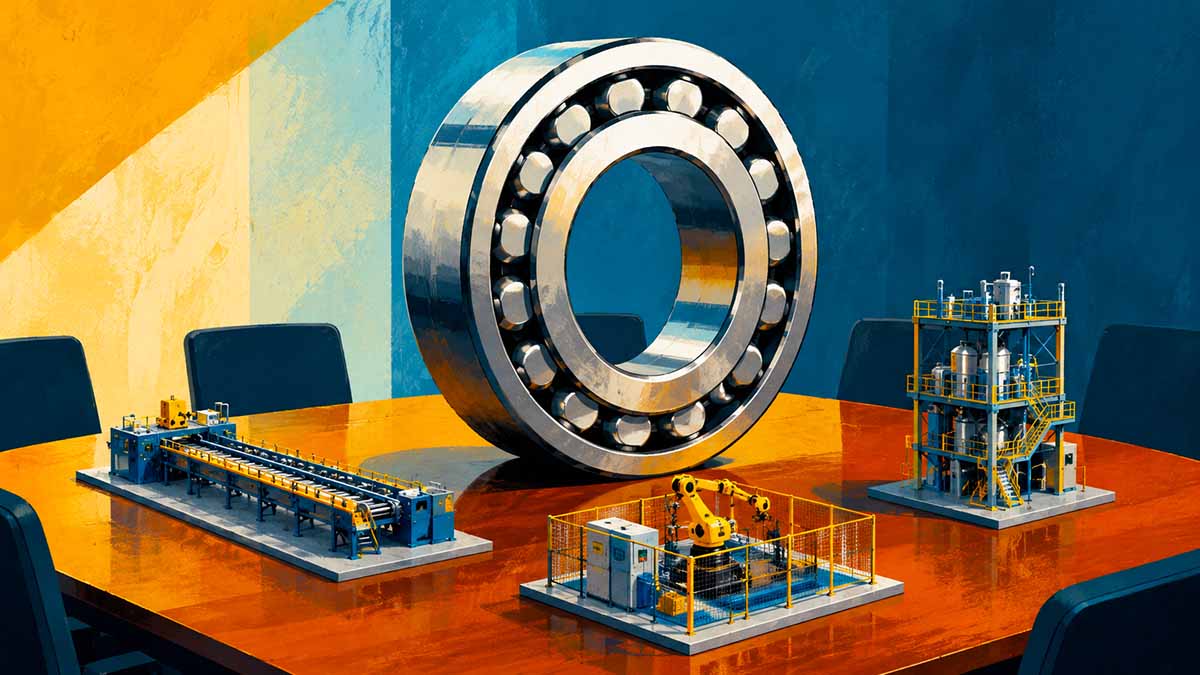
The most successful reliability professionals I’ve worked with all shared one characteristic. They understood equipment. But they understood business even better. They knew every bearing, every pump, every gearbox, and every failure mode. Yet when they walked into the executive conference room, they rarely talked about bearings.
They talked about production. Customers. Cash flow. Risk. Return on investment. Competitive advantage.
That’s why they earned credibility … and credibility earns budgets.
Final Thoughts
Reliability leaders often believe their greatest challenge is obtaining more funding. I would argue their greatest challenge is changing the conversation. The organizations that consistently invest in reliability aren’t doing so because they love maintenance. They’re doing so because someone successfully connected reliability to business performance. When executives clearly see that connection, budgets become far easier to approve.
Reliability isn’t about fixing equipment. It’s about helping businesses perform better. When reliability leaders begin telling that story, they stop asking for budgets and start earning investments … which is what makes maintenance and reliability a lot of fun!
Related: How Operations Leadership Turns Reliability into a Team Sport.