
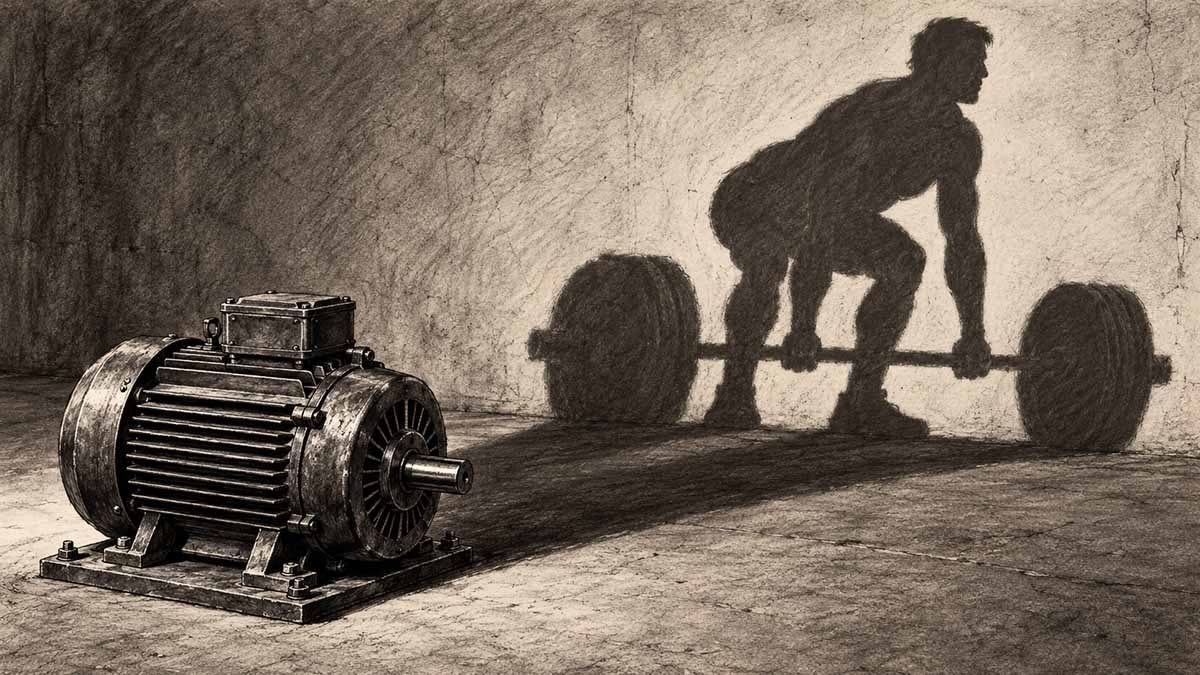

Competition gives preparation a definite purpose. There is an event, a performance requirement, and a period in which the athlete and coach must decide how to get there. Completing today’s training is only part of that work. The more useful question is whether the preparation is moving performance in the intended direction, and what the measurements tell us to change.
Our work with sports readiness has brought that question into closer focus through measurements of the human and machine interface. It also has practical implications for reliability and maintenance, where equipment must be prepared to meet a defined operating demand.
At Human Reliability Intelligence Labs LLC, or HRI Labs, the present work involves sports performance and strength and conditioning, including treadmill activity, squat, bench press, and deadlift, amongst other movements and sports. The interest extends beyond recording a successful performance.
Examining human performance is helping us rethink how we assess equipment capability and operating demand.
We are examining evidence that helps a coach assess readiness, guide preparation for competition, and review the athlete’s response to training both physically and mentally. This draws on experience from our equipment reliability and maintenance services and sensor technologies and competitive strength sports. In turn, examining human performance is helping us reconsider how those services and technologies support decisions about equipment capability, operating demand, and the work needed to improve performance.
Readiness is specific to an assignment. An athlete may be prepared for a technique session and poorly prepared for a maximum effort. The person has not changed between those two decisions; the demand has. Competition adds a longer view: today’s session needs to contribute to the intended physical and mental performance at the event.
Measurements and observations can help the coach choose a direction and review whether the athlete is responding as expected. For reliability personnel, the comparable discipline is defining the required operating duty before interpreting condition data or recommending work. Satisfactory operation under one condition cannot establish capability under every condition.
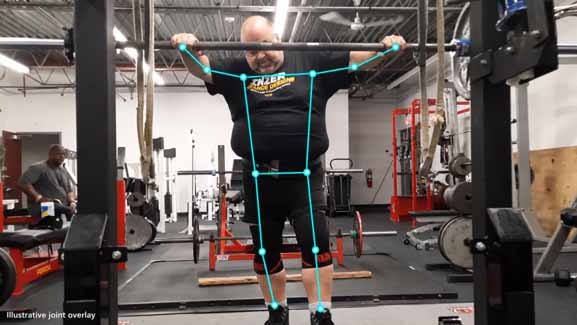
Figure 1. Squat evaluation frame supporting preparation and technique review.
Check the Measurement Before Acting
Equipment practice contributes an essential discipline to this work: check the measurement before explaining the deviation. In our electrical and current signature analysis services, including work with EMPATH and EMPOWER, the analyst must understand the equipment, measurement setup, and operating conditions. [2]
A change in demand can affect the interpretation of a reading. The same care belongs in a sports readiness assessment. A different workload, an incomplete observation, or a change in setup may explain a difference that initially appears to be a change in the athlete. We should not manufacture a performance problem from a measurement problem.
We should not manufacture a performance problem from a measurement problem.
The learning in the other direction is about making those conditions usable. A coach needs to connect a finding with the observed activity, the competition objective, and the next preparation decision. A readiness indication without that connection offers little direction. This has a direct bearing on our equipment sensor and reporting work.
Asset identification, operating demand, measurement quality, and relevant limitations belong with the finding. The technician receiving the report should be able to understand why an additional inspection, repeat measurement, or maintenance action is being recommended without reconstructing the assessment from disconnected records.
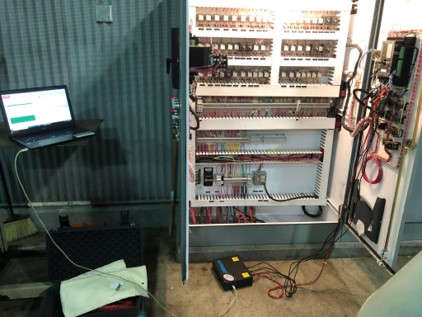
Figure 2. EMPATH connected for data collection. Equipment identification, measurement setup, and operating conditions support interpretation of the resulting evidence.
Account for the Human Side of Performance
Readiness also brings psychology into the discussion in a practical way. Reported sleep, recovery, stress, focus, confidence, perceived effort and motivation can help explain the circumstances of a sports session. These inputs give a coach context; they do not establish a psychological diagnosis.
Confidence, for example, is useful information about the person’s expectations, but it is not proof of capacity. An athlete can feel ready when the observed execution suggests further review. Conversely, an uncertain athlete may perform the task consistently. The value comes from considering the reports and observations together, rather than allowing either to settle the question alone.
For reliability and maintenance personnel, the relevant lesson is how human conditions influence the use of technical information. A technician working a planned assignment has different circumstances from one restoring service under repeated requests for a completion time. Clear instructions, available expertise, interruptions, and pressure affect the decision environment. The Department of Energy’s Human Performance Improvement Handbook examines the contributions of individuals, leaders, and organizations to performance. [1] This gives us a useful way to examine the whole assignment before concluding that an undesirable result was simply human error.
Mental conditioning is part of preparation for that assignment. In sports, rehearsal and attention to useful cues help the athlete carry an instruction into execution. In maintenance, the practical equivalents include reviewing the job, discussing responsibilities, and identifying conditions that require a pause.
Experience matters, but familiarity can also encourage us to skip the preparation. Observations can contribute by explaining the conditions that affect a measurement or recommendation. Our technologies can contribute by presenting those conditions clearly at the point of use. Neither contribution is effective if the person is expected to guess what the system context consists of.
The human and machine interface includes both the physical interaction and the information used to guide it. On one side, we measure the athlete’s response to the equipment and applied demand. On the other, the coach reviews those observations and decides how preparation should proceed.
Sports readiness work makes the connection immediate: the finding must mean something for the session and the competition objective. Equipment assessment also requires us to understand the interaction between a machine and the process it serves. Improving the technology includes making that relationship understandable, so that an observed change can lead to an appropriate action.
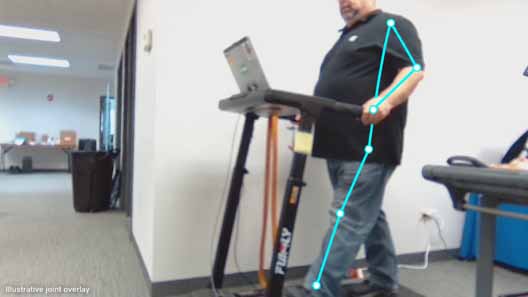
Figure 3. Treadmill evaluation frame with joint overlay for stride measurement. The athlete, equipment, and applied pace form the interaction being reviewed.
Keep Expert Judgment in the Loop
The human in the loop must have authority to review the evidence and influence the recommendation. For HRI Labs, that means the coach can accept, modify, reject, or investigate a proposed improvement in light of the athlete and the intended activity. In reliability and maintenance, the analyst applies equipment knowledge, operating history, and the consequences of the proposed action.
The coach or technician should record a considered decision. It should not become a routine click that transfers an unexplained software conclusion into a work order or athletic assessment. Disagreement is useful information when it identifies something the assessment has missed and should be incorporated into the monitoring system for the specific athlete or industrial application.
The human in the loop must have authority to review the evidence and influence the recommendation.
The shared development lesson is to preserve the relationship between the observation, its interpretation, and the selected action. Our equipment work brings measurement quality, repeatability, and operating history into the sports assessments. Sports readiness work brings closer attention to context, changing performance during a task, and the way an expert uses a recommendation.
These lessons inform local tools that support assessment and review at the edge. Recorded sessions and evaluation cases help us examine software behavior. Each application still needs its own testing; a sports result does not validate an equipment diagnosis, and an equipment result does not validate a human readiness assessment.
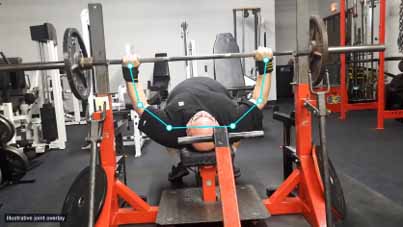
Figure 4. Bench press evaluation frame with joint links. A coach reviews the activity and supporting measurements before acting on a recommendation.
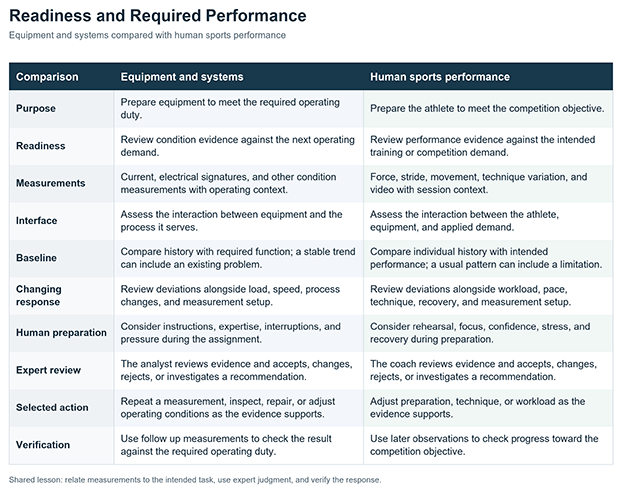
Table 1: Comparison of Industrial Monitoring and Sports Performance and Readiness
Verify the Result of the Work
The relationship continues after the recommendation. In sports, later observations help the coach review whether a change in physical or mental preparation, technique, or workload is moving the athlete toward the competition objective. The direction should be open to adjustment as evidence accumulates.
In our maintenance services, follow up measurements help determine whether the work addressed the condition that prompted it and supported the required operating duty. A completed task and an effective intervention are different findings. Keeping the initial evidence, decision, and subsequent result together gives both efforts a basis for improvement when the expected response does not occur.
A completed task and an effective intervention are different findings.
The useful lesson from sports readiness work is that preparation needs a purpose and a way to evaluate its direction. Measurements of the human and machine interface support decisions about the athlete’s progress toward competition. Our reliability and maintenance services and technologies contribute the discipline of measurement quality, operating context, and verification.
The sports work brings greater attention to the relationship between observed response, expert judgment, and the next action. In both settings, a satisfactory result today is one piece of evidence. The broader responsibility is to understand what must be prepared or improved to deliver the required performance when it matters.
References
[1] U.S. Department of Energy. Human Performance Improvement Handbook, DOE HDBK 1028 2009, Volumes 1 and 2. https://www.energy.gov/ehss/articles/doe-hdbk-1028-2009
[2] MotorDoc. EMPOWER. Public overview of motor current data collection and analysis. https://motordocai.io/empower/