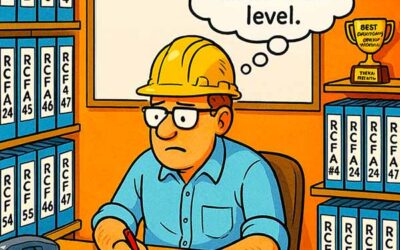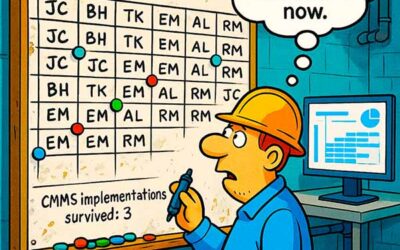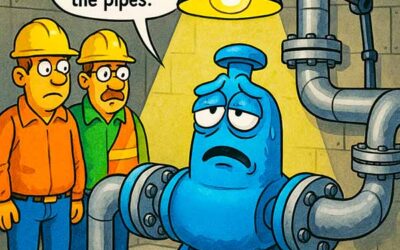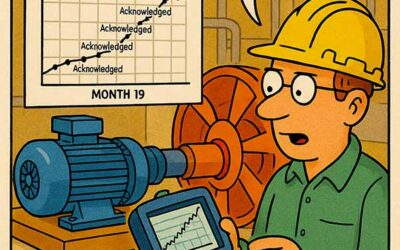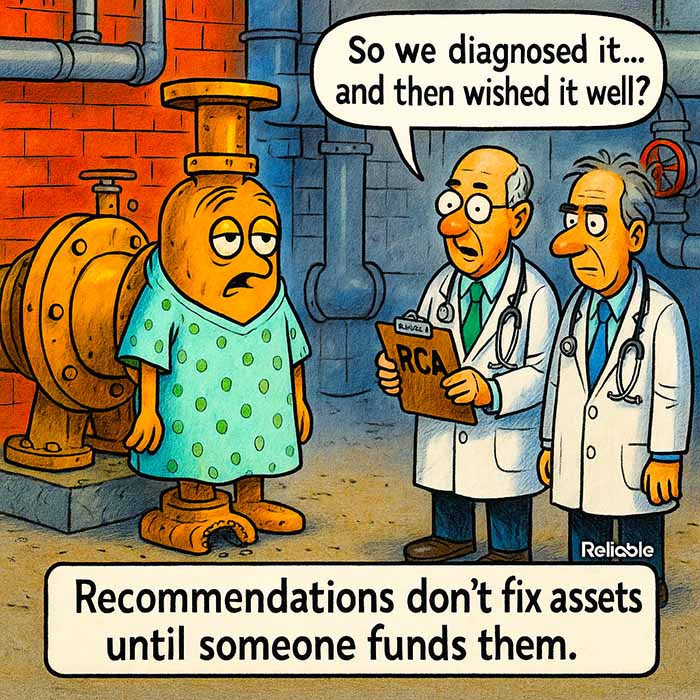

The investigation was thorough. The team identified the failure mechanism, traced it back through contributing factors, and produced a clean report with three solid recommendations. Then the report went into a shared drive folder, and nothing happened. Root cause analysis corrective actions have a completion rate problem, and the consequences show up as repeat failures, wasted investigation effort, and eroding trust in the reliability program.
Industry surveys consistently put the implementation rate for RCA recommendations somewhere between 30% and 50%. That means more than half of the corrective actions generated by formal investigations never make it past the proposal stage. The analysis gets done. The repairs stall.
Why Root Cause Analysis Corrective Actions Stall
The reasons are predictable, and they rarely have anything to do with the quality of the analysis itself. Most RCA recommendations fail at the handoff between investigation and execution.
The most common stall points:
- Recommendations lack a named owner, a due date, and a budget line item, making them suggestions rather than assignments
- Capital requests compete with production priorities, and corrective actions from past failures lose urgency once the immediate crisis passes
- Recommendations are written in engineering language that doesn’t translate to a clear business case for leadership approval
- No tracking system exists to follow recommendations from proposal through completion, so items fall off the radar quietly
Every one of these stall points is a management problem rooted in accountability gaps, competing budgets, and organizational inertia. The root cause failure analysis process itself works fine in most organizations. The breakdown happens downstream, where analysis meets budgets, priorities, and organizational inertia.
An RCA recommendation without an owner, a due date, and a funding source is a wish list entry, and wish lists don’t prevent failures.
The pattern is frustratingly consistent: a significant failure occurs, a team spends 20 to 40 hours investigating, the report identifies the root cause accurately, and the corrective actions sit in a queue until the next failure makes them urgent again. At that point, the organization pays for the same failure twice (once in downtime, once in investigation labor) and still hasn’t fixed anything.
Making Root Cause Analysis Corrective Actions Stick
Closing the loop on RCA findings requires treating corrective actions with the same rigor as any other capital or maintenance project. That means structured handoffs, clear ownership, and regular tracking.
Assign Ownership During the Closeout Meeting
The single most effective change is assigning each corrective action to a specific person during the RCA closeout meeting, with a deadline attached. This sounds basic, but most organizations skip this step. The report gets distributed. Everyone assumes someone else will follow up.
Effective assignment means naming the individual (not a department), defining what “complete” looks like, and setting a realistic timeline that accounts for procurement, scheduling, and outage windows. If the action requires capital funding, the owner should be someone with budget authority or direct access to whoever holds it.
Write Recommendations That Get Funded
A recommendation that reads “replace the coupling with a higher-rated design” gives engineering something to work with. A recommendation that reads “replace the coupling with a higher-rated design ($4,200 installed cost) to eliminate the repeat failure that has caused $87,000 in downtime losses over the past 18 months” gives management a reason to say yes.
The difference between root cause analysis corrective actions that get funded and those that don’t often comes down to how they’re framed. Technical correctness matters, but cost justification moves budgets. Every recommendation should include:
- The specific action required, including part numbers or specifications where known
- Estimated cost to implement (materials, labor, and any required outage time)
- Documented cost of inaction: what the failure has cost historically and what it will cost if it recurs
- A timeline for implementation with key milestones
Framing recommendations this way borrows directly from the logic of 5 whys analysis: keep asking why until you reach the actionable root. The same principle applies to getting the fix approved. Keep asking what management needs to see until the approval happens.
Track Corrective Actions Like Open Work Orders
Root cause analysis corrective actions need the same visibility as any open work order. They should appear on a tracked list, reviewed at a regular cadence (monthly at minimum), with status updates recorded against each item.
Some organizations use their CMMS for this. Others use a standalone tracking spreadsheet or database. The tool matters less than the discipline. What kills implementation is letting items age without review. A corrective action that’s been “pending” for six months without a status update has effectively been abandoned.
Corrective actions reviewed monthly get completed. Corrective actions filed in a shared drive get forgotten.
Build the review into an existing meeting (weekly maintenance review or monthly reliability review) rather than creating a new one. Tie completion rates to overall reliability metrics. When leadership can see that unfunded corrective actions correlate with repeat failures, the risk of deferred maintenance risks becomes harder to ignore.
Track three numbers: total open corrective actions, average age of open items, and completion rate over the trailing 12 months. If the average age is climbing, the process is falling behind. If the completion rate drops below 70%, the RCA program is generating more work than the organization can absorb, and either the volume needs to drop or the resources need to increase.
The organizations that close the loop on their RCA corrective actions consistently share one trait: they treat the recommendation as the starting point, with the real work happening after the report is written. The investigation provides the map. The fix prevents the next failure.