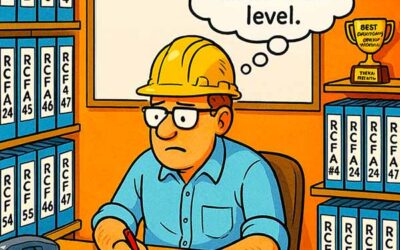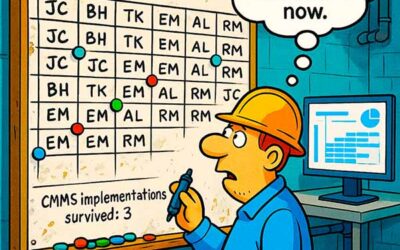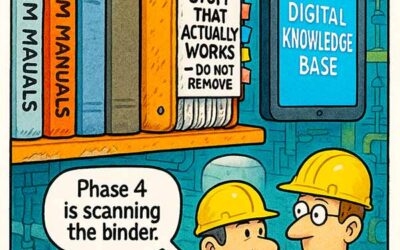

Every plant has a filing cabinet (or a shared drive, or a dusty binder on someone’s desk) full of carefully engineered repair procedures. Step-by-step instructions, torque specs, alignment tolerances, all of it documented and approved.
Every plant also has a second, unwritten set of procedures: the ones technicians actually follow at 3 a.m. when a critical pump goes down and production is screaming for output.
The gap between those two worlds is where how to improve maintenance repair quality becomes a serious operational question. Closing that gap requires more than good intentions. It demands systematic changes to planning, training, parts management, and accountability.
This problem cuts across industries, from petrochemical plants to food processing to power generation. The equipment differs, but the pattern holds: carefully documented procedures gather dust while field crews invent workarounds on the fly. And the consequences compound over months and years.
What Poor Maintenance Repair Quality Actually Costs
Most organizations track downtime. Fewer track rework: the number of times a technician returns to fix the same piece of equipment within 30, 60, or 90 days. Rework rates above 10% signal a systemic repair quality problem, and plenty of plants run north of 20% without knowing it.
The costs stack up fast. A single rework event on a centrifugal pump can eat 8 to 16 hours of labor, plus parts, plus the production loss from a second unplanned outage. Multiply that across dozens of assets and several months, and you’re looking at six figures annually in avoidable expense.
Rework rates above 10% signal a systemic repair quality problem, and plenty of plants run north of 20% without knowing it.
The deeper cost is harder to measure. When repairs keep failing, operators lose trust in the maintenance team. They start hoarding production time, resisting planned shutdowns, and pushing equipment past safe operating limits.
That erosion of trust can take years to rebuild, even after repair quality improves. And it feeds a vicious cycle: less cooperation from operations means tighter maintenance windows, which means more pressure to cut corners, which means more failures.
Rework also hides in CMMS data. If your system doesn’t flag repeat work orders on the same asset within a defined window, the problem stays invisible. Maintenance teams end up treating every call as a new event instead of recognizing it as a pattern.
Common Root Causes When Maintenance Repair Quality Suffers
The accurate answer to why repairs fail almost always points upstream, toward systems and processes that set technicians up for trouble.
The most frequent root causes include:
- Missing or outdated job plans that force technicians to improvise under pressure, relying on memory and tribal knowledge instead of documented procedures
- Inadequate parts kitting, where the wrong bearing, seal, or fastener shows up at the job site (or nothing shows up at all)
- Time pressure from production that compresses a four-hour procedure into ninety minutes, guaranteeing shortcuts
- Insufficient precision maintenance training on alignment, lubrication, balancing, and torque standards
- Poor feedback loops that prevent lessons from one repair informing the next
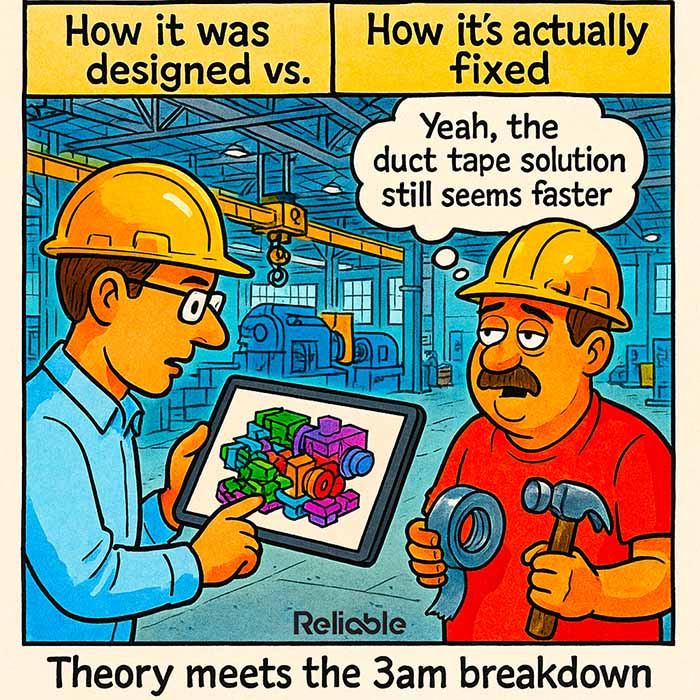
When a technician reaches for duct tape or a zip tie, the real problem lives upstream: in the planning process, the parts room, or the training program. Fixing repair quality means fixing those systems first.
Every shortcut on the shop floor traces back to a gap in the planning process, the parts room, or the training program.
How to Improve Maintenance Repair Quality in Five Steps
Turning repair quality around requires changes at the system level. Individual effort from dedicated technicians won’t compensate for broken processes. Here are five practical steps that work.
1. Build Job Plans Worth Following
A job plan sitting unread in a CMMS is decoration. Useful job plans include specific part numbers, tool requirements, safety prerequisites, torque values, and step-by-step procedures with photos where possible.
The best job plans come from direct input from the technicians who do the work. If your planning team hasn’t spent time on the floor watching repairs happen, the plans will reflect theory rather than practice. Strong maintenance planning ties procedures to real field conditions, and that connection dramatically reduces improvisation during repairs.
2. Track Rework Like You Track Downtime
You can’t fix what you don’t measure. Tag every work order with the asset ID and failure code, then run a monthly report showing repeat repairs within 90 days. This data reveals which assets, which failure modes, and which repair procedures are driving the most rework.
Once you can see the rework clearly, apply root cause failure analysis to the top offenders. Often you’ll find a handful of recurring issues that account for a disproportionate share of repeat failures.
3. Invest in Precision Maintenance Skills
Shaft alignment, dynamic balancing, proper lubrication practices, and calibrated torquing are skills that degrade without regular practice and reinforcement. Annual refresher training pays for itself within a single avoided rework event.
Pair classroom sessions with supervised field application. Technicians need to practice on real equipment under realistic conditions. The goal is muscle memory backed by understanding, and that only develops through hands-on repetition with coaching.
Annual refresher training in precision maintenance skills pays for itself within a single avoided rework event.
4. Fix the Parts Problem
Wrong parts cause bad repairs. A kitting program that stages the correct bearings, seals, gaskets, couplings, and fasteners before the job starts eliminates the single most common reason technicians improvise.
Partner with your spare parts management process to verify that critical spares are stocked, properly stored, and matched to the correct asset specifications. A $12 wrong-spec seal can trigger a $40,000 component failure downstream. Proper kitting also speeds up the job, giving technicians more time for precision work instead of scavenging for parts.
5. Close the Feedback Loop
After every major repair, spend ten minutes capturing what went right and what went wrong. Did the job plan match reality? Were the right parts staged and available? Was there enough time to complete the work properly?
Feed those answers back into the job plan and the planning process. This is how to improve maintenance repair quality over time: small, continuous corrections based on actual field experience rather than assumptions. The best organizations run a brief post-job review on every critical asset repair, and the insights accumulate fast.
Why Better Repair Quality Changes Everything
Organizations that drive rework rates below 5% typically see 15 to 25% reductions in overall maintenance labor costs. They also see fewer unplanned outages, longer mean time between failures, and a maintenance workforce that takes real pride in first-time fix rates.
Equipment failure patterns shift, too. When repairs are done correctly (precision-installed, with the right parts, at the proper specifications) assets start failing for predictable, wear-based reasons instead of random, repair-induced ones. That makes condition monitoring programs far more effective, because analysts can trust their baselines.
The win that matters most is cultural. When technicians trust that they’ll receive the right tools, the right parts, and enough time to do quality work, they stop cutting corners. That shift starts the moment leadership commits to improving maintenance repair quality at the system level, and it compounds with every job done right the first time.