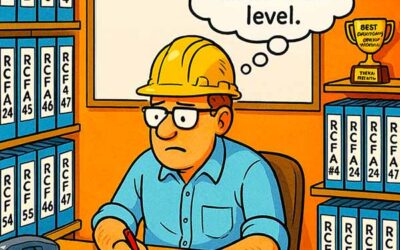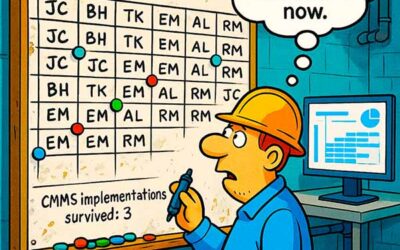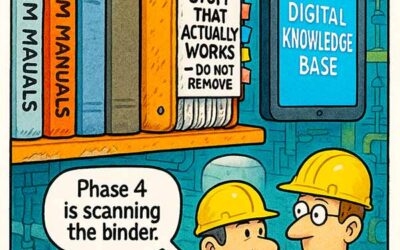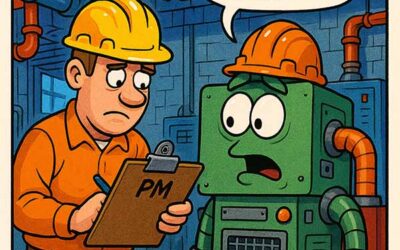
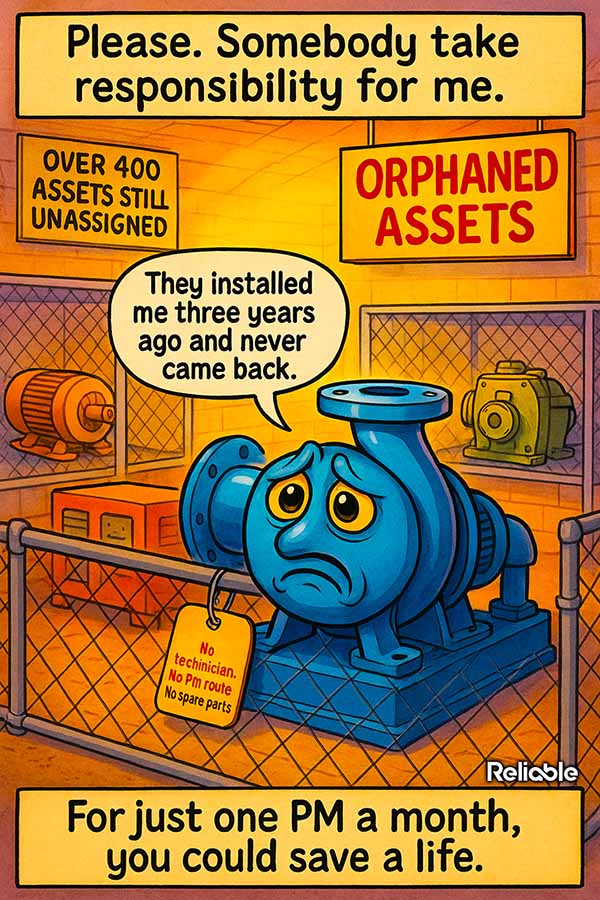

Walk through almost any plant and you’ll find them: equipment running without a technician assigned, no PM route, no spare parts staged, no one who claims responsibility. The asset exists in the CMMS, it shows up in the register, but for all practical purposes it’s invisible to the maintenance program.
That’s an orphaned asset. And most plants have more of them than they realize.
What Makes an Asset Orphaned
An orphaned asset is any piece of equipment that has fallen outside your accountability structure. No owner means no one writes PMs for it. No PM route means it goes uninspected. No spare parts staged means when it fails, you’re scrambling.
The tag usually reads something like: installed and never revisited. It might have been part of a capital project that closed out without assigning operational ownership. It might have been transferred between departments and lost in the handoff. It might have been running fine for two years and simply never questioned.
Running fine, until it isn’t.
A piece of equipment with no owner has no advocate, no inspection schedule, and no one who loses sleep when it goes down.
The Scale of the Problem
Industry audits consistently show that plants with more than 500 assets in their CMMS carry 15 to 25 percent of those assets with incomplete ownership records. In a facility with 2,000 assets, that’s potentially 400 pieces of equipment drifting through your operation without a maintenance net under them.
Most reliability leaders don’t know their number. They haven’t audited for ownership gaps because ownership gaps aren’t the kind of thing that shows up in a KPI dashboard. You won’t see it in your MTBF report. You won’t catch it in a work order backlog review. It surfaces when something catastrophic fails and the post-mortem reveals no one had been looking at it.
Asset Ownership vs. Failure Rate
| Asset Condition | Has Owner | Has PM Route | Avg. Failure Rate |
| Assigned + PM Route | Yes | Yes | 4% |
| Assigned, No PM Route | Yes | No | 18% |
| Orphaned (No Owner, No PM) | No | No | 41% |
Source: Industry CMMS audit data composite. Failure rate = unplanned failure events per 100 assets per year.
The pattern is consistent: assets with both an owner and a PM route fail at a fraction of the rate of orphaned assets. The gap between 4 percent and 41 percent isn’t a rounding error. It’s a maintenance program working versus a maintenance program pretending to work.
Why Ownership Gaps Persist
Capital projects are the biggest culprit. A new line goes in, commissioning closes out, the project team disperses, and the asset gets added to the CMMS with a serial number and a location but no assigned technician and no PM template. The operations team assumes maintenance has it. The maintenance team assumes it was handed off. Everyone assumes someone else did the paperwork.
The Commissioning Handoff Problem
Most commissioning checklists confirm that equipment runs. Few require proof of ownership assignment before project closeout. That’s a structural gap, and it’s been standard practice in industrial operations for decades.
The fix is procedural: any asset added to the CMMS should require a completed owner field, an associated PM template, and a spare parts review before the work order can be closed. The technology to enforce this already exists in most platforms. The discipline to require it usually doesn’t.
Most commissioning checklists confirm that equipment runs. Few require proof of ownership assignment before the project closes out.
Reorganizations and Asset Transfers
Departmental reorganizations are the second-biggest source of orphaned assets. When a team restructures, asset ownership often gets shuffled informally: verbal agreements, email threads, whiteboard sessions. None of it updates the CMMS. Six months later, the reorganization is forgotten and the assets are in limbo.
A technician who leaves and isn’t replaced takes their asset assignments with them. Unless your program actively redistributes those assignments, the coverage disappears quietly.
How to Find Your Orphaned Assets
An ownership audit doesn’t require a consultant or a new software subscription. You need a CMMS export and a few hours with someone who knows the asset register. Start by pulling every active asset record and filtering for these gaps:
- No assigned technician or craft group
- No linked PM work orders in the past 12 months
- No spare parts associated in the storeroom system
- No criticality classification recorded
- Assets added via capital project in the last three years with no PM history
Any asset that hits two or more of those criteria is effectively orphaned. Prioritize by criticality: if you don’t have criticality data, start with rotating equipment, then electrical distribution, then anything in a single-point-of-failure position on the production line.
Any asset that hits two or more of those criteria is effectively orphaned. Start with rotating equipment and single-point-of-failure positions.
Assigning Ownership Is a Reliability Decision
Ownership assignment sounds administrative. It isn’t. When you assign a technician to an asset, you’re creating accountability. That person knows the equipment, notices when something sounds different, and writes the work request before the failure event happens. That’s the entire logic behind route-based maintenance.
Plants that treat ownership as a clerical detail tend to have reactive maintenance cultures. They’re busy, they’re good at fixing things, and they can’t figure out why the MTBF numbers won’t improve. The asset register tells you why: nobody owns the problem until it becomes an emergency.
What a Clean Asset Register Actually Looks Like
Every active asset has a primary owner and a backup. Every critical asset has a PM template with defined frequency and task steps. Storeroom records link back to asset records. Criticality rankings drive PM intervals and inspection frequency.
That’s the standard. Most plants are somewhere between that standard and organized chaos, and the distance between those two states is measurable in downtime hours and maintenance overtime costs.
Plants that treat ownership as a clerical detail tend to have reactive maintenance cultures. They can’t figure out why MTBF won’t improve.
Start With 10 Assets
A full ownership audit can feel like a multi-month project. It doesn’t have to start that way. Pull your top ten critical assets and verify ownership, PM coverage, and spare parts status this week. Fix what’s missing. Document what you find.
That process, repeated across asset classes over three to six months, closes most of the gaps in a typical plant. You don’t need a big initiative. You need a consistent habit and a CMMS field that someone checks before a capital project closes out.
The pump sitting in the corner with no technician assigned, no PM route, and a tag that says ‘installed three years ago’ is a signal. Your maintenance program is showing you exactly where the coverage ends. The question is whether anyone acts on it.