When Everything’s Urgent, Nothing Is
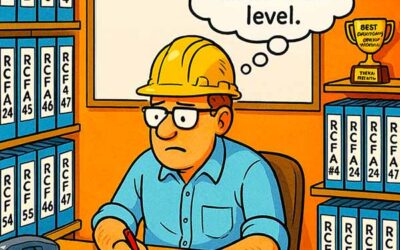
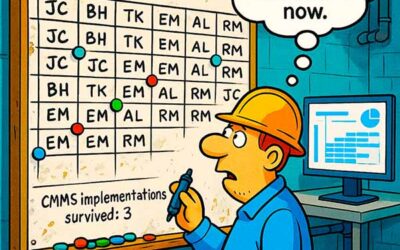
Walk into almost any maintenance office and you’ll find the same scene: a whiteboard full of “urgent” and “emergency” tags. Supervisors are firefighting. Technicians are triaging. Operators are frustrated. Everyone’s busy, but very little of it is planned, strategic, or reliable.
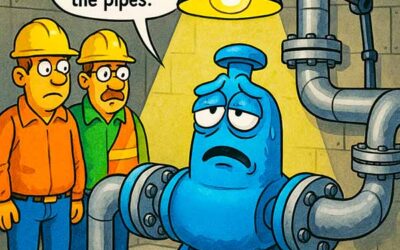
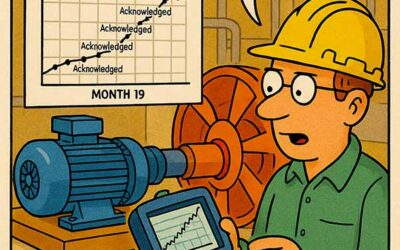
This is priority inflation, the maintenance world’s version of economic inflation. Just as too much money in circulation devalues the currency, too many “urgent” requests devalue the concept of urgency. When everything’s a crisis, nothing truly is.
Urgency only has value when it’s scarce. Treat every task like an emergency, and you’ll never stop living in one.
Understanding how to prioritize maintenance work orders is not about slowing things down. It’s about regaining control. When you apply clear criteria for urgency, you move from emotional reactions to logical prioritization. You focus effort where it delivers measurable results: uptime, safety, and asset longevity.
The best maintenance teams don’t work harder; they work smarter through consistent, widely understood, and respected prioritization frameworks.
The Cost of Priority Inflation
Priority inflation has predictable and painful consequences. It transforms reliability teams from permanent first responders into strategic planners. The hidden costs ripple through every part of the operation.
1. Lost productivity: When technicians are constantly pulled off planned work to chase the latest “urgent” job, preventive maintenance (PM) tasks slip through the cracks. The backlog grows, and so does unplanned downtime.
2. Skyrocketing costs: Emergency parts orders, overtime, and unscheduled line stops all drain the maintenance budget. Studies show that unplanned work can cost 3–5 times as much as planned maintenance.
3. Reduced asset reliability: Chronic priority inflation erodes mean time between failures (MTBF) and reduces overall equipment effectiveness (OEE). The plant becomes a reliability rollercoaster; never stable, always behind.
4. Burnout and disengagement: When technicians see every ticket marked “critical,” they stop believing the system matters. Morale drops, and experienced people quietly check out.
The fix starts with redefining what “urgent” really means. A structured, transparent approach to prioritizing maintenance work orders transforms firefighting into foresight.
A Framework for Rational Prioritization
A solid prioritization process isn’t about bureaucracy; it’s about clarity. The most reliable plants use a data-driven approach grounded in risk management. Each work order is evaluated against objective criteria that determine its actual priority level.
Here’s a proven framework for how to prioritize maintenance work orders effectively:
- Assess safety and environmental risk.
Anything posing a threat to worker safety or regulatory compliance receives top priority. No exceptions. - Evaluate production impact.
If a failure will stop production or compromise quality, elevate it. But avoid labeling everything production-related as “emergency.” - Check redundancy.
If a critical pump has a spare, it might not demand immediate action. Use redundancy to plan efficiently rather than react emotionally. - Analyze failure progression.
Condition monitoring data like vibration, oil analysis, infrared, motor current, and ultrasound. It tells you how close an asset is to functional failure. Use data, not guesses. - Estimate time-to-failure and repair effort.
Knowing how long you have before breakdown allows more innovative scheduling. For example, a bearing showing rising vibration might have 72 hours before it crosses the failure threshold. - Bundle related work.
Group tasks logically. If you’re taking down a machine for one repair, complete all other pending maintenance tasks in the same window.
A structured matrix (often a 1–5 or A–E scale) helps quantify these decisions. For example:
- Priority 1: Immediate safety or environmental threat
- Priority 2: Production-critical failure in progress
- Priority 3: Potential issue identified by condition monitoring
- Priority 4: Routine preventive maintenance
- Priority 5: Cosmetic or minor improvement
With this structure, every technician knows why a job matters, not just that it matters.
Priority discipline usually collapses at the tooling layer. A well-designed 1 to 5 matrix still fails when urgency lives in a supervisor’s head, condition data sits in one system, and work orders sit in another. By the time a rising vibration reading reaches a technician, someone has already relabeled the job as an emergency.
MaintainX closes that gap by keeping work orders, asset history, PM schedules, and IIoT sensor data in a single mobile platform, so priority is assigned against real failure data and stays visible from planner to technician. Condition alerts generate triaged work orders automatically, PMs stay on the calendar instead of slipping when firefighting spikes, and planned work becomes the default. Customers using MaintainX report an average 32% reduction in unplanned downtime, which is what a prioritization framework is supposed to deliver once the discipline reaches the floor.
Embedding Prioritization Into Culture
Even the best system fails without cultural buy-in. The real challenge isn’t building a matrix—it’s getting everyone to respect it. This is where leadership must be uncompromising.
Set and enforce the rules.
Make the priority matrix visible, and communicate it often. If someone tries to bypass it with “this is special,” the system breaks. Accountability must be universal.
Train the entire plant.
Operators, engineers, and planners all need to understand how to correctly prioritize maintenance work orders. Provide examples, case studies, and post-mortems on mis-prioritized jobs.
Link KPIs to prioritization discipline.
Monitor metrics like:
- Planned vs. unplanned work ratio
- Average work order response time by priority
- Number of emergencies prevented through predictive detection
These KPIs reveal whether the system is working or if urgency inflation is creeping back in.
Promote success stories.
Highlight when a team correctly identified a priority and prevented downtime. Turning prioritization success into recognition reinforces the correct behavior.
A strong prioritization culture doesn’t emerge from software or procedures. It comes from trust. Everyone must believe that when they assign or follow a priority, it means something.
From Chaos to Control: The Reliability Payoff
Plants that master how to prioritize maintenance work orders see transformations beyond scheduling. They shift from chaotic reactivity to predictable, data-driven operations.
The outcomes are measurable:
- Planned work exceeds 80% of total maintenance effort.
- Emergency jobs drop by 50% or more.
- Maintenance costs as a percentage of Replacement Asset Value (RAV) decline steadily.
- Mean Time Between Failures (MTBF) increases.
- Technicians reclaim control of their time and their sanity.
Prioritization discipline also strengthens communication between operations and maintenance. Instead of endless debates over “whose job is more urgent,” everyone speaks a shared language of risk, consequence, and timing.
Ultimately, prioritization isn’t just about choosing which job to do next. It’s about ensuring that every maintenance action supports the plant’s strategic goals. It aligns maintenance with production, safety, and profitability.
A priority system without discipline is just a list of wishes masquerading as a plan.
Final Thoughts
When you know how to prioritize maintenance work orders, you stop reacting and start engineering reliability. Urgency regains its meaning. Schedules become predictable. Performance stabilizes.
The best maintenance teams treat prioritization as a form of control; an intentional act that directs effort toward what truly matters. In an environment where every minute counts, learning to say “not now” is the smartest reliability move you can make.
Because the truth is simple: when everything’s urgent, nothing is. But when you decide what truly matters, reliability thrives.