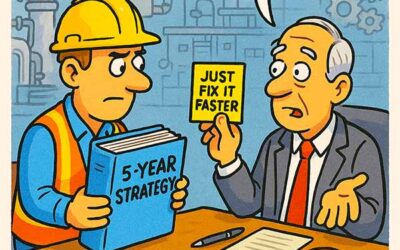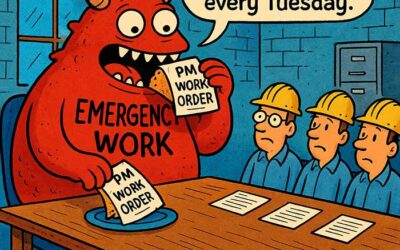
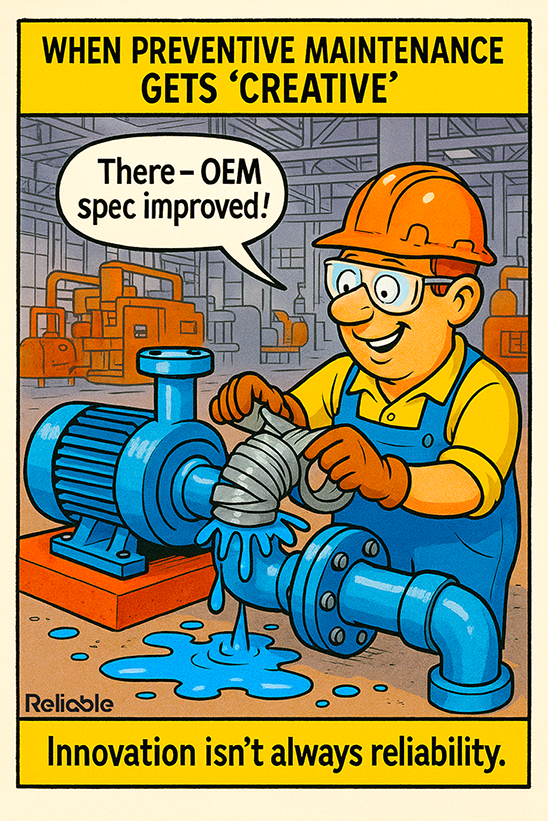

Every plant has skilled technicians who take pride in solving problems quickly and keeping production running. Their ingenuity often saves time and prevents costly downtime. But even the most practical field adjustments like rerouting a line, substituting a seal, or applying a quick fix to control a leak can unintentionally introduce variability if they aren’t documented or validated.
Even small undocumented changes can quietly rewrite an asset’s reliability story.
These actions come from commitment, not carelessness. Yet when preventive maintenance drifts from verified procedures, subtle differences begin to appear between identical assets. Over time, those small, undocumented changes can complicate troubleshooting, distort reliability data, and make it harder for predictive systems to recognize true failure patterns.
The preventive maintenance inspection checklist protects that valuable craftsmanship by providing a shared standard, a framework that channels technician experience into consistent, validated action. It’s not bureaucracy; it’s the structure that ensures every asset performs as designed while preserving the professional judgment and expertise of the people maintaining it.
Why the Preventive Maintenance Inspection Checklist Matters
A preventive maintenance inspection checklist defines repeatable excellence. It’s how world-class plants translate reliability theory into daily execution. Without it, every task becomes tribal knowledge and is passed by memory, prone to drift, and vulnerable to “creative” misinterpretation.
OEM specs, torque limits, and calibration values exist for a reason. They reflect engineering intent: the conditions where that equipment has been tested and proven. When field technicians bypass those boundaries, the entire reliability system becomes compromised.
A robust preventive maintenance inspection checklist:
- Codifies standards – so no technician improvises critical tolerances.
- Captures inspection data – allowing trends to guide predictive maintenance.
- Ensures traceability – linking every action to work order, asset, and result.
- Drives consistency – ensuring identical assets perform identically across shifts and sites.
Plants that thrive in reliability treat their checklists as living quality systems, not static paperwork.
How Improvisation Erodes Reliability
It’s easy to underestimate the impact of a single “temporary fix.” But every deviation from the preventive maintenance inspection checklist carries a cost that rarely appears on the surface.
- Hidden Variability
Two pumps built the same way should perform the same way. But if one has been modified with unapproved sealants or fittings, its vibration and temperature data become incomparable. The analytics break. Predictive models misfire. Reliability engineering loses visibility. - Maintenance Inflation
“Creative” fixes require constant babysitting. A hose clamp instead of a flange? That’s now an inspection item, forever. Improvisation multiplies workload without improving uptime. - Data Contamination
When assets are no longer configured as documented, CMMS data becomes unreliable. A technician logging vibration or oil analysis readings can’t trust baselines that no longer reflect the equipment’s actual state. - Safety Exposure
Unverified materials, pressures, or electrical configurations can introduce risks beyond mechanical failure, creating safety incidents from maintenance “creativity.”
Reliability is not built on improvisation. It’s built on precision.
How to Strengthen Your Preventive Maintenance Inspection Checklist
If your checklist isn’t evolving, it’s decaying. Equipment changes, operating conditions shift, and new insights emerge from failure analysis. The key is to make the checklist dynamic that’s structured yet adaptive.
Here’s how to elevate it:
1. Integrate Predictive Insights
Use vibration, oil analysis, and thermography data to determine what inspection points truly drive failures. Convert these into checklist steps to target the highest-risk components.
2. Digitize the Process
Move from paper to digital checklists. Mobile CMMS platforms allow timestamped verification, photo capture, and real-time data syncing. This creates audit trails and eliminates guesswork.
3. Close the Feedback Loop
Encourage technicians to flag recurring issues in the checklist. Route that feedback through engineering to evaluate whether changes are needed. Controlled iteration—not ad hoc creativity—keeps reliability data clean.
4. Standardize Across Sites
Global organizations struggle when each plant develops its own “version” of maintenance. A unified preventive maintenance inspection checklist keeps benchmarks comparable and performance metrics credible.
5. Audit for Compliance
A checklist is only as good as its adherence. Conduct periodic audits; not to punish, but to validate that best practices are being followed and to detect deviations early.
This structure allows innovation to thrive inside the framework of reliability, not outside it.
Culture: From Improvisation to Discipline
The difference between a reactive and a reliable plant is cultural, not technological. Discipline – not creativity – defines mature maintenance organizations.
A preventive maintenance inspection checklist embodies that discipline. It replaces memory with structure, opinions with evidence, and improvisation with repeatable excellence. It’s what allows new hires to perform like veterans, and veterans to leave behind a legacy of reliability, not folklore.
Discipline doesn’t limit innovation, it gives it a foundation strong enough to last.
The goal isn’t to suppress innovation but to validate it. Great plants capture technician creativity, test it through engineering rigor, and – if proven – document it into the official maintenance procedure. That’s how improvement becomes institutional rather than accidental.
Because in maintenance, “innovation” without documentation isn’t progress, it’s entropy.
Expanding Reliability with Data-Driven Maintenance and Continuous Improvement
While the preventive maintenance inspection checklist ensures consistent execution, long-term reliability excellence comes from connecting it to a broader ecosystem of data-driven maintenance practices, condition-based monitoring, and continuous improvement programs. Plants that integrate these elements evolve from reactive repair cycles to proactive performance management—turning maintenance into a strategic advantage.
From Data Collection to Intelligent Maintenance Execution
A robust preventive maintenance plan begins with accurate asset hierarchy documentation and comprehensive equipment maintenance records. By mapping every component’s history, maintenance teams can identify repeat failure modes, track repair frequency, and align maintenance work orders with operational priorities. This forms the foundation for more advanced strategies such as predictive maintenance programs, asset performance management (APM), and reliability-centered maintenance (RCM) frameworks.
When data guides inspections, maintenance stops guessing – and starts preventing.
Integrating condition monitoring technologies including vibration analysis, infrared thermography, ultrasonic testing, and oil analysis programs into the preventive framework allows technicians to move from fixed schedules to data-based interventions. When these inspection findings feed directly into the preventive maintenance inspection checklist, the checklist becomes a living document that evolves with real asset conditions. Instead of performing generic time-based checks, teams focus on early-warning indicators that truly predict failure.
Connecting Digital Systems to Drive Reliability Insights
The next frontier lies in linking CMMS (computerized maintenance management systems) and EAM (enterprise asset management) platforms with the checklist workflow. Digital inspection forms, automated task reminders, and real-time maintenance reporting eliminate gaps in communication and documentation. A technician’s input – temperature readings, vibration trends, or visual notes – instantly syncs to the asset record. This integration allows maintenance leaders to analyze trends across shifts, departments, or even multiple facilities, revealing systemic reliability bottlenecks.
Continuous improvement relies on leveraging these insights. Periodic maintenance performance reviews, OEE (overall equipment effectiveness) analysis, and root cause failure analysis (RCFA) meetings convert checklist data into actionable reliability improvements. Instead of guessing at problems, leaders can quantify the impact of each inspection point; whether it’s extending mean time between failures (MTBF), reducing mean time to repair (MTTR), or optimizing spare parts usage.
To sustain this cycle, plants should regularly update their maintenance standard operating procedures (SOPs), enhance technician training programs, and benchmark their results against industry maintenance KPIs. By merging the preventive maintenance inspection checklist with digital tools, condition monitoring, and structured feedback loops, organizations build a culture of precision and foresight.
Reliability stops being a maintenance goal and becomes a measurable business outcome driven by discipline, verified by data, and sustained through continuous improvement.
Reliability Starts With the Basics
Every maintenance manager wants smarter systems, predictive analytics, and digital twins. But no technology can fix a bad process. The preventive maintenance inspection checklist is the control layer between reliability theory and execution reality.
When it’s enforced and continuously refined, it builds reliability muscle task by task, day by day. But when it’s ignored, maintenance slips back into firefighting, and equipment health becomes a matter of luck.
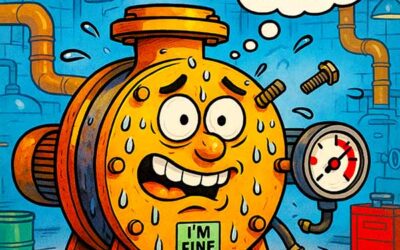
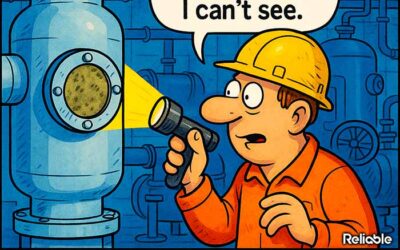
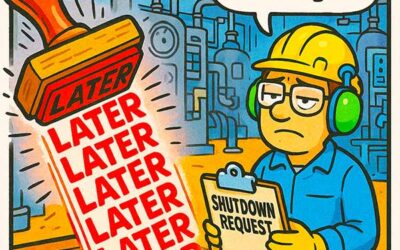
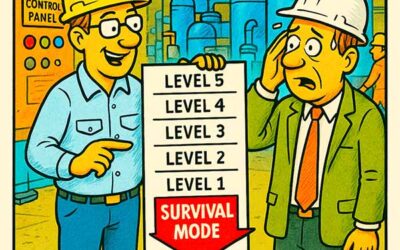
The cartoon’s humor hides a hard truth: the gap between creativity and reliability is measured in failures. Keeping that gap closed takes discipline, structure, and an unwavering respect for the checklist that keeps your plant running.