
Why RCM II Implementation Matters More Than Ever
Organizations often say they “do RCM,” but few truly implement it with rigor. The first generation of reliability-centered maintenance brought structure to failure analysis. Still, RCM II implementation best practices push it further by integrating decision logic, data science, and cross-functional accountability.
Today’s manufacturing environments are too complex for intuition alone. Machines interact, failure modes overlap, and the margin for downtime shrinks daily. Successful programs don’t just perform analyses; they institutionalize learning. That’s where RCM II excels: translating knowledge into systems, workflows, and measurable performance outcomes.
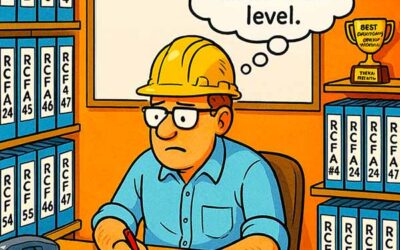
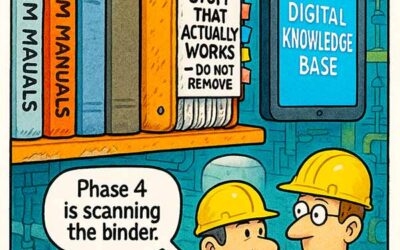
When RCM II is applied correctly, it becomes a framework for precision maintenance, not another binder on a shelf.
Laying the Groundwork for Success
Every sustainable reliability initiative begins with cultural and data readiness. The first RCM II implementation best practice is recognizing that maintenance excellence isn’t a department; it’s a mindset embedded across operations.
1. Build the Right Team
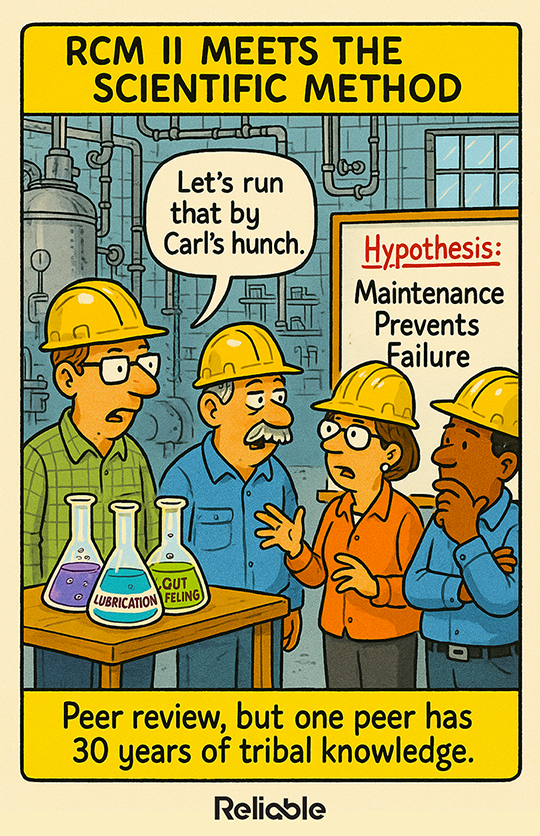
An RCM II analysis is only as strong as the expertise behind it. Cross-functional participation from maintenance, engineering, operations, and safety ensures that every perspective is represented. The blend of experience and data literacy creates balance—tribal knowledge validated by analytics.
2. Define the System Boundaries
Before identifying failure modes, clearly define the asset’s functional boundaries. What does “success” mean operationally? What does “failure” look like? RCM II thrives on precision, and vague system definitions are the root of many failed programs.
3. Use Data, Not Assumptions
Legacy maintenance programs often rely on intuition—“we’ve always done it this way.” In contrast, RCM II implementation best practices require evidence. Pull in CMMS histories, condition monitoring data, and failure analysis reports to establish real performance baselines.
When teams see the data rather than just opinions, reliability becomes measurable, not mythical.
Executing the RCM II Process Effectively
The structured logic of RCM II turns reliability from art to science. However, following the seven-question framework mechanically isn’t enough. The best implementations infuse discipline with iteration.
1. Identify and Prioritize Critical Assets
Not every machine deserves a full RCM II analysis. Focus on systems whose failure has the highest impact on safety, production, or cost. A tiered approach—critical, semi-critical, non-critical—maximizes ROI.
2. Perform Functional Failure Analysis with Context
For each asset, define its primary and secondary functions, then explore failure modes. The insight comes from context: environmental conditions, operating cycles, and human interactions. RCM II implementation best practices treat this as an investigative process, not a paperwork exercise.
3. Select Tasks That Are Technically Feasible and Worth Doing
RCM II doesn’t promote maintenance for its own sake. It filters tasks through two questions:
- Can the task detect or prevent the failure?
- Is it worth the cost compared to the consequence?
This is where condition-based maintenance often replaces routine intervals, driving both cost efficiency and reliability gains.
Institutionalizing Continuous Improvement
Even a perfectly executed RCM II analysis fails if it isn’t sustained. The fourth pillar of RCM II implementation best practices is embedding results into daily operations.
1. Integrate with CMMS and Performance Metrics
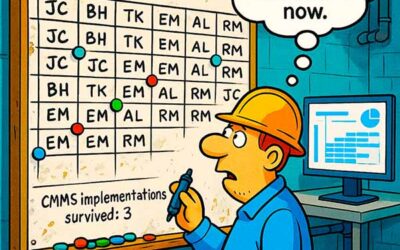
Link RCM II outcomes to your CMMS. Scheduled tasks, condition monitoring triggers, and performance KPIs must trace directly back to RCM logic. This ensures traceability and accountability when results are reviewed.
2. Train and Communicate Relentlessly
RCM II fails silently when operators don’t understand the “why.” Every technician should know the intent behind the tasks they perform. Build short, focused training loops after each analysis session.
3. Review, Refine, and Revalidate
No maintenance plan is static. As assets age, production demands shift, and technologies evolve, revisit assumptions. Annual reviews of RCM II logic keep the program aligned with reality.
When new data contradicts old rules, update the analysis. The best organizations treat RCM II as a living experiment, not a finished project.
From Program to Culture
The ultimate goal of RCM II implementation best practices isn’t just fewer breakdowns; it’s organizational learning. A plant that understands why failures occur and how to prevent them outperforms one that simply reacts faster.
When leadership supports RCM II as part of the reliability culture, decision-making changes, and operators report anomalies earlier. Planners question task value. Engineers validate assumptions with evidence.
This culture shift turns maintenance from a cost center into a source of competitive advantage. Every adjustment, inspection, and interval becomes part of a continuous feedback loop that strengthens the business.
Conclusion: Reliability by Design
RCM II’s true power lies in disciplined, evidence-based implementation. The best practices, team integration, data validation, structured analysis, and continuous feedback move reliability from theory to operational fact.
In the end, plants that embrace RCM II implementation best practices stop chasing failures. They start engineering reliability into everything they do, and that’s the real mark of maturity.