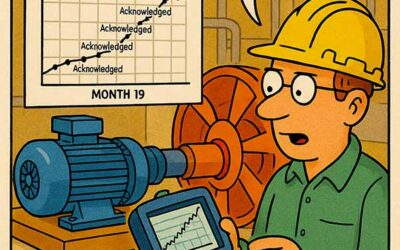


The Power of Ultrasonic Leak Detection for Compressed Air Systems
When your maintenance team first gets an ultrasonic leak detector, it’s like gaining a new sense. Suddenly, leaks you never knew existed reveal themselves: tiny hisses behind valves, fittings, and insulation. Within hours, you may find hundreds of “critical” leaks. The discovery is exciting, but without a disciplined plan, it can quickly overwhelm your maintenance backlog.
Ultrasonic leak detection for compressed air systems remains one of the most efficient strategies for reducing energy waste and improving system reliability. Yet success depends less on the device itself and more on how it’s deployed, documented, and followed up.
Why Ultrasonic Leak Detection for Compressed Air Systems Matters
Compressed air is notoriously inefficient—often called the “fourth utility” because of its high energy cost. According to the U.S. Department of Energy, compressed air systems can lose 20–30% of generated air through leaks in poorly maintained facilities, while well-managed plants typically keep losses below 10%. Most industrial sites without proactive programs experience leak rates of 15–25%, wasting thousands annually.
Key Advantages
- Pinpoint Accuracy: Detects even micro-leaks invisible to sight or sound.
- Non-Intrusive Testing: Conducted safely during operation, no shutdowns needed.
- Rapid ROI: A single large leak repair often pays for the detector in weeks.
- Scalable Efficiency: Enables structured leak surveys across large or complex plants.
How It Works:
Ultrasonic detectors identify leaks by sensing ultrasonic pressure waves—typically 20–40 kHz— generated as compressed air escapes through an orifice. The device converts these inaudible ultrasonic signals into audible tones or visual indicators, allowing maintenance teams to pinpoint the exact source of leaks.
Turning Detection into Actionable Maintenance Intelligence
Detection is the easy part. What separates successful programs is how data leaks are managed, verified, and turned into savings. Many plants locate leaks, tag them, and never return to fix them—erasing much of the potential benefit.
Best-Practice Workflow
- Rank by Energy Cost:
Estimate annual loss using orifice diameter (from ultrasonic signal strength), system pressure, compressor efficiency, operating hours, and kWh rate.
Tools like DOE AIRMaster+ or CAGI’s calculators automate this process.
Example: A ¼-inch leak at 100 psi, operating 6,000 hours per year with electricity at $0.10/kWh, wastes roughly $8,000 annually. - Log with Context:
Record each leak’s location, component, pressure, and estimated size. - Schedule Repairs:
Combine leak fixes with other PM tasks to reduce downtime. - Validate Repairs:
Reinspect and verify closure to document energy recovery.
Case Insight: One manufacturing plant found over 400 leaks worth $50,000 in annual losses. After prioritized repairs, compressor load dropped 12%, improving uptime and reducing unnecessary run hours—though maintenance interval extension claims should always be verified against OEM recommendations.
Building a Continuous Leak Management Program
A one-time “leak hunt” delivers short-term savings. A continuous ultrasonic leak detection program compounds benefits every quarter. Leading facilities embed it as a standard preventive practice—like lubrication or vibration analysis.
How to Institutionalize the Process
- Assign Ownership: A program champion coordinates surveys and reporting.
- Train Operators: Teach frontline staff to spot hissing sounds and pressure trends.
- Integrate with CMMS: Log leak data in work order systems for visibility.
- Audit and Report: Reinspect semiannually and quantify cost savings.
- Reference Standards: Align with ISO 11011 (energy efficiency) and CAGI best practices to benchmark performance.
Safety-Conscious Process:
Detection may occur under pressure, but repairs require strict lockout/tagout, pressure isolation, PPE, and hot-work permits when welding or brazing is required.
Ambient Noise Considerations:
Surveys in noisy environments should occur during quieter shifts or use directional parabolic attachments to isolate leak signals. Background noise can mask ultrasonic emissions, reducing accuracy.
Beyond Air: Expanding the Scope of Ultrasonic Detection
Although ultrasonic leak detection for compressed air systems is the primary application, ultrasonic instruments serve multiple reliability functions when correctly configured.
Common Extensions
- Steam Trap Testing: Identify failed open/closed traps by characteristic ultrasonic signatures.
- Vacuum Leak Detection: Verify seal integrity in process industries.
- Bearing Condition Monitoring: Detect ultrasonic emissions indicating lubrication breakdown or early-stage defects. Unlike vibration analysis (which measures BPFO, BPFI, BSF, and FTF), ultrasonic bearing monitoring trends amplitude changes in the 20–40 kHz range to detect issues before they appear in vibration spectra.
- Electrical Discharge Detection: Identify corona or tracking, but note that these tasks require specialized instruments with higher frequency sensitivity (>40 kHz) and trained users.
Each use case demands proper setup and analysis techniques; ultrasonics are powerful but not interchangeable across applications.
Key Takeaways
Ultrasonic leak detection for compressed air systems is one of the fastest, most cost-effective ways to recover wasted energy and improve plant reliability. Its true value lies not in finding leaks but in turning that insight into disciplined action.
Core Principles
- Make ultrasonic surveys part of your preventive maintenance cycle.
- Use quantitative methods for ranking and cost analysis.
- Embed safety and data integrity into every phase.
- Expand ultrasonic tools beyond air systems for broader ROI.
When managed correctly, ultrasonic leak detection transforms maintenance from reactionary repair to predictive efficiency. It doesn’t just expose leaks, it uncovers opportunities hidden in plain sound.