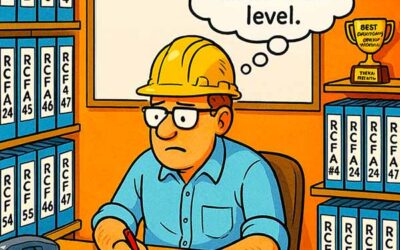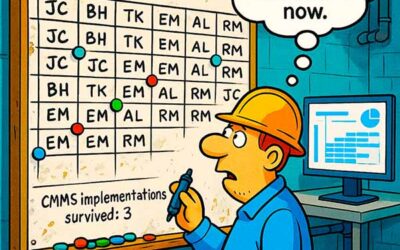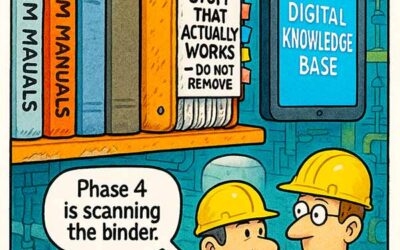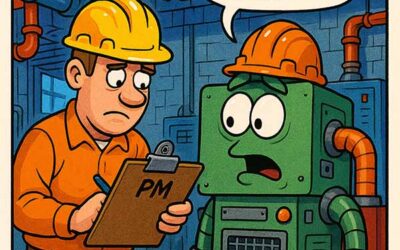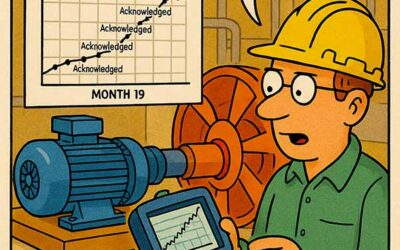


In the world of manufacturing and maintenance, few concepts are as often misunderstood or ignored as standard work best practices. The cartoon we’re reflecting on captures the reality perfectly: work is “standardized” only in how one operator does it. Without enforcement, standardization becomes little more than wall décor. In this article, we’ll unpack why standard work best practices matter, the pitfalls of poor enforcement, and what leaders can do to transform procedures into performance drivers.
Why Standard Work Best Practices Are More Than Paperwork
Standard work best practices are the backbone of Lean, TPM, and reliability-centered operations. At their core, they establish a consistent and repeatable method for performing tasks. This consistency reduces variability, prevents errors, and ensures quality outputs. When properly implemented, standard work is dynamic, constantly updated based on frontline feedback and real-world improvements.
But too often, the documentation becomes static. Leaders post instructions on the wall and call it progress, yet operators continue doing tasks “their way.” In practice, this leaves plants vulnerable to recurring errors, inconsistent results, and training gaps. Standardization only creates value when it’s applied, observed, and reinforced.
Here’s the irony: the more “optional” standard work feels, the less reliable the plant becomes. When every operator improvises, the process becomes unpredictable, and improvement initiatives stall. What appears to be flexibility is often just a hidden liability.
The Hidden Costs of Ignoring Standard Work Best Practices
Every plant leader has seen it: equipment operators each running “their version” of the process. At first glance, this flexibility looks harmless, even efficient. But the hidden costs are staggering:
- Inconsistent quality: Product variation creeps in, triggering rework, scrap, or customer complaints.
- Safety risks: Deviations from standard procedures can bypass safeguards or increase human error.
- Training inefficiencies: New hires struggle to learn because there’s no single “right way.”
- Missed improvement opportunities: Continuous improvement depends on a common baseline. Without it, metrics become meaningless.
- Unreliable KPIs: Without consistent work methods, data from OEE, MTBF, or downtime tracking is distorted.
Consider a real-world example: A Tier 1 automotive supplier documented torque specs for assembly, but operators applied them differently. Some trusted their “feel” over the calibrated wrench. The result? Intermittent product failures, warranty claims, and a strained customer relationship. The cost of ignoring standard work best practices was measured not just in dollars, but in damaged trust.
Enforcing Standard Work Best Practices Without Killing Initiative
Enforcement doesn’t mean policing every movement on the shop floor. Instead, it’s about creating alignment, accountability, and ownership. Here’s how high-reliability organizations enforce without stifling:
- Visual management: Standards should be visible and intuitive at the point of use. Clear one-page visuals beat 50-page SOPs.
- Layered audits: Leaders at every level routinely confirm adherence—not as punishment, but as coaching moments. Small, frequent check-ins matter more than annual audits.
- Operator involvement: Standards must reflect real-world workflows. If operators see them as unrealistic, they’ll ignore them. Continuous feedback loops keep documents alive.
- Leadership modeling: If supervisors treat standards as optional, so will everyone else. Leadership consistency is the ultimate form of enforcement.
- Celebrate compliance: Recognition and positive reinforcement drive culture change more effectively than discipline alone.
Done right, enforcement fuels initiative rather than killing it. The message becomes: “We respect your input, but until the process changes, we expect everyone to follow the standard.” This balance ensures employees don’t feel like robots, but instead are empowered problem-solvers operating within a reliable framework.
Turning Standard Work Best Practices Into a Competitive Advantage
Companies that master standard work best practices achieve something rare: predictable reliability. Assets run more consistently, teams spend less time firefighting, and improvements actually stick. Toyota’s production system remains the gold standard in this regard. Their operators follow strict standards, but those standards are constantly improved through kaizen. The culture enforces discipline while encouraging ownership.
Compare this to plants that treat standards as mere decoration. You’ll see walls plastered with procedures, but shop-floor execution that bears little resemblance to them. Metrics may appear acceptable on paper, but reality tells a different story: unplanned downtime, chronic defects, and rising maintenance costs.
When every operator performs tasks the same way, variation is reduced, which means defects, downtime, and waste decline. From there, plants can measure, analyze, and continuously improve. Enforcement ensures that when improvements are made, they are implemented across the entire workforce, not just a select few individuals.
Think about training: if five operators each perform lubrication differently, how do you onboard the next hire? The answer is, you don’t, you confuse them. However, if standard work best practices are enforced, training becomes faster, learning curves are shortened, and performance stabilizes. That’s not just efficiency, it’s a competitive advantage.
Practical Steps for Leaders to Strengthen Standard Work
If your plant is struggling to move beyond “decoration,” here are steps you can implement immediately:
- Audit standards weekly, not annually: Frequent checks build habits.
- Use storytelling: Share examples of when following (or not following) standards prevented failures or caused breakdowns. Stories stick more than numbers.
- Integrate technology: Digital work instructions on tablets or AR devices reduce “interpretation risk” and improve adherence.
- Measure compliance directly: Pair KPIs with behaviors. If OEE is off, don’t just ask “why”—check if standards are followed.
- Reward frontline ownership: When operators suggest a change that becomes the new standard, recognize it publicly.
These small steps reinforce the message: standardization isn’t optional, it’s the foundation for reliability.
The Bottom Line
The lesson from the cartoon is clear: posting standards on a wall is easy; building a culture where those standards are lived out in every action is hard. However, when done well, it’s transformative—turning reliability from a decoration into a competitive advantage.
Standard work best practices are more than documents; they are agreements. They represent the collective knowledge of the workforce, codified and improved over time. Without enforcement, they’re just decoration. With enforcement, they become the backbone of safety, efficiency, and reliability.
If you want your plant to move from firefighting to world-class performance, don’t just write down standards, live them, audit them, and improve them continuously. That’s how you turn paper into performance.