
1. Understanding Operator Engagement in Total Productive Maintenance
In total productive maintenance (TPM), slogans like “Operators are the key to reliability!” sound inspiring, but without structure, they can create confusion and burnout. TPM, at its core, is about shared responsibility for equipment health. However, when the boundaries between production and maintenance blur without clear expectations, engagement can quickly devolve into chaos.
Operator engagement in total productive maintenance means more than handing operators cleaning checklists or inspection routines. It’s a systemic shift in mindset, from viewing equipment care as a maintenance task to seeing it as everyone’s job. This requires training, communication, and trust.
Most TPM initiatives fail because organizations skip the foundation. They expect operators to take ownership without giving them the authority, tools, or feedback loops needed to succeed. The best TPM programs start with deep collaboration, operators learning how their actions directly affect reliability metrics like MTBF (Mean Time Between Failures) and OEE (Overall Equipment Effectiveness), when operators understand the why, they naturally begin to drive the how.
Empowerment comes when operators become proactive problem-solvers, not just machine attendants. They recognize subtle vibrations, oil color changes, or temperature shifts before a failure occurs. That’s not just engagement, it’s transformation.
2. From Compliance to Commitment: Building Real Ownership
The transition from compliance to commitment is the true test of operator engagement in total productive maintenance. Compliance means following instructions; commitment means taking initiative. Most TPM programs plateau because they stay in compliance mode, operators do what’s required, nothing more.
Building commitment requires three deliberate strategies:
1. Clarity of Purpose
Operators must know why their engagement matters. A generic “keep machines clean” directive isn’t enough. When linked to reduced downtime, safer conditions, and better product quality, engagement gains purpose. Clear KPIs tied to TPM, like reduced minor stoppages or improved first-pass yield, turn daily routines into meaningful contributions.
2. Capability Development
Training is the cornerstone of sustainable engagement. Without it, operators can’t confidently inspect, lubricate, or diagnose equipment. World-class TPM programs integrate microlearning, mentoring, and cross-functional sessions between operators and maintenance techs. These interactions transfer tribal knowledge, align standards, and build respect between departments.
3. Credibility and Feedback
Nothing kills engagement faster than ignored input. When operators flag issues and leadership fails to act, participation declines. Successful plants close this loop through visible problem-solving boards, quick feedback channels, and acknowledgment systems. Each validated observation reinforces trust and ownership.
When these three elements—clarity, capability, and credibility- align, operators move from passive compliance to active commitment. They stop waiting for direction and start shaping the process.
3. Accountability Without Overload: Structuring the TPM Role
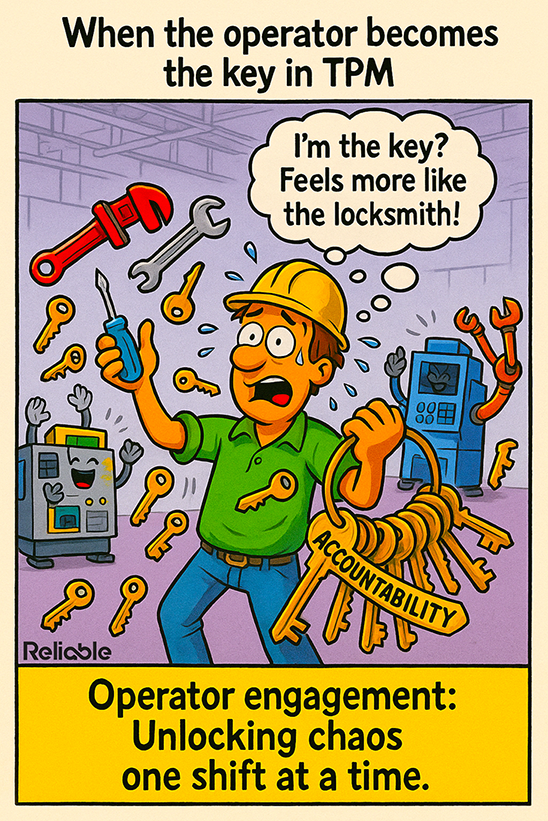
The cartoon captures a painful truth: sometimes “ownership” feels like “overload.” A well-meaning TPM initiative can accidentally dump layers of responsibility onto operators without adjusting their workload or priorities. The result? Frustration disguised as engagement.
Real operator engagement in total productive maintenance thrives on balance. TPM leaders must define clear boundaries between what operators own and what maintenance owns. Operators should manage routine tasks, like cleaning, basic inspection, tightening, and lubrication, while maintenance tackles higher-complexity activities such as alignment, precision rebuilds, and root cause analysis.
A practical framework for structuring TPM accountability includes:
- Task clarity: Define specific autonomous maintenance (AM) levels. Level 1 could be cleaning and visual checks; Level 2 might include minor adjustments or part replacements.
- Smart scheduling: Integrate AM tasks into production planning, not as an afterthought. If operators are expected to maintain equipment, they need time in the schedule to do it.
- Feedback loops: Digitize AM checklists using CMMS or mobile apps, ensuring every inspection generates actionable data.
- Shared goals: Link TPM metrics to both maintenance and production KPIs, creating shared success, not departmental silos.
Accountability should feel empowering, not punishing. The goal is for operators to develop mechanical empathy, a deep awareness of how their machine “feels” when healthy versus stressed. When done right, they’re not the locksmith juggling endless keys; they’re the guardians of uptime, unlocking stability with every shift.
4. Measuring and Sustaining Operator Engagement
You can’t sustain what you can’t measure. Quantifying operator engagement in total productive maintenance requires blending technical and behavioral metrics. The technical side might include:
- Increased OEE from baseline
- Reduced unplanned downtime hours
- Fewer minor stops and quality losses
- More operator-initiated work orders
But data alone doesn’t tell the whole story. Behavioral indicators, like participation in improvement teams, idea submissions, and safety observations, reveal whether engagement has become cultural.
Leading organizations embed operator engagement into daily management systems. They use tiered meetings to review TPM metrics, share success stories, and spotlight operator-led wins. Recognition programs reinforce that small daily actions lead to significant reliability gains.
Sustainment depends on three cultural anchors:
1. Recognition
Highlight operator-driven improvements in public spaces, digital dashboards, newsletters, or morning huddles. Recognition converts effort into pride, and pride sustains effort.
2. Reinforcement
Keep the TPM process consistent. Constantly changing formats or focus areas erodes trust. When routines stay predictable, behaviors become habits.
3. Relevance
TPM must remain tied to business results. Operators should see how their engagement directly improves throughput, safety, and profitability. When relevance fades, engagement becomes mechanical again.
A mature TPM culture doesn’t rely on reminders or checklists; it’s self-sustaining. Operators own their machines the same way pilots own aircraft preflight checks: with care, precision, and responsibility.
5. The Leadership Imperative: Enabling Engagement to Flourish
Sustained operator engagement in total productive maintenance doesn’t start on the shop floor—it begins in leadership offices. Executives and managers shape the ecosystem that determines whether engagement thrives or fails.
Three leadership behaviors separate high-performing TPM organizations from struggling ones:
- Visibility: Leaders frequently walk the floor, not to inspect, but to learn. When they ask questions like, “What’s frustrating your maintenance routines today?” they uncover barriers before they become disengagement.
- Empowerment: Great leaders delegate authority with accountability. They trust operators to act, and they support them when things go wrong.
- Consistency: Leadership must model TPM values even when production pressures rise. If operators see leaders skip standards to hit quotas, TPM credibility collapses.
Leaders must also invest in storytelling, connecting TPM improvements to the company’s purpose. When operators realize their reliability work supports not just machinery but jobs, safety, and customer trust, engagement becomes identity, not obligation.
6. The Payoff: Turning Engagement Into Reliability
Plants that master operator engagement in total productive maintenance experience cascading benefits: higher OEE, fewer breakdowns, improved product quality, and stronger morale. But the intangible payoff—cultural alignment—is even more powerful.
A TPM program where operators truly engage turns the factory into a living system. Problems surface faster. Solutions are shared more widely. Continuous improvement becomes the default behavior. Maintenance isn’t a department anymore, it’s a mindset woven into every role.
When operators hold the keys to accountability, the organization unlocks more than machine uptime; it unlocks resilience.
Conclusion
The promise of TPM has always been about people, not processes. The phrase “total productive maintenance” implies completeness—machines, methods, and mindsets aligned toward reliability. The real key is engagement built on trust, structure, and shared purpose.
Operator engagement in total productive maintenance isn’t about giving more keys to the operator—it’s about ensuring every key fits a lock that matters. When that happens, chaos turns into coordination, and reliability stops being a goal; it becomes a habit.