The Hidden Power Behind “One-Piece Flow” Thinking
Most companies claim they’re lean. Few actually are. One-piece flow is the dividing line, the moment when efficiency stops being a slogan and becomes a measurable reality. It’s not about doing things faster. It’s about creating a rhythm where every step adds value and nothing else survives.
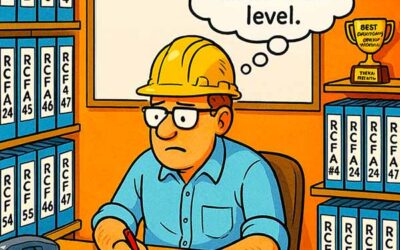
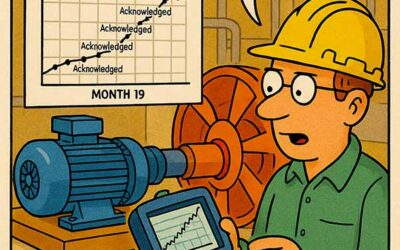
In its purest form, one-piece flow represents the highest level of operational maturity. It strips away the noise like batch processing, rework, and waiting time, and exposes what’s broken. That’s why so many leaders fall for the buzzword without grasping the transformation it requires. As the cartoon jokes, “Inventory problem solved!” is only the surface. Proper flow is invisible until it fails, and then the weaknesses are crystal clear.
Why One-Piece Flow Changes Everything
Batch production hides problems. One-piece flow exposes them instantly. Each unit becomes a messenger, carrying information about quality, timing, and efficiency. When a process stalls, you know exactly where and why. That visibility changes how teams think about performance.
Advantages of implementing:
- Immediate defect detection: Every issue is caught at the source.
- Reduced lead time: Products move smoothly from station to station.
- Lower WIP inventory: No more warehouses filled with unfinished work.
- Better employee engagement: Operators see the direct impact of their efforts.
But the actual value isn’t just faster output, it’s cultural clarity. In this system, waste has nowhere to hide. That’s uncomfortable at first, but ultimately liberating. Teams stop firefighting and start improving.
Turning Process Flow Into a Daily Discipline
One-piece flow requires more than rearranging machines or updating a whiteboard. It’s a shift in how work is designed, measured, and improved. Every bottleneck becomes a teacher. Every delay becomes a signal.
o implement a truly continuous and efficient production flow:
- Map the entire value stream. Visualize every movement, delay, and handoff.
- Match processes to takt time. Align work pace with customer demand.
- Standardize work. Define consistent methods to reduce variability.
- Minimize changeovers. Use SMED techniques to maintain uninterrupted flow.
- Train for cross-functionality. Every operator should understand upstream and downstream effects.
Leaders must go beyond metrics. They need to walk the floor, observe flow disruptions, and remove systemic barriers. When flow is real, production feels effortless. When it’s not, every inefficiency screams for attention.
The Misunderstandings That Derail One-Piece Flow
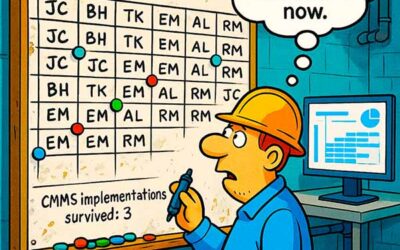
The cartoon captures a painful truth: management often simplifies lean to the point of absurdity. Declaring victory over “inventory” while ignoring machine downtime or process imbalance is common. One-piece flow isn’t a slogan. It’s a commitment to precision, coordination, and discipline.
Common pitfalls include:
- Superficial adoption: Implementing visual cues without real process alignment.
- Neglecting equipment reliability: Machines must perform predictably for flow to survive.
- Underestimating change management: Teams need time to unlearn old habits.
- Lack of leadership follow-through: Without executive patience, lean efforts collapse under pressure.
Successful organizations integrate it with reliability engineering, predictive maintenance, and quality control. It’s a symbiotic system: if one area falters, flow disappears.
The Strategic Payoff of Mastering One-Piece Flow
When one-piece flow becomes part of the operational culture, everything changes: output consistency, workforce morale, and even profitability. Production managers start making decisions based on data rather than reacting. Maintenance teams work proactively because issues surface sooner.
The outcomes are measurable:
- Throughput increases by 20–50%.
- Quality defects drop significantly.
- Customer responsiveness improves.
- Employee satisfaction rises because chaos disappears.
The cartoon’s closing line: “Next up: one-piece paychecks,” may be a joke, but it points to something deeper. You can’t cherry-pick lean principles. Either flow runs through the organization like electricity, or it doesn’t.
Integrating Flow, Layout, and Demand Synchronization
Continuous flow manufacturing builds on the one-piece concept by maintaining an uninterrupted stream of work at the pace of customer demand. This alignment with takt time—the heartbeat of lean—ensures that production never falls behind or gets ahead. When teams synchronize operations to takt time, the result is not just speed but rhythm. Every operator, machine, and workstation becomes part of a synchronized value chain that minimizes idle time and maximizes output.
Equally critical is cellular manufacturing, in which equipment and personnel are grouped by product family rather than by function. This layout eliminates unnecessary movement and reduces transportation waste, one of the seven classic wastes defined in lean methodology. In a well-designed production cell, the product flows naturally from one step to the next without waiting, queuing, or double-handling.
Advanced plants now pair one-piece flow with pull production systems, such as Kanban scheduling. Instead of pushing materials through processes, Kanban uses real-time demand signals to pull only what’s needed. This not only minimizes overproduction and excess inventory but also keeps work-in-progress (WIP) levels visible and controlled. Integrating digital Kanban tools and real-time production monitoring further enhances flow visibility, making it easier to spot constraints before they escalate into downtime.
Strengthening Reliability to Protect Continuous Flow
Reliable equipment performance remains essential. Without total productive maintenance (TPM), the tight sequence required by one-piece flow can easily collapse. Predictive maintenance sensors, OEE (Overall Equipment Effectiveness) tracking, and condition-based maintenance ensure that assets perform consistently. In lean environments, reliability and flow are inseparable—one protects the other.
Flow depends on reliability. Without dependable equipment, even the best lean systems grind to a halt.
Finally, leading manufacturers combine value stream mapping, standardized work, and lean continuous improvement cycles to sustain progress. Together, these tools identify new opportunities to reduce cycle time, improve setup time, and balance flow across shifts.
When all these systems converge, one-piece flow evolves from a lean technique into a complete operational philosophy. One that delivers speed, precision, and long-term competitive advantage.
The Real Lesson
One-piece flow is a mirror that reflects operational truth. When applied correctly, it reveals where value is created and where it’s lost. It demands collaboration between engineering, maintenance, and operations, uniting them under one principle: flow must never stop.
Lean success doesn’t come from imitation. It comes from insight. And the plants that truly understand one-piece flow don’t just improve productivity; they redefine reliability itself.