
Why FMEA Meetings Feel Like an Infinite Loop
Anyone in maintenance, reliability, or quality engineering has lived through it—the FMEA meeting that never ends. You enter with optimism, armed with spreadsheets, risk charts, and coffee. Four hours later, your brain feels like a worn-out bearing, and the team still hasn’t agreed on the severity score for a motor bearing failure.
The original intent of Failure Mode and Effects Analysis (FMEA) is to help teams identify, prioritize, and mitigate risks before they cause real-world problems. But ironically, many organizations turn FMEA into a failure mode of its own—a repetitive process that produces more frustration than insight.
That’s where structured facilitation and FMEA meeting best practices make all the difference. A disciplined approach can transform a time sink into a high-value decision-making tool that truly drives reliability improvement.
Applying FMEA Meeting Best Practices for Real Efficiency
The secret to efficient FMEA sessions isn’t working faster—it’s working smarter. The following FMEA meeting best practices have been proven to shorten sessions by as much as 50% while improving accuracy and engagement.
- Start with a crystal-clear scope.
FMEA creeps when boundaries blur. Define exactly what system or process is under review. If you’re analyzing a gearbox, don’t let the conversation wander into the entire drive train. Set expectations for what won’t be analyzed. - Designate a strong facilitator.
The facilitator’s job is to keep the discussion focused, not to contribute technically. They must know when to stop circular debates and move forward. When discussions hit an impasse, assign an action to verify data instead of continuing the argument. - Use pre-work to reduce wasted time.
Before the meeting, have each engineer draft potential failure modes, effects, and severity/occurrence/detection ratings. The session then becomes a validation and prioritization exercise instead of a brainstorming free-for-all. - Timebox each item.
A simple rule: 10–15 minutes per failure mode. Use a visible timer to stay disciplined. Long discussions are a symptom of uncertainty—flag them for offline analysis rather than draining the whole meeting. - Prioritize by data, not opinion.
Use field failure data, maintenance logs, and condition monitoring trends to inform occurrence ratings. This prevents subjectivity and accelerates consensus.
These structured steps form the backbone of FMEA meeting best practices, ensuring meetings generate value instead of burnout.
Turning FMEA Output Into Real-World Action
The real purpose of FMEA isn’t documentation—it’s failure prevention. Yet many teams stop the moment they calculate Risk Priority Numbers (RPNs). That’s a critical mistake.
To transform analysis into impact, follow these best practices:
- Create an actionable improvement plan.
Every high RPN should trigger at least one corrective or preventive action. Assign a specific owner, deadline, and verification step. - Integrate your CMMS or EAM system.
Link FMEA actions directly to work orders or reliability initiatives. This ensures accountability and tracks completion automatically. - Measure effectiveness.
After implementation, review if the action reduced the risk (severity, occurrence, or detection). Use real-world feedback to refine your next FMEA cycle.
Without action follow-through, your FMEA becomes little more than an intellectual exercise. Closing the loop—turning insight into measurable reliability improvements—is one of the most essential FMEA meeting best practices you can implement.
Common Failure Modes in FMEA Meetings Themselves
Ironically, FMEA meetings often exhibit their own failure modes—exactly the kind they’re meant to prevent. Let’s analyze the process itself using FMEA logic:
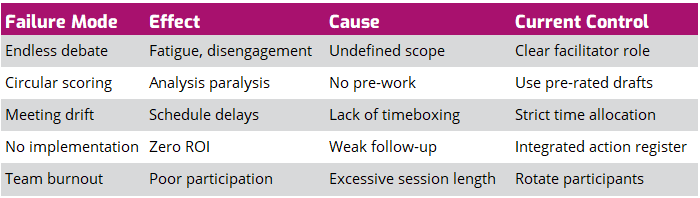
By identifying and controlling these “process failure modes,” you improve not just your FMEA results—but your team’s ability to collaborate effectively.
Digital Tools and Emerging Technologies
Modern reliability programs are evolving fast, and digital tools can make FMEA meeting best practices far easier to sustain. Here’s how:
- AI-based ranking and clustering (speculative but promising)
Machine learning can automatically identify similar failure modes across assets, suggesting priority clusters based on past outcomes. - Collaborative FMEA platforms
Tools like ReliaSoft XFMEA, PTC Windchill, and Alchemy Reliability integrate FMEA tables with version control, audit trails, and cloud collaboration. - Automated RPN tracking dashboards
Visual dashboards update as actions close, showing live trends in risk reduction. Teams can see progress rather than get lost in spreadsheets. - Voice transcription and smart notes
Using AI-powered meeting tools ensures all discussions are documented without burdening the facilitator, preserving insights for future reference.
Adopting these digital solutions transforms FMEA from a static analysis tool into a dynamic reliability improvement engine.
Building a Continuous Improvement Culture
An effective FMEA process is not just a single event—it’s part of a continuous improvement loop. Companies with mature reliability programs use the FMEA framework to update standards, improve maintenance procedures, and feed insights back into design.
Key cultural drivers include:
- Making FMEA participation part of every engineer’s development.
- Rewarding problem-solving behaviors, not just problem identification.
- Treating the FMEA worksheet as a living document rather than a compliance artifact.
By embedding FMEA meeting best practices into your culture, you ensure risk reduction becomes routine, not reactive.
Escaping the Never-Ending FMEA
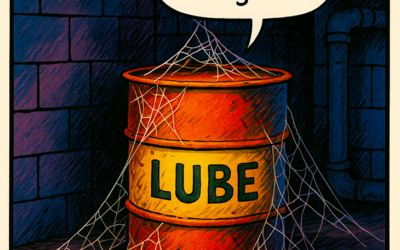
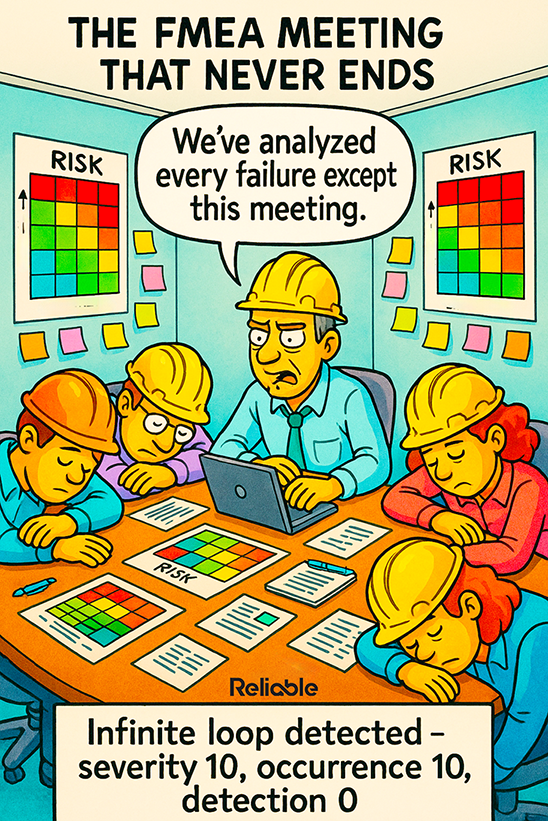
The cartoon says it best—“We’ve analyzed every failure except this meeting.” That’s exactly the trap to avoid. When your FMEA meetings feel like an infinite loop, it’s time to apply the same analytical rigor to the process itself.
A great FMEA meeting doesn’t just identify problems—it prevents them efficiently. When you combine structure, accountability, and technology, you move from reactive analysis to proactive reliability.
Break the cycle.
Apply FMEA meeting best practices, and make your next FMEA session the most productive one your team has ever had.