Reading the Signs of an Overloaded Electric Motor on the Plant Floor
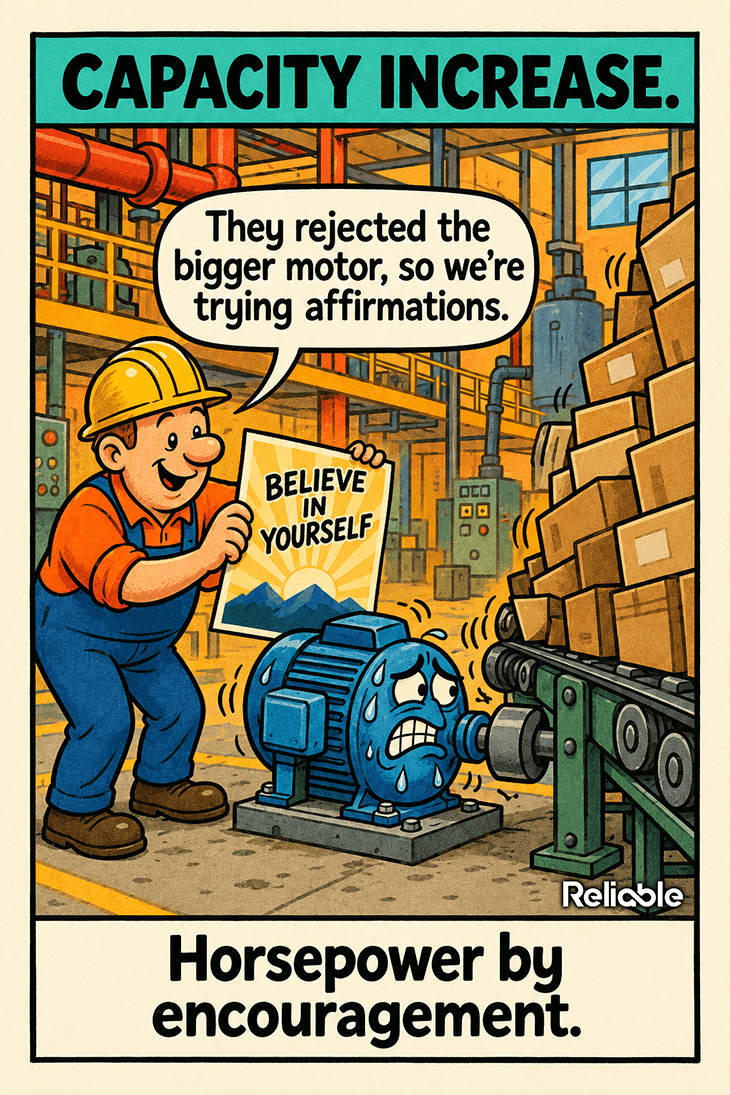
The Signs of an Overloaded Electric Motor Nobody Logs
The signs of an overloaded electric motor rarely show up as a dramatic failure on day one. They show up as heat the crew stops noticing, a hum that changes pitch, and a thermal trip that somebody resets twice a shift. By the time anyone writes a work order, the winding insulation has already paid for months of quiet abuse.
Overload is sneaky because the motor keeps running. A unit pulling above its nameplate current can keep running even while it overheats, which is exactly why operators learn to treat the warm frame as normal. The damage compounds while production celebrates the extra throughput and nobody connects the two.
A motor that runs hot every shift still turns, so it stays off the failure list until the morning it finally quits for good.
Start with the nameplate. Full-load amps printed on that plate show the current at rated output, voltage, and frequency; the duty rating and any service-factor rating also matter. Have a qualified technician measure each phase during a normal production run and compare the readings. Amps that sit above full-load for hours at a time call for a load and supply check against the motor’s ratings.
Temperature tells the same story from a different angle. Insulation class sets a winding temperature limit, not a frame-temperature limit you can judge by touch; even a motor within its rating can be too hot to touch. A cheap infrared check on the same loaded motors each week turns a vague worry into a trend you can act on.
Why Capacity Demands Outrun the Motor
The request that starts the problem always sounds reasonable. Production wants more output, the line speeds up, and the same motor that was sized for the old rate suddenly carries a heavier load. Nobody re-ran the sizing math, so the motor silently absorbs the gap between what was planned and what the floor actually asks of it.
Undersizing also creeps in through substitution. A failed forty-horsepower unit gets replaced with whatever sits on the shelf, a belt change shifts the mechanical load, or a process upgrade adds back pressure the original selection never accounted for. These machines drift past their electric motor safe operating limits one small decision at a time.
Each of these changes looks minor on its own. Here are the ones that quietly stack the deck against a healthy motor:
Line speed increases that were never matched with a fresh motor sizing review
Replacement motors chosen by frame size or shelf availability instead of calculated load
Added process resistance from fouling, higher viscosity, or tighter tolerances
Voltage imbalance that forces the motor to draw more current for the same mechanical work
Stacked together over a couple of years, these small moves push a perfectly healthy motor into a chronic overload it will never advertise. The nameplate still reads the same, the asset record still says forty horsepower, and the demand on the floor has quietly outgrown both.
The maintenance team inherits the result without ever seeing the decision that caused it. A motor that was correctly specified five years ago can be badly overloaded today, and the paperwork will still describe the original, comfortable design point long after the floor moved on from it.
Reading the Signs of an Overloaded Electric Motor in the Data
Current is the most honest witness you have. Trending amperage against the nameplate over several weeks shows whether high current is occasional or constant. A brief startup current spike is expected; a motor that lives above full-load amps during steady running is the real concern. Chronic overheating damages winding insulation and undermines motor reliability.
Power factor and supply voltage round out the picture. Power factor usually rises as an induction motor approaches full load, so it cannot confirm overload on its own. Voltage imbalance across the three phases can create extra heating that mimics overload even when the mechanical load sits in a normal range. Measuring both keeps you from chasing the wrong cause.
Amperage trended against the nameplate turns an argument about whether a motor is overloaded into a number anyone on the floor can read.
Vibration and bearing temperature add useful clues. Chronic overload can raise bearing temperatures, but the early warning signs of motor failure, including climbing temperatures and shifting vibration signatures, can also come from lubrication or alignment problems.
Pull these streams together and the overloaded motor stops hiding. The data names the problem, dates it, and lets you separate a genuine sizing shortfall from a blocked cooling path before anyone spends capital on the wrong fix. That distinction is where most overload money gets wasted.
Fixing the Cause of the Overload
Once the data flags a persistent current or temperature problem, resist the reflex to just order a bigger motor. Sometimes that is the correct answer. Often the real driver is a process change that can be tuned back, a cooling path that is caked shut, or an unbalanced supply.
Work through the cheap and reversible causes before you sign a purchase order. These checks help separate genuine undersizing from other problems:
Confirm the load calculation against the current production rate, using real numbers from the floor
Clean the cooling fins and clear any blocked airflow around the frame and fan cover
Correct voltage imbalance and verify the supply right at the motor terminals
Check for mechanical binding, misalignment, or added drag in the driven equipment
Voltage and cooling alone account for a surprising share of what looks like undersizing. A motor starved of airflow can run hot even at normal current, while an unbalanced supply can cause high current and extra heating at an otherwise normal mechanical load. Those fixes cost almost nothing compared with a new machine and an afternoon of lost production.
If every one of those comes back clean and the measured load exceeds the motor’s rated capacity, then the motor is genuinely undersized and a correctly sized replacement is justified. The difference is that your purchase request now carries measured evidence instead of a hunch, and the next engineer can see exactly why the upgrade happened.
Building Overload Awareness into Maintenance
The cheapest protection against overload is a simple habit. Add a full-load amp reading and a frame temperature to the route on your most heavily loaded motors, then review the trend once a month. It takes a few minutes per machine and catches the slow slide that annual inspections sail right past.
Overload is really a capacity problem wearing a maintenance costume. When production asks a motor to do more, the sizing conversation should happen before the load does the asking for you, because the motor will answer that question whether or not anyone planned for it.
None of this requires new instruments or a software platform to get started. A clamp meter, an infrared thermometer, and a monthly glance at the trend can flag chronic overloads for closer investigation. The equipment that earns this attention is the short list of motors your plant simply cannot run a shift without.
Catch the signs of an overloaded electric motor while they are still numbers on a trend, and you get to choose the fix on your own schedule and your own budget. Miss them, and the motor eventually picks the schedule for you, almost always during the busiest run of the quarter.