How to Analyze Failed Components Before the Evidence Is Scrapped
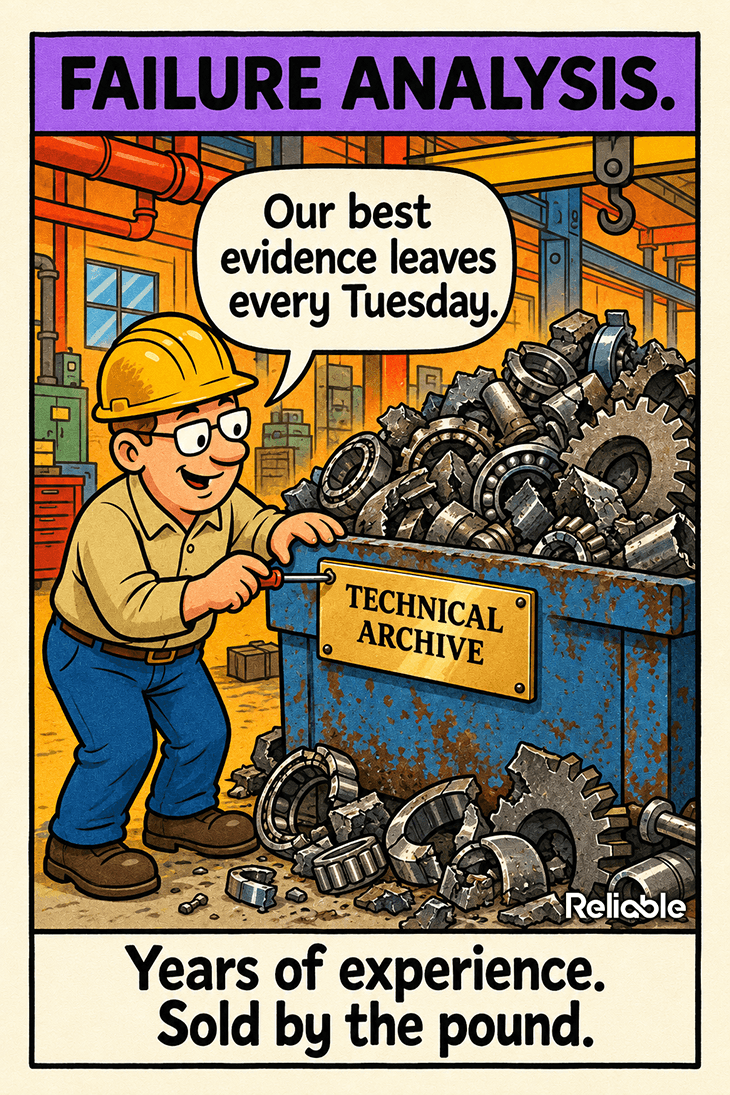
How to Analyze Failed Components Before They Vanish
A failed bearing holds more diagnostic value than a shelf of reports, and knowing how to analyze failed components is how a maintenance team converts breakdowns into prevention. The trouble is that most plants destroy the evidence before anyone bothers to read it.
A worn gear, a spalled race, or a cracked shaft carries physical clues to how it died. Overload, misalignment, and contamination can leave telling signatures, but those signatures can overlap. The part is a witness that cannot lie, as long as it survives long enough to testify.
Every failed part is a signed confession about how it died, and most plants throw that confession in a bin before a single person reads it.
Reading that record takes only a few simple disciplines. A clean bench, decent light, a camera, and a habit of looking before replacing turn a routine swap into a source of root cause. The forensic rcfa mindset treats the broken part as the starting point of the investigation instead of its end.
None of this requires a metallurgy lab on site. Field examination can help identify failure mechanisms and flag parts that need specialist or laboratory work once someone has looked closely and knows which questions to ask of them.
The skill compounds quickly too. A technician who regularly examines failures learns to recognize patterns worth investigating, and that pattern recognition is worth more than any single written report, because it rides along to every job that technician touches afterward.
Why the Evidence Leaves on the Scrap Truck
Failed parts disappear for ordinary reasons. The storeroom wants the core charge back, the floor wants the clutter gone, and the scrap bin sits closer than the analysis bench. Speed beats curiosity on a busy shift, and the part is gone before anyone thinks to ask what it could have told them.
The cost of that habit hides in plain sight. The same failure repeats, a fresh part goes in, and the cycle runs again because nobody ever learned why the first one died. Here is what walks out the door with every scrapped component:
The wear pattern that would have named the real failure mechanism
The evidence that separates a defective part from a system problem
The chance to catch a fleet-wide issue before it reaches the next machine
A concrete teaching example for the next technician on the crew
A single salvaged part can pay for a year of the discipline. One correctly diagnosed repeat failure that finally stops is worth more than every core charge the storeroom ever chased across a fiscal year.
The irony is that the storeroom and the floor both want the same thing the analysis bench wants, which is fewer failures. The scrap habit quietly works against that shared goal, one quick trip to the bin at a time, while everyone involved believes they are helping.
Giving the bench first claim on critical failures costs almost nothing. The part can still be scrapped after the investigation is complete, rather than carrying its lesson straight to the dumpster.
How to Analyze Failed Components at the Bench
Start with the part exactly as it came out, dirt and all. Photograph it before cleaning, because the contamination, discoloration, and witness marks are the data. A thorough bearing failure analysis often turns on lubricant residue or loose debris that a quick wipe with a rag could have erased for good.
Save lubricant and debris samples before gently cleaning wear surfaces; leave fracture surfaces untouched for specialist examination. Spalling, pitting, scoring, and discoloration can each have several causes, and the location of the damage needs to be read alongside operating history and the surrounding assembly.
The difference between a defective part and a doomed installation is usually written on the failure surface, in a pattern anyone can learn to read.
Match what you see against the known physical mechanisms of component failure before you settle on a verdict. Fatigue, corrosion, wear, and overload each leave distinct fingerprints, and naming the right one is what separates a real finding from a guess dressed up as a conclusion.
Write the finding down while the part is still in your hand. A photo, the mechanism, and a one-line suspected cause create a record the next person can act on, and a drawer full of those records becomes the most honest failure history a plant can own.
Keep the photos organized by equipment rather than by date. When the fifth identical failure finally lands on the bench, a folder sorted by asset makes the pattern jump out immediately, and that is the moment a stubborn repeat failure gets killed for good.
Turning Findings into Fewer Failures
Analysis only pays off when it changes something downstream. A finding that sits in a folder is a hobby. A finding that updates a specification, a storeroom part number, or an installation procedure is prevention you can measure in the next failure interval.
Prevention is the only scoreboard that counts here. If the same bearing keeps arriving at the bench with the same spalling pattern, the diagnosis or the follow-through needs another look, and a thick folder of findings becomes a well-documented way to keep losing the same battle.
Share the wins out loud as well. A quick note at the shift meeting that a recurring failure got solved by reading the part turns the whole crew into evidence collectors, because everyone on the floor wants their own save on the board next.
Build the loop so it runs without heroics. A few plain rules keep the evidence alive long enough to matter:
Hold failed parts from critical equipment for a set review window before scrapping
Photograph every significant failure at the bench instead of at the dumpster
Record the mechanism and the suspected cause in the same place every time
Feed confirmed causes back into specifications, procedures, and purchasing
Do that consistently and the plant stops buying the same failure twice. Learning how to analyze failed components is the cheapest reliability upgrade available to most sites, because the evidence is already being generated every single time something breaks.