

1. When the Root Cause Failure Analysis Process Turns Inward
Root cause failure analysis (RCFA) is one of the most valuable tools in reliability engineering. It systematically dissects an incident to identify the sequence of factors that led to failure—mechanical, human, and procedural. Yet, the most surprising findings often occur when the process turns inward, tracing problems not to components or technicians, but to management culture itself.
Every plant has seen it: the same coupling misaligns again, the same pump cavitates despite repeated rebuilds, or the same electrical fault reappears after every shutdown. When reliability teams apply the root cause failure analysis process correctly, they often discover that these recurring failures are not physical at all; they’re organizational. Decisions made in budget meetings, training policies, and leadership behavior silently shape technical outcomes.
This is why the best RCFAs act as organizational mirrors. They don’t just repair equipment; they diagnose the culture that allowed the failure to happen in the first place.
2. The Chain Reaction Behind “Simple” Problems
Most failures appear simple when isolated: a cracked expansion joint, a misaligned shaft, or an overloaded bearing. But reliability engineers know that true causation lies deeper. The root cause failure analysis process forces a structured descent through multiple causal layers:
- Technical layer: Physical symptoms such as fatigue, wear, or contamination.
- Human layer: Errors in execution, improper repair, or skipped inspections.
- Systemic layer: Training gaps, procedural weaknesses, and unclear roles.
- Cultural layer: Leadership decisions, incentive structures, and communication failures.
When analysis reaches that fourth layer, the results often make executives uncomfortable. An “improper repair” may not be due to technician incompetence but to underfunded training or rushed schedules. A “maintenance backlog” may trace back to arbitrary budget constraints or unrealistic production targets. Each of these findings exposes how management behavior directly affects technical reliability.
In other words, a cracked joint might have started as metal fatigue, but the metal didn’t write the budget.
3. Management Culture as a Hidden Failure Mode
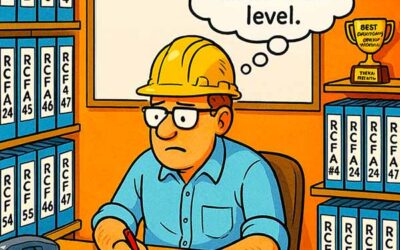
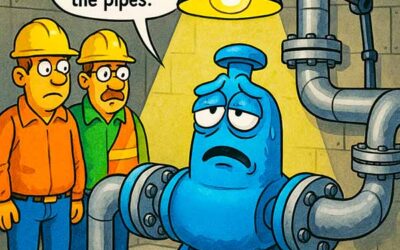
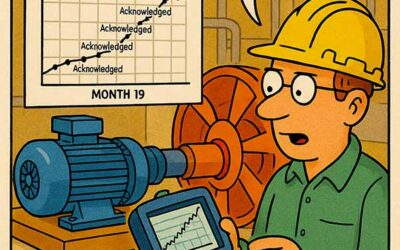
The cartoon captures this truth with humor but accuracy: “We traced it all the way to management culture.” In many organizations, culture is the most persistent and most ignored failure mode.
Leadership culture shapes how people prioritize time, manage stress, and define success. When culture values heroics over prevention, maintenance becomes reactive. When cost reduction is rewarded without context, training evaporates. When it tolerates apathy or poor communication, data integrity collapses.
In reliability terms, culture behaves like an unmeasured variable, an uncontrolled input corrupting the reliability equation. You can instrument every bearing in the plant, but if technicians don’t trust management, the data won’t matter. If leadership underfunds proactive maintenance, even the best predictive tools can’t prevent failure.
The root cause failure analysis process exposes these contradictions because it insists on asking “why” until systemic causes emerge. When the chain of causes leads from vibration to training to turnover to budget cuts, culture becomes visible as a root cause, something few plants ever intend to see.
4. The Data Doesn’t Lie: Organizational Factors Dominate
Research from the ARC Advisory Group and multiple maintenance benchmarking studies confirms what practitioners observe: over 60% of chronic equipment issues stem from systemic or managerial causes rather than purely technical ones.
For example:
- Plants that invest steadily in technical training show up to 40% fewer repeat failures than those that cut budgets during downturns.
- Teams with high turnover experience 2x the mean time to repair (MTTR) due to inconsistent expertise.
- Organizations with unclear reliability accountability have 30–50% lower OEE compared to those with dedicated reliability leadership.
These are not coincidences, they’re patterns. The root cause failure analysis process quantifies cultural impact through repeated investigation. Each RCFA becomes a data point confirming that leadership choices either strengthen or weaken reliability at scale.
Over time, organizations that ignore these findings develop a self-inflicted reliability ceiling: the same types of failures repeat, morale declines, and management blames “bad luck” instead of poor systems.
5. Turning RCFA Into an Organizational Feedback Loop
The most effective use of RCFA goes beyond finding what broke; it identifies why similar problems keep happening across different systems. Once that insight emerges, organizations can use it to realign leadership behavior.
Here’s how to elevate the root cause failure analysis process from an engineering tool to a cultural feedback mechanism:
- Close the loop at the leadership level. Every RCFA report should include a section for “organizational contributors,” reviewed directly by management.
- Track recurring cultural causes. If “training deficiency” appears in multiple RCFAs, it signals a leadership accountability issue, not an isolated event.
- Assign ownership, not blame. Treat management-related causes as systemic risks that require proactive mitigation, not individual fault.
- Embed learnings into policy. Each RCFA should inform revisions to maintenance procedures, onboarding, budgeting, and decision protocols.
The goal isn’t to assign guilt, it’s to build reliability literacy across all levels of the organization. When leaders understand how their policies translate into physical outcomes, they can design systems that prevent both equipment and cultural degradation.
6. Building a Culture That Supports Reliability
Transforming culture requires intentional design. Leaders must make reliability not just an engineering function but a company-wide value. Plants that excel at reliability treat it as a mindset reinforced through structure, metrics, and recognition.
Core cultural enablers include:
- Psychological safety: Encouraging technicians to report anomalies and near misses without fear.
- Predictive budgeting: Funding reliability initiatives based on lifecycle cost, not annual spend.
- Visible leadership engagement: Executives attending RCFA meetings and celebrating lessons learned.
- Skill reinforcement: Treating technical training as a strategic investment, not discretionary overhead.
When these cultural traits become embedded, the root cause failure analysis process evolves from post-mortem to prevention. Teams start recognizing emerging risks before they cause downtime, not after. The plant becomes self-correcting, with leadership as part of the reliability ecosystem rather than a bottleneck.
7. Reframing Accountability: From Blame to System Design
Blame kills learning. When RCFA outcomes are used to punish rather than understand, teams begin hiding problems instead of surfacing them. This defensive posture ensures that the same issues repeat indefinitely.
Proper accountability, by contrast, involves system design. It recognizes that incentives, workload, and communication shape human behavior. Leaders who focus on these levers create reliability by default.
For example:
- Instead of asking, “Who made this mistake?” ask, “What system allowed this mistake to happen undetected?”
- Replace the phrase “human error” with “system opportunity.”
- Use every RCFA as a training opportunity, both technical and cultural.
By reframing accountability, leadership turns the root cause failure analysis process into an engine for continuous learning and psychological resilience.
8. Conclusion: The Culture-Mechanical Connection
The final message of this analysis, and the cartoon, is profound: “Sometimes the failure isn’t in the metal.” When you trace failures honestly, many of them end at management’s doorstep. And that’s good news, because culture is far easier to change than metallurgy.
The root cause failure analysis process offers a structured method to reveal the invisible factors that drive visible failures. But its ultimate success depends on leaders willing to confront their own role in those failures.
Reliability is not a function of maintenance alone; it’s the outcome of organizational intent. Every decision about training, budgeting, and empowerment ripples into physical performance. When management culture values prevention over reaction, learning over blame, and long-term health over short-term optics, the entire plant becomes more reliable.
In the end, every cracked weld, failed bearing, or misaligned shaft tells a story. The question is whether leadership is ready to listen to what that story says about them.